

Top athletes do not follow complicated diets. They follow simple nutrition plans that fuel training, protect muscle and keep energy steady every single day. That is why the best gym plans look boring on paper, but powerful in real life.
This nutrition plan works the same way. It focuses on whole foods, steady protein and clean carbs that make workouts stronger and recovery faster. No hype, no extremes, just a structure your body can trust.
Once you see how each part fits together, it becomes clear why professionals depend on this approach for consistent performance and long term progress.
What Makes a Gym Diet Plan Different From Any Other Diet Plan?
A gym diet works differently because it focuses on how your body loses weight, loses fat and builds steady progress using a balanced diet that relies on nutrient dense foods and whole foods.
It aligns with dietary guidelines but still fits natural bodybuilding contest preparation for people who want structure without extremes. This foundation opens the way to understand what sets gym nutrition apart from regular plans.
| Factor | Gym Diet Plan | Regular Diet Plan |
|---|---|---|
| Primary Purpose | Supports muscle gain, fat loss and workout performance. | Focuses on basic weight control or general health. |
| Protein Intake | High, structured and consistent. Lean meats, eggs, paneer, whey. | Moderate, inconsistent and often low. |
| Carbohydrate Strategy | Timed around workouts to fuel training and recovery. | Spread randomly through the day without timing. |
| Fat Intake | Measured for hormone balance and recovery. | Not usually measured or planned. |
| Meal Frequency | 3 main meals + 2 protein based snacks. | Depends on convenience or appetite. |
| Food Quality | Prioritises whole foods, nutrient dense meals and clean cooking. | Mix of home food, takeout and processed foods. |
| Training Support | Designed to improve strength, endurance and muscle repair. | Not aligned with performance goals. |
| Supplement Use | Strategic use of whey, creatine, electrolytes. | Rare, inconsistent or random use. |
| Expected Results | Improved muscle mass, lower body fat and better workout output. | General weight changes without performance benefits. |
| Meal Timing | Aligned with training, recovery and energy cycles. | No specific timing linked to activity. |
| Flexibility | Structured, predictable and goal driven. | More flexible but often less effective. |
A gym diet holds its edge because every part of it supports training, recovery and long term progress. Once this contrast is clear, the next step is to see how a ready to use plan fits into real daily meals and makes consistency much easier.
Your Ready-To-Use Diet Plan Designed To Maximize Muscle and Fat Loss
This ready plan is built to fast track fat loss and muscle gain by keeping every meal structured for consistency. It supports beginners and lifters who want results without confusion. By keeping choices predictable, you get a layout that supports both training and recovery.
Now the plan itself can show how each part works in real routine settings.
Pre Workout Nutrition
Pre workout nutrition prepares your body for intense workouts by giving it complex carbs, the right carbohydrate rich food and enough support to refill glycogen stores. Choosing the right sports drink or simple carb helps deliver sharper energy without feeling heavy.
This sets the stage for understanding which foods actually help your performance before you lift.
| Time Before Workout | What To Eat | Portion Size | Calories (Approx) | Why It Helps |
|---|---|---|---|---|
| 60–90 minutes before | Oats with banana | 1 cup oats + ½ banana | 280–320 kcal | Complex carbs for steady energy and full glycogen support |
| 60–90 minutes before | Brown rice with curd or dal | ¾ cup rice + ½ cup curd or dal | 300–350 kcal | Balanced carbs and light protein for sustained strength |
| 45–60 minutes before | Upma or poha with vegetables | 1 plate | 220–300 kcal | Quick digesting carbs to power the session |
| 30–40 minutes before | Banana or apple | 1 medium fruit | 80–120 kcal | Simple carbs for a quick energy rise |
| 20–30 minutes before | Sports drink or electrolyte mix | 200–250 ml | 40–80 kcal | Maintains hydration and electrolytes during warm up |
| 15–20 minutes before | Dates or raisins | 2–3 dates or 1 small handful raisins | 60–100 kcal | Fast absorbing sugars to boost final performance |
A well-timed pre workout meal lifts your performance, and the next step is understanding how post workout nutrition repairs muscle and accelerates recovery.
Post Workout Nutrition
Post workout eating focuses on rapid muscle repair, better recovery and restoring what your muscles lose during training. A protein shake and a protein rich diet help muscles recover faster and make every session more productive.
This also creates the starting point for choosing meals that genuinely help your body rebuild stronger after training.
| Time After Workout | What To Eat | Portion Size | Calories (Approx) | Why It Helps |
|---|---|---|---|---|
| Within 15 minutes | Whey protein shake with water | 1 scoop + 200 ml water | 110–140 kcal | Fast digesting protein that starts muscle repair immediately |
| Within 30 minutes | Banana with whey or curd | 1 banana + ½ cup curd or whey | 180–250 kcal | Combines quick carbs and protein to refill glycogen and repair tissue |
| Within 45 minutes | Grilled chicken or paneer + boiled potatoes | 80 g chicken or paneer + 1 small potato | 230–320 kcal | High protein and clean carbs for deeper recovery |
| Within 60 minutes | Brown rice with dal and vegetables | ¾ cup rice + 1 cup dal + 1 cup veg | 350–420 kcal | Balanced whole foods that restore nutrients lost in training |
| Within 60 minutes | Egg omelette with multigrain toast | 2 eggs + 1 toast | 250–300 kcal | Protein and complex carbs that build muscle without heaviness |
| 60–90 minutes later | Greek yogurt with chia seeds and fruits | 1 cup yogurt + 1 tbsp chia + ½ cup fruit | 200–260 kcal | Protein, fibre and antioxidants that support sustained recovery |
Post workout meals decide how well your muscles rebuild after each session, and now the next part shows which everyday foods quietly hold you back even when your workouts are strong.
Foods To Avoid When Following A Gym Diet Plan
A gym diet becomes harder to follow when high fat foods, fried foods, too much sugar, processed foods or sugar sweetened beverages sneak into daily meals. Even foods high in refined grains like whole wheat bread, whole grain bread or whole wheat can interrupt progress.
This section now shows which items hold you back even when the workouts are strong.
1. Deep Fried Snacks
Deep fried snacks pack a lot of oil into a small serving, which raises calories quickly without adding much protein. Regular portions of samosas, fries, pakoras or bhajis make it harder to stay in a deficit even if training is solid. Keeping these for rare occasions protects both fat loss and recovery.
2. Sugary Beverages
Liquid sugar from soft drinks, sweetened iced tea or heavy fruit drinks adds calories that do not fill you up. These drinks spike blood sugar, then leave you hungry again, which often leads to overeating. Water, plain coffee, lime water or light electrolyte drinks support gym goals more directly.
3. Processed Meats (see weight gain diet chart)
Processed meats like sausages, salami and some cold cuts bring extra salt and fat along with protein. They can fit into a calorie surplus very quickly and are rarely as lean as grilled chicken, fish or paneer. Choosing fresher lean protein keeps sodium lower and recovery cleaner.
4. Packaged Breakfast Cereals
Many packaged cereals look healthy but hide added sugar and refined grains. A bowl can seem light while still delivering a high calorie hit with little fibre or protein. Oats, poha with vegetables or home cooked upma give better support before or after training.
5. High Sugar Energy Bars
Some energy bars are closer to chocolate bars than balanced snacks. They combine sugar, oils and syrups in a way that pushes calorie intake up without steady fullness. A greek yogurt cup, a handful of nuts or fruit with curd often gives better fuel for the same or fewer calories.
6. Excessively Creamy Gravies
Creamy gravies built from cream, butter or cashew paste turn otherwise simple dishes into calorie dense meals. A few ladles over rice or naan can match a full extra meal in energy. Lighter onion tomato gravies with measured oil keep flavour high and calories reasonable.
7. Refined Bakery Items
Pastries, puffs, cookies and sweet buns deliver refined flour and fat in a form that is easy to overeat. They give quick taste but very little support for muscle repair or sustained training. Keeping them as an occasional treat instead of a daily habit keeps body fat in check.
8. Heavy Late Night Meals
Large late night meals with rich gravies, fried starters or heavy desserts sit in the stomach when the body is trying to wind down. Sleep quality often drops, which affects recovery, hormones and next day performance. A lighter dinner with lean protein and simple carbs keeps sleep and progress aligned.
Removing or limiting these foods gives your gym diet a cleaner base to work from, and the next step is to use that cleaner base to build a practical plan that supports muscle, strength and fat loss every day.
My Balance Bite also shares clean eating swaps that make gym diets easier to follow without giving up taste.
Steps To Build Your Own Practical Gym Diet That Actually Works
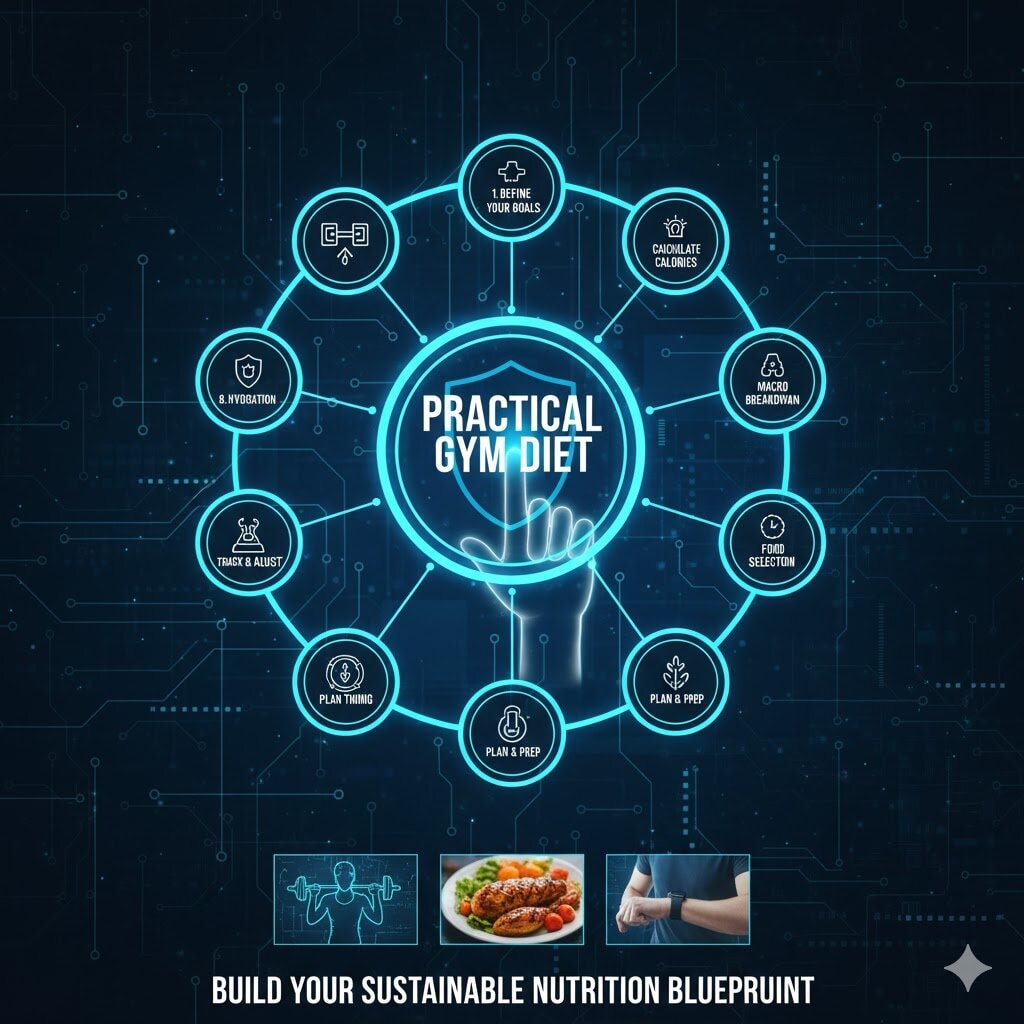
A practical gym diet balances how many calories you need with smart calorie intake choices so your body gets all the nutrients. It focuses on meal plan structure, protein intake, lean protein options, balanced meals, healthy fats, complex carbs and whole foods like brown rice.
These principles shape the formula you will use to build each step of your own diet.
1. Set Your Daily Calorie Target And Know How Many Calories You Need
Your calorie target depends on your weight, height, age, activity and goal. A small, steady deficit supports fat loss, while a slight surplus supports muscle gain. The aim is to give your body enough fuel to train well and still move in the direction you want.
How To Set It
-
Use a simple calculator or rough guide, for example body weight in kilos multiplied by 28 to 32 for many active people.
-
For fat loss, start with a small cut of 200 to 300 kcal below your maintenance level.
-
For muscle gain, keep a surplus of around 150 to 250 kcal above maintenance.
Simple Example
A 70 kilo lifter may sit around 2000 to 2202 kcal for maintenance. For fat loss, 1800 to 1900 kcal often works better than a sharp drop.
2. Fix Your Protein Intake First For Building Muscle
Protein intake drives muscle repair, recovery and muscle mass over time. Lean meats, grilled chicken, turkey breast, cottage cheese and other protein rich foods support training progress.
How To Fix It
-
Aim for around 1.6 to 2.0 grams of protein per kilo of body weight.
-
Spread protein across all meals.
-
Include dal, curd, paneer, eggs or chicken in each major meal.
Simple Example
A 70 kilo person targets 110 to 130 grams of protein daily through balanced meals and one high protein snack.
3. Add Carbs Around Your Workout
Carbohydrate rich food around workouts helps refill glycogen and keeps hard sessions smooth.
How To Place Them
-
Eat complex carbs 60 to 90 minutes before lifting.
-
Use simple carbs like fruit closer to training.
-
Pair post workout carbs with lean protein for recovery.
Simple Example
Poha before the gym and brown rice with dal after the gym supports energy and recovery.
4. Include Healthy Fats In Two Meals
Healthy fats support hormones, joint comfort and recovery without raising calories too sharply.
How To Use Them
-
Add one teaspoon of oil to cooking at each meal.
-
Keep nuts or seeds to one small serving per day.
-
Include fatty fish weekly if possible.
Simple Example
Olive oil in your sabzi and a handful of almonds later in the day cover your needs without excess.
5. Plan Three Core Meals And Two Snacks To Build A Simple Meal Plan
A predictable structure stabilises hunger and supports muscle growth.
Basic Daily Frame
-
Breakfast balanced with protein and carbs.
-
Lunch with roti or rice, dal and vegetables.
-
Dinner lighter in carbs and strong in protein.
-
Snacks from fruit, yoghurt or small protein sources.
Simple Example
Eggs at breakfast, rice and dal at lunch, paneer and vegetables for dinner with two small snacks.
6. Choose Simple Pre Workout Foods
Simple pre workout foods provide clean energy without heaviness.
Good Choices
-
Banana or apple.
-
Poha or upma eaten earlier.
-
Toast with peanut butter for morning trainers.
Simple Example
A banana 30 minutes before training lifts energy without slowing digestion.
7. Add A High Protein Post Workout Meal
This meal supports recovery, rebuilds muscle tissue and reduces soreness.
How To Build It
-
Combine protein with moderate carbs.
-
Keep fats low at this meal.
-
Use reliable, easy to prepare foods.
Simple Example
Grilled chicken with rice, or paneer bhurji with roti and salad.
8. Keep Five Staple Foods Always Stocked
Staples reduce last minute snacking and keep your diet stable on busy days.
Useful Staples To Keep On Hand
-
Brown rice or whole grains.
-
Eggs, paneer or chicken.
-
Potatoes or sweet potatoes.
-
Curd or greek yogurt.
-
Everyday vegetables like spinach and tomatoes.
Simple Example
With rice, dal, curd, eggs and vegetables at home, you can build a complete gym friendly meal anytime.
These steps turn gym nutrition into a predictable system built on calories, protein and structured meals. This makes it easier to understand how supplements actually support the plan, which is exactly what the next section covers.
Beyond Diet: 8 Smart Dietary Supplements That Every Gym Goer Benefits From

Dietary supplements help gym goers cover gaps when food alone cannot support recovery or long sessions. Options like whey protein powder and electrolyte mixes help keep the body hydrated and improve training quality.
This section now sets up how each supplement adds value depending on your fitness goal and training demands.
1. Whey Protein
Whey protein supports muscle growth, improves recovery and fills protein gaps when whole meals fall short. Its fast absorption helps muscle repair after training and pairs easily with foods like greek yogurt or cottage cheese to strengthen a high protein diet.
Best Use Cases
-
After strength training when you cannot eat a full meal soon.
-
As a quick snack to reach your daily protein target.
-
For people who struggle to chew through large protein portions.
2. Creatine Monohydrate
Creatine boosts strength output, supports muscle building and improves performance during repeated high effort sets. It works well in diets built around lean meats and whole foods and makes heavy sessions feel more sustainable over time.
Best Use Cases
-
For lifters who train with heavy weights or multiple sets.
-
During phases focused on strength or muscle gain.
-
For people who want more power without extra stimulants.
-
For guidance on structuring your meals to support your goals, consider reviewing this Indian Diet Food Chart: What to Eat for Each Meal of the Day.
3. Omega 3 Fish Oil
Omega 3 fish oil reduces inflammation, supports recovery and complements fatty fish in your meals. It helps maintain weight by supporting metabolic health and plays a stabilising role in joint comfort and training consistency.
Best Use Cases
-
When you rarely eat fatty fish like salmon or mackerel.
-
For lifters with regular joint soreness after sessions.
-
During intense training cycles where recovery feels slow.
4. Multivitamins
Multivitamins fill nutritional gaps when food groups become repetitive or limited. They support immune strength, energy production and daily muscle repair, especially for gym goers who train frequently and need reliable micronutrient coverage.
Best Use Cases
-
When your routine makes meal variety difficult.
-
During travel, exam time or busy work phases.
-
For people who often skip fruits and vegetables.
5. Vitamin D3
Vitamin D3 improves strength, supports hormone balance and aids muscle growth. Many gym goers remain deficient, which affects recovery and performance. Consistent intake enhances training quality and overall health stability.
Best Use Cases
-
For people who get little direct sunlight.
-
When lab tests show low vitamin D levels.
-
During periods of low mood and weak training drive.
6. Electrolyte Mix
Electrolytes keep the body hydrated during intense workouts and help maintain performance by preventing fatigue and cramps. They support clean energy without relying on too much sugar and work well during long sessions or hot conditions.
Best Use Cases
-
During long or high intensity workouts in warm weather.
-
For people who sweat heavily during training.
-
When you feel light cramps or dips in focus mid session.
7. BCAA
BCAAs support muscle repair and help reduce muscle breakdown during long aerobic exercise or fasted training. They assist with smoother recovery when paired with whole foods and lean meats, especially on high volume workout days.
Best Use Cases
-
For fasted cardio or early morning training.
-
During long sessions with many working sets.
-
When there is a long gap between workout and next meal.
8. Pre Workout Powder
Pre workout powder increases focus and intensity by supporting better energy output during training. It pairs well with simple pre workout foods and fuels more productive sessions without adding unnecessary heaviness to your stomach.
Best Use Cases
-
On days when you feel mentally flat but still want to train.
-
Before heavy leg sessions or big compound lifts.
-
For lifters who need help staying focused through long workouts.
Choosing Supplements Like A System, Not A Shortcut
These supplements work best when they sit on top of a solid diet, not instead of one.
Once food, calories and protein are in place, they become precise tools rather than expensive guesses, and the next section shows how common diet mistakes can still block progress even when the right products are in your stack.
Common Mistakes Gym Goers Make In Their Diet Plan
Many gym goers struggle because they eat too little protein, assume body weight alone guides progress, overuse peanut butter or skip pre workout nutrition. Small habits like this reduce the chance to reduce body fat or maintain steady weight loss.
This section now explains how each mistake blocks progress even when workouts are consistent.
1. Eating Too Little Protein
Eating too little protein slows muscle repair and limits muscle growth. Using lean meats, cottage cheese and other protein rich foods keeps strength stable and reduces soreness after training.
Example
A plate filled only with rice and sabzi leaves you hungry again in an hour, while adding dal or eggs keeps energy steady.
2. Training Hard But Undereating
Heavy training with low calorie intake reduces performance and muscle mass. The body needs enough whole foods to fuel lifts and maintain recovery.
Example
When calories stay too low for several days, workouts start feeling unusually heavy and motivation drops even with the same routine.
3. Overusing Peanut Butter
Peanut butter is healthy but calorie dense. A few extra spoons can quietly push daily calories much higher than expected.
Example
A small extra scoop adds nearly 100 calories, which can stall fat loss across the week without you noticing.
4. Skipping Pre Workout Food
Skipping pre workout food reduces strength output and makes sets feel heavier. Even fresh fruit or a light mushrooms snack gives clean energy without slowing digestion.
Example
Training on an empty stomach often leads to early fatigue, lower reps and weaker performance during compound lifts.
5. Not Tracking Weekend Eating
Weekend meals often carry hidden calories from social outings, desserts or takeout. These additions can balance out the calorie deficit you create during the week.
Example
Two restaurant meals and a dessert can cancel the progress built from five disciplined weekdays.
6. Taking Random Supplements
Random supplements increase cost without adding real value. Many gym goers replace essential meals with unproven products that do not support recovery.
Example
Buying three different powders often replaces actual meals, leaving the body under-fueled for proper training.
7. Copying Athlete Diets
Athlete diets require high volumes, expensive foods and extreme schedules not suited for regular gym goers.
Example
Trying to eat six massive meals like a bodybuilder leads to fatigue, bloating and unnecessary calorie intake.
8. Eating Zero Carbs After 6 PM
Cutting carbs at night weakens recovery and limits muscle growth. Whole grain carbs and starchy vegetables still matter after evening training sessions.
Example
Someone training at 7 pm still needs a balanced dinner with carbs and protein to rebuild strength for the next session.
Correcting these patterns makes your diet more predictable and improves your strength consistently, and the next section explains how tracking your progress gives a clearer picture of whether your nutrition is truly working.
Avoiding these mistakes becomes easier when you follow structured diet routines. You can explore more actionable weekly plans on My Balance Bite.
Progress Tracking Methods That Support Your Gym Diet Plan

Tracking fitness goals, monitoring weight loss, measuring body fat and watching energy levels helps you understand how your gym diet is performing. These metrics let you adjust eating patterns before progress slows down.
This section now sets the tone for how each tracking method supports smarter changes throughout your routine.
1. Scale Weight That Shows The Trend, Not The Day
Daily weight can move because of water, meal timing and digestion. The useful signal is the average across days, not one single reading.
-
Weigh yourself at the same time, ideally in the morning after using the washroom.
-
Write down numbers for at least four to five days each week.
-
Look at the weekly average instead of worrying about small jumps.
Example
If your daily readings move between 71.2 and 70.6 but the average drops from 71 to 70.8, the plan is working.
2. Body Measurements That Reflect Real Shape Change
Measurements around the waist, hips, chest, arms and thighs often show progress before the mirror does. They also react less to water shifts.
-
Use a soft measuring tape and measure at the same points each time.
-
Track once a week or once in two weeks, not daily.
-
Focus on waist and hip changes when fat loss is the goal.
Example
The scale may stay at 70 kilos while your waist drops from 34 to 33 inches, which shows clear fat loss and better shape.
3. Progress Photos For Visual Proof
Photos capture posture, muscle lines and fat loss in ways numbers cannot. They also show small changes that you may ignore in daily mirrors.
-
Take front, side and back photos under the same light each time.
-
Repeat every two to four weeks, not every day.
-
Wear similar clothes so the comparison stays clear.
Example
Side photos taken one month apart often reveal a flatter waist and better shoulder shape, even if weight change is small.
4. Strength And Performance Logs
Tracking what you lift shows whether your gym diet supports muscle and energy. If strength rises over time, your intake likely matches your training.
-
Record sets, reps and weights for key lifts each session.
-
Note how you feel during the last sets, not just the numbers.
-
Watch for gradual progress over weeks, not sudden spikes.
Example
If your squat moves from 40 kilos for 8 reps to 50 kilos for 8 reps in two months, your fuel and recovery are aligned.
5. Energy, Sleep And Recovery Notes
Your energy, sleep quality and soreness levels show how well your body is handling the plan. These signals matter as much as weight and numbers.
-
Rate daily energy on a simple scale from 1 to 5.
-
Note sleep hours and how rested you feel on waking.
-
Watch how long heavy soreness lasts after big sessions.
Example
If you sleep 7 hours, feel rested and soreness fades within two days, your diet and training balance is usually healthy.
Putting All Tracking Methods Together
When scale, measurements, strength and energy all point in the same direction, you can judge your gym diet with more confidence. If one marker drifts, you know where to adjust instead of guessing.
These tracking habits show whether your current plan is only changing your size or also improving deeper health, which is exactly what the next section explores.
Long Term Health Benefits of Following a Balanced Gym Diet Plan
A balanced gym diet improves several health benefits over time. Muscle recovery becomes faster, repair muscles becomes easier and overall heart health improves naturally as fat reduces. Steady nutrition supports energy and strength that lasts beyond training phases.
This section now opens the view into how these long term shifts support a healthier body.
1. Better Metabolic Function
Better metabolic function comes from whole foods, balanced meals and enough protein to preserve muscle mass. Steady eating supports long term metabolic health and gives your body the structure it needs to perform well.
-
Regular protein intake prevents muscle loss while you lose fat.
-
Whole grains and vegetables give fibre that supports blood sugar control.
-
Consistent meal timing reduces long gaps that stress your metabolism.
Example
Someone who moves from random snacking to three balanced meals and two small snacks often feels fewer afternoon crashes within a few weeks.
2. Improved Hormone Balance
Healthy fats, lean meats and nutrient dense foods support hormone stability, improve recovery and help the body handle training loads more efficiently. Balanced intake keeps your system running smoothly.
-
Fats from nuts, seeds and fatty fish support hormone production.
-
Adequate calories prevent stress hormones from staying elevated.
-
Regular meals reduce wild swings in hunger hormones.
Example
After a month of steady eating with enough healthy fats, many people notice better sleep and more even moods across the day.
3. Stronger Immune System
Strong immunity comes from food groups that supply all the nutrients needed for daily repair. Consistent intake of whole foods and fresh ingredients helps your body stay resilient under training stress.
-
Fruits and vegetables provide antioxidants that protect cells.
-
Protein supports the repair of tissues after hard sessions.
-
Whole grains and pulses give minerals that back immune function.
Example
Lifters who move from frequent junk food to mostly home cooked meals often see fewer small colds across the training year.
4. Reduced Inflammation
Fatty fish, olive oil and whole foods help reduce inflammation after intense workouts. These foods support smoother recovery and reduce joint discomfort over time.
-
Omega 3 fats from fish oil or fish reduce soreness signals.
-
Cutting excess sugar and processed oils calms background inflammation.
-
Vegetables add compounds that support joint health and tissue repair.
Example
Someone who replaces daily fried snacks with nuts and grilled fish may feel less knee or shoulder stiffness after heavy leg or push days.
5. Enhanced Muscle Recovery
Muscle recovery improves when meals include protein rich foods like grilled chicken breast, turkey breast or cottage cheese. These foods help muscle repair and allow you to train again without excessive soreness.
-
Protein after training gives muscles the building blocks to rebuild.
-
Carbs alongside protein refill glycogen for the next workout.
-
Enough total calories stop the body from breaking down muscle.
Example
Switching from only tea and biscuits after the gym to curd with fruit or a paneer wrap often cuts next day soreness noticeably.
6. Stable Energy Levels
Stable energy comes from complex carbs, balanced meals and steady calorie intake. These habits support muscle building and keep your daily rhythm predictable without sudden energy crashes.
-
Complex carbs release energy slowly instead of flooding the system.
-
Protein and fats help meals last longer in your stomach.
-
Regular eating windows prevent intense hunger spikes.
Example
People who shift from sugary breakfasts to oats with nuts and fruit usually report steady focus till lunch instead of a mid morning slump.
7. Lower Long Term Body Fat
Lower long term body fat develops through aerobic exercise, consistent fat loss habits and reliable protein intake. These patterns prevent rebound weight and support gradual improvement.
-
Moderate calorie deficits reduce fat without harming muscle.
-
Aerobic exercise supports heart health and extra calorie burn.
-
Ongoing protein intake protects lean mass as the scale drops.
Example
Someone who loses five kilos over three to four months with this approach often keeps it off far longer than with a crash diet.
8. Improved Heart Health
Improved heart health comes from whole foods, fatty fish and nutrient dense choices that support circulation, metabolism and overall wellbeing. These habits build long lasting resilience.
-
Less trans fat and deep fried food lowers strain on blood vessels.
-
More fibre from fruits, vegetables and pulses supports cholesterol control.
-
Regular training plus clean eating keeps blood pressure in a healthier range.
Example
Over time, many people see better lipid reports and easier breathing on stairs when they pair gym work with a balanced plate.
These long term effects show that a balanced gym diet reshapes more than your mirror, it strengthens every major system that carries you through daily life.
Conclusion
A gym nutrition plan earns trust when it delivers the same thing to everyone who follows it, clearer energy, steady progress and a body that recovers well enough to train again tomorrow. This plan gives you that structure without complexity, and shows exactly how food can support every rep you put in.
Your next step is simple, pick one part of the plan, pre workout food, post workout habits or daily protein, and lock it in for the week ahead. Once that feels natural, add the next piece. Small steps done consistently turn into the long term changes that athletes rely on every day.
If you want to build a gym diet that fits your lifestyle, explore more simplified nutrition guides on My Balance Bite.




Leave a comment
Translation missing: en.blogs.comments.discription