

Overeating rarely begins with hunger, it begins with cues that make the body reach for food before it needs it. These cues build into habits, and those habits make eating feel automatic instead of deliberate.
A weight loss diet chart works only when it reduces those cues and keeps you full with simple, steady meals. When each meal supports calmer appetite patterns, healthy weight loss becomes easier to sustain.
You’ll see how a structured Indian routine can help you regain control of your eating rhythm and create balance without pressure.
What Makes People Overeat And Struggle With Healthy Eating
Processed foods, refined carbs, refined grains and sugary drinks make meals easier to overeat, especially when white bread and fried foods become daily choices.
“Hunger is not a signal of emptiness, it is a signal of rhythm.” — Dr. Ethan Lazarus, Obesity Medicine Specialist
Poor sleep increases cravings, stress pushes mindless snacking and a chaotic daily routine leads to extra calories and more calories than the body truly needs. This sets the base for understanding how these patterns take shape inside everyday habits.
Key patterns to notice
-
Snacks that come in packets and are eaten without serving them on a plate
-
Sugary drinks that slip into the day as tea, coffee, juices or sodas
-
White bread or bakery items that feel light but add up in extra calories
-
Meals built around refined carbs that leave you hungry soon after
Example
-
Breakfast of white bread with jam and tea may feel light, but the refined carbs and sugar push you toward mid-morning hunger and more snacking.
Hunger Patterns That Push You To Eat More
Extra calories and more calories often come from habits, not real hunger. When gaps between meals are long or meals lack fibre and protein, the body pushes hard for quick energy. Over time this pattern leads to weight gain even if you think you eat only a few “big” meals.
Signals that the pattern is off
-
Strong evening hunger after a light or delayed lunch
-
Feeling “starving” and eating very fast at the first meal of the day
-
Reaching for snacks while cooking because the main meal is late
-
Regularly finishing the plate then still wanting something “small” after
Example
-
Skipping breakfast, eating a heavy lunch and then overeating at dinner sets a cycle where the body keeps demanding compensation for missed structure.
Emotional Eating And Mindless Snacking
Poor sleep increases cravings and poor sleep makes it harder to control reactions to food. When tiredness and stress combine, food becomes an easy way to change how the body feels in the moment. If manage stress is not part of the routine, emotional eating slowly turns into the default response.
“Most overeating happens when the brain seeks comfort, not calories.” — Dr. Susan Albers, Clinical Psychologist & Eating Behavior Expert
Common emotional cues
-
Stress at work leading to constant nibbling in front of a screen
-
Boredom in the evening making the kitchen feel like the only activity
-
Tiredness after a long day pushing you toward “reward” foods
-
Low mood making sugary snacks feel like a quick lift
Example
-
A stressful meeting ends, and the hand goes straight to biscuits or sweets, not because of hunger but because the brain wants comfort and distraction.
How Indian Diet Habits Shape Eating Behaviour
Indian cuisine offers rich flavours, but many daily dishes make it easy to overeat when fried foods and refined grains stay at the centre of the plate. When you rarely avoid foods that are deep fried or heavy, the body gets used to large, energy-dense meals and feels “less satisfied” with lighter options.
Habit patterns to watch
-
Frequent pakoras, samosas or fried snacks with tea in the evening
-
Heavy use of refined grains like maida in everyday breads and snacks
-
Treating rich festival or weekend dishes as normal weekday meals
-
Serving size decided by emotion or culture, not by appetite
Example
-
Regularly pairing fried snacks with sweet tea in the evening combines high fat and sugar, which makes overeating feel normal and resets what “enough” looks like.
These patterns explain why overeating feels built into daily life rather than like a single choice, and they lead directly into the health risks that show up when this cycle continues.
“Get a Free Nutrition Assessment Based On Your Eating Patterns”
Risks of Overeating
Overeating quietly affects overall health by raising the chances of heart disease, increasing water retention and creating long term success issues when the body stays in repeated calorie surplus cycles. It also weakens the body’s ability to recover and maintain balance across multiple systems.
This helps frame the risks you need to watch closely inside this section.
1. Increased Blood Sugar Spikes
Blood sugar rises faster when meals are large, unbalanced or filled with refined choices. These spikes increase appetite and make healthy weight loss harder to maintain. High fibre foods, portion control and avoiding processed foods help stabilise glucose patterns and reduce the cycle that pushes you toward overeating.
Signs that show up
-
Hunger returning too soon after meals
-
Cravings for sweet snacks
-
Feeling shaky between meals
2. Higher Blood Pressure Levels
Heavy meals create fluid shifts that increase blood pressure and strain the circulatory system. These changes support weight gain because the body works harder to find balance. High fibre meals and low fat choices help keep numbers steady and reduce this pressure across the day.
3. Faster Fat Gain And Slower Fat Loss
Extra intake pushes the body toward storage instead of burning. This slows progress and increases long term weight gain risk. Whole wheat, brown rice and high fibre foods support steadier appetite and help restore more efficient fat use.
4. Poor Digestion And Bloating
Large portions slow digestion and create heaviness because the stomach works beyond its comfort range. High fibre foods, portion control and avoiding foods that irritate your gut help clear this sluggishness and reduce bloating.
5. Low Energy And Midday Crashes
Heavy meals cause quick energy rises followed by steep drops. This leads to afternoon tiredness and difficulty staying focused. Whole wheat or brown rice provides steadier energy, and low fat meals help prevent these midday crashes.
6. Higher Risk Of Emotional Eating Cycles
Stress and poor habits make emotional eating easier. Food becomes a response to feeling rather than hunger. Managing stress, staying consistent with routines and choosing high fibre snacks help break this cycle and bring eating patterns back under control.
7. Sleep Disruptions And Night Hunger
Eating too much late in the day keeps digestion active when the body needs rest. This disrupts sleep and increases next-day cravings. Portion control, low fat meals and steady mealtimes help support deeper rest and reduce night hunger.
8. Increased Stress Hormones
When digestive load increases, stress hormones rise and cravings strengthen. This makes healthy weight loss slower. High fibre meals, balanced portions and reduced processed foods help calm these internal signals and support more stable appetite control.
9. Reduced Metabolism Over Time
Consistent overeating slows metabolism because the body adapts to higher intake by reducing energy use. This makes fat loss harder and promotes future weight gain. Whole wheat, brown rice and low fat meals help support healthier metabolic balance.
10. Greater Risk Of Long Term Health Conditions
Overeating affects multiple systems, from digestion to cardiovascular health. These changes increase long term risks connected to chronic disease and inflammation. High fibre foods, low fat meals and solid portion control help protect daily health and keep these risks in check.
These risks reveal why controlling intake matters for long term balance, and they naturally lead into understanding how many calories your body actually needs for safe fat loss.
How Many Calories Overeaters Need For Safe Fat Loss
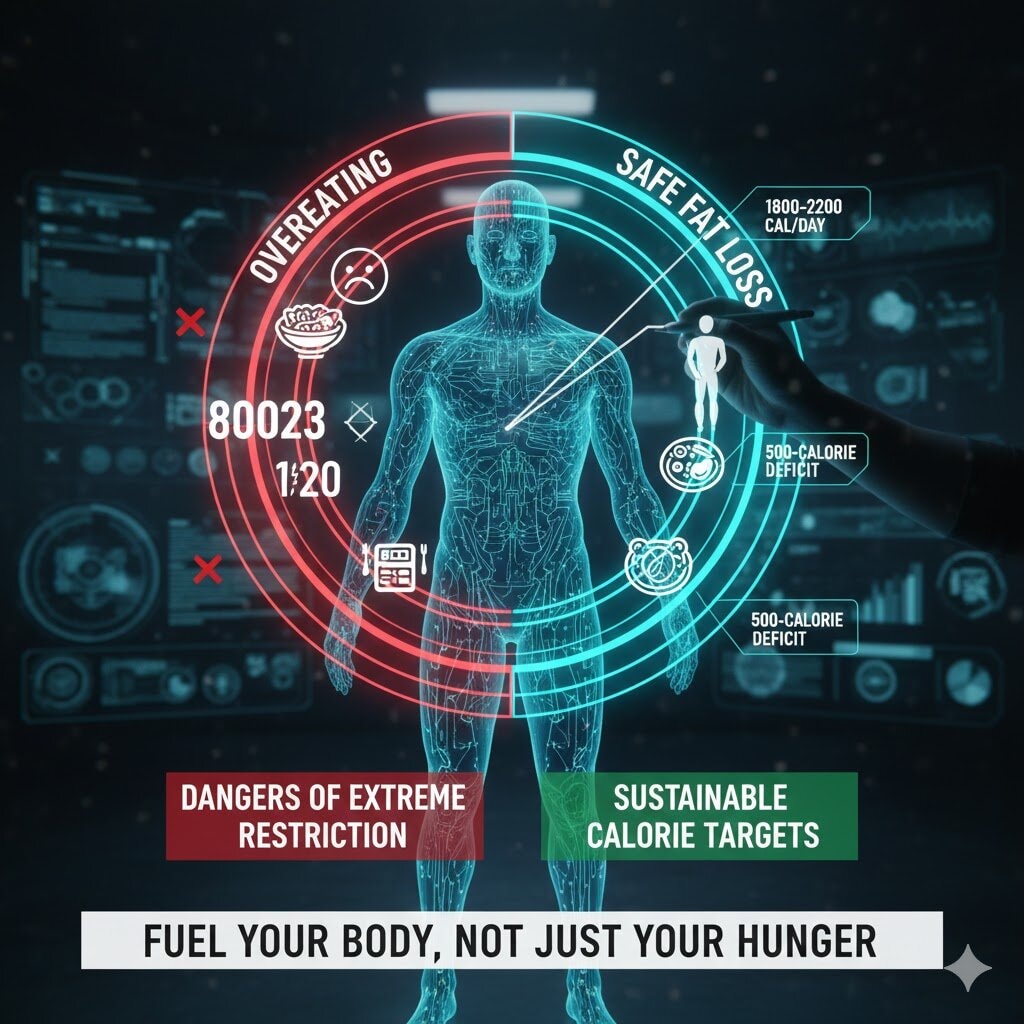
Healthy weight goals depend on understanding how many calories you need without chasing quick weight loss, quick fixes or habits that break steady progress. People who overeat often misjudge portions, which disconnects them from their indian weight loss diet and slows long term adjustment.
A simple way to think about targets
-
Smaller body size and low activity: usually around 1,300 to 1,500 calories
-
Medium body size with desk work: usually around 1,500 to 1,800 calories
-
Larger body size or more active days: usually around 1,800 to 2,000 calories
Example
-
Someone with a desk job who often overeats at night may begin near 1,600 calories, then adjust slightly based on hunger, energy and weekly progress.
Portion Guide For Common Indian Meals
An indian weight loss diet works best when portion sizes match actual needs rather than habits. Many plates appear balanced but contain more food than required for steady fat loss. Following structured portion principles helps overeaters reconnect with hunger signals and simplify daily choices.
Simple portion cues for main foods
-
Rice or brown rice: about 1 small katori per meal
-
Roti: 1 to 2 medium whole wheat rotis instead of 3 or 4
-
Dal or lentils: 1 medium katori for protein and fibre
-
Sabzi or vegetables: at least 1 to 2 katoris to build volume
-
Curd or yogurt: ½ to 1 katori for fullness and comfort
How this helps an overeater
-
The plate looks full because of vegetables, not only carbs
-
Portions are decided before eating, not while refilling
-
The stomach learns what a normal serving looks like again
How To Prevent Evening Cravings With Smart Calories
Steady progress comes from distributing calories in a way that keeps you satisfied and reduces late-night urges. Quick fixes and quick weight loss tricks usually amplify cravings for overeaters. When calories are balanced properly, cravings ease naturally and evening eating becomes easier to manage.
Practical ways to spread calories
-
Eat a complete lunch with protein, whole grains and vegetables
-
Avoid very small breakfasts that trigger strong evening hunger
-
Keep a planned evening snack, not random grazing
-
Save a small, planned calorie buffer for late evening if needed
Example
-
A 1,600 calorie day can look like 350 at breakfast, 500 at lunch, 200 to 250 as an evening snack and 450 to 500 at dinner, which leaves less room for unplanned overeating.
Once calories and portions feel clear, the next step is turning these numbers into real meals. The following section builds an Indian diet chart that helps overeaters lose weight and stay full without feeling restricted.
“Talk To A Nutritionist Who Understands Indian Eating Habits”
Indian Diet Chart For Weight Loss That Helps Overeaters Lose Weight And Stay Full
An effective indian diet plan blends whole grains, balanced meals, fresh fruits, vegetables, veggies and fibre rich foods with whole foods and protein rich foods. Using olive oil for healthy fats, adding stir fried tofu, sautéed veggies and simple meal plans gives essential vitamins and essential nutrients without heaviness. Green tea and roasted chana bring smart structure.
“See How A Balanced Indian Diet Looks When Experts Design It”
Chart 1: Indian Diet Chart Designed To Calm Hunger Spikes
(Focus: Stopping overeating through steady fullness)
| Meal Time | What To Eat | Why It Helps Overeaters |
|---|---|---|
| Early Morning | Green tea | Calms early cravings and sets appetite rhythm. |
| Breakfast | 1 bowl vegetable poha or dal chilla | Fibre rich foods slow digestion and prevent strong mid-morning hunger. |
| Mid-Morning | Fresh fruits like apple or orange | Natural sweetness reduces cravings that push overeating. |
| Lunch | 1 cup brown rice or 2 whole wheat rotis, dal, large bowl vegetables | Balanced meals steady blood sugar and reduce the urge to refill. |
| Evening Snack | Roasted chana | Crunch and protein reduce emotional snacking. |
| Dinner | Stir fried tofu or paneer with sautéed veggies | Light but satisfying, prevents large late-night meals. |
| Late Night (Optional) | ½ cup curd | Helps stop unnecessary snacking before sleep. |
Chart 2: Indian Diet Plan To Reduce Portion Size Naturally
(Focus: Training the stomach to feel full on less—see this 1000 calories diet plan (Indian style) for practical meal ideas)
| Meal Time | What To Eat | Why It Helps Overeaters |
|---|---|---|
| Early Morning | Warm lemon water or green tea | Clears early appetite spikes without calories. |
| Breakfast | Oats with fresh fruits | High fibre volume fills the stomach without heaviness. |
| Mid-Morning | 1 small bowl papaya | Smooth, light and prevents grazing. |
| Lunch | 2 whole wheat rotis, dal, 2 bowls vegetables | Large veggie volume reduces rice or roti dependence. |
| Evening Snack | Buttermilk or roasted chana | Keeps appetite stable between lunch and dinner. |
| Dinner | Paneer bhurji or tofu, sautéed veggies, 1 small whole grain portion | Slow eating, simple flavours and small grain portions reduce overeating. |
Chart 3: Simplest Anti-Overeating Routine
(Focus: Predictable structure for people who overeat due to chaos or irregular timing)
| Meal Time | What To Eat | Why It Helps Overeaters |
|---|---|---|
| Early Morning | Green tea | Brings control before the first meal. |
| Breakfast | Moong dal chilla or idli with sambar | Steady fullness without salt or oil triggers. |
| Mid-Morning | 1 banana | Prevents the hunger dip that drives overeating at lunch. |
| Lunch | Brown rice, dal, vegetables | Balanced, predictable and easy to repeat daily. |
| Evening Snack | Roasted chana | Targeted snack that blocks evening binge patterns. |
| Dinner | Stir fried tofu or paneer with sautéed veggies | Light dinner that stops the cycle of heavy night eating. |
When meals are built around steady fullness, simple structure and high fibre foods, overeating patterns weaken naturally. The next part focuses on the habits that strengthen this control beyond food choices alone.
Beyond Diet Plans: Tips To Control Overeating

Healthy habits go beyond food by improving overall health, long term success and day to day consistency. Strength training, regular exercise and staying hydrated help manage energy, while routines that support emotional balance reduce overeating triggers during your weight loss journey.
“Consistency reshapes appetite faster than restriction ever can.” — Dr. Michelle Harvie, Weight Management Researcher
This prepares you for the behaviour-focused strategies covered within this section.
1. Identify Your Emotional Eating Triggers
Emotional triggers often lead to overeating even when the body does not need extra energy. Recognising patterns connected to stress, tiredness or habit helps reduce weight gain over time.
Common emotional triggers to watch
-
Arguments, work pressure or conflict
-
Boredom in the evening with nothing planned
-
Reward eating after a long or tiring day
When you name the trigger, it becomes easier to pause and separate hunger from emotion before you reach for food.
2. Set A Consistent Daily Sleep Routine
Poor sleep increases cravings and disrupts appetite control, which makes overeating more likely. A consistent sleep schedule supports healthy weight loss by balancing hormones and reducing late night hunger.
Helpful anchors for better sleep
-
Fixed sleep and wake times on most days
-
A simple wind down routine without screens
-
Light dinners that do not sit heavy at night
Staying consistent with bedtime routines also reduces mindless snacking that often starts when you feel tired, not hungry.
3. Create A Stress Management Practice
Stress is one of the biggest drivers of overeating because the body seeks quick comfort. When you manage stress intentionally, cravings reduce and eating patterns feel easier to control.
Simple ways to manage stress
-
Short walks between tasks
-
Breathing exercises during tense moments
-
Talking through worries instead of eating through them
These practices steady your mood and lower the pull toward food as the first response to difficult feelings.
4. Take Short Breaks During Cravings
Cravings fade when you pause before eating, especially when they are emotional rather than physical. Short breaks give the body time to reset and test whether hunger is real.
Useful pause actions
-
Drink a glass of water and wait ten minutes
-
Change the room or task you are in
-
Ask yourself what you felt just before the craving started
This small habit helps you avoid foods that trigger overeating and prevents extra calories that do not match your needs.
5. Use Journaling To Track Hunger Patterns
Journaling reveals when overeating links more to mood, time or place than to hunger. It also shows which choices repeatedly lead to weight gain over time.
What to track in a simple log
-
Time you ate and how hungry you felt
-
What you ate and how full you felt after
-
What you were feeling or doing just before eating
These notes make patterns visible and help you shape healthier habits and clearer weight loss goals.
6. Build A Pre-Meal Mindfulness Habit
Mindfulness before meals slows eating speed and sharpens your sense of true hunger. This reduces overeating and supports healthy weight loss without strict rules.
You can try
-
Taking three deep breaths before the first bite
-
Noticing smell, colour and texture for a moment
-
Rating your hunger on a simple scale from one to ten
When you stay consistent with mindful habits, meals feel calmer and emotional eating loses much of its force.
7. Create A Daily Movement Routine
Movement supports appetite control, improves digestion and balances mood. A regular routine also lowers the risk of weight gain by using energy more efficiently.
Simple movement ideas
-
A ten to fifteen minute walk after meals
-
Light stretching during long sitting periods
-
Two to three short exercise blocks across the day
When movement becomes part of daily life, cravings feel less intense and food decisions become easier.
8. Set Clear Work And Meal Boundaries
Work distractions often lead to overeating because hunger cues get ignored until they are very strong. Boundaries prevent this build up and reduce mindless snacking.
Helpful boundary shifts
-
Fixed meal breaks away from the work desk
-
No eating during calls, meetings or deadlines
-
A simple snack plan instead of grazing all day
When meals have their own space and time, daily eating feels more stable and easier to manage.
9. Use Environment Cues To Limit Snacking
Your environment strongly shapes whether you overeat. When snacks are always visible, the urge to reach for them rises even without hunger.
Smart environment changes
-
Keep high fibre snacks and whole foods within reach
-
Store heavy treats in closed containers or higher shelves
-
Avoid keeping large family packs at your work table
These cues guide your hand toward better choices and reduce the number of decisions you fight through each day.
10. Keep Your Eating Zone Free Of Screens
Screens distract you from fullness cues and make it easy to keep eating without noticing. Eating without screens brings attention back to taste, pace and portion.
Small shifts that help
-
No phones, laptops or television at the main eating place
-
Finish the meal before returning to messages or shows
-
Sit at a table rather than eating in bed or on a sofa
This simple boundary supports natural portion control and steadier progress without extra effort.
11. Practice Portion Awareness With Visual Cues
Visual cues make portion control easier, especially when foods are calorie dense. Smaller plates, clear serving sizes and balanced layouts give the body a steady reference point.
Practical visual cues
-
Use smaller plates or katoris for main meals
-
Fill half the plate with vegetables before you serve other items
-
Decide how much you will eat brown rice, roti or sabzi before you start
Pairing these cues with high fibre foods and whole grains supports healthy weight loss and helps you stay consistent with better choices.
FAQs
1. How Do Stress Hormones Influence Hunger Even When You Are Not Overeating?
Stress hormones like cortisol make the body seek quick energy, which increases cravings even when you are not physically hungry.
2. Can Light Daily Activity Reduce Cravings Even If You Are Not Following A Structured Diet Plan?
Yes. Light movement steadies appetite, reduces emotional snacking and helps regulate hunger throughout the day.
3. How Does Drinking Enough Water Affect Hunger Signals Throughout The Day?
Hydration prevents thirst from being mistaken for hunger and creates a mild fullness that reduces unnecessary snacking.
4. Can Adding Chia Seeds To Your Routine Help Improve Fullness Levels Naturally?
Yes. Chia seeds absorb water, slow digestion and keep the stomach fuller for longer, which reduces between-meal hunger.
5. What Role Do Weekend Routines Play In Preventing Sudden Craving Spikes?
Stable weekend routines keep sleep and meal timings predictable, which prevents sudden cravings and overeating at the start of the week.
Conclusion
A diet chart works only when it brings order to your hunger, steadies your routine and helps you choose food with intention instead of impulse. When each meal supports a calmer rhythm, overeating loses its grip and your day begins to feel more predictable.
Your next step is simple. Follow the structure, stay consistent with the habits that keep appetite stable and let your eating pattern shift at a pace your body can trust.
“Begin Your Balanced Eating Journey With MyBalanceBite”




Leave a comment
Translation missing: en.blogs.comments.discription