

A single week of meals can be more powerful than random dieting when it adapts to your body’s needs. A flexible routine keeps energy steady and makes healthy eating easier to follow.
This one weight loss diet plan adjusts naturally to different health conditions and personal goals, letting you stay consistent without feeling restricted.
Small, practical changes each day create habits that support long-term results and make the week feel manageable, even for busy schedules.
Why Not Fixing Your Weekly Diet Structure Slows Fat Loss?
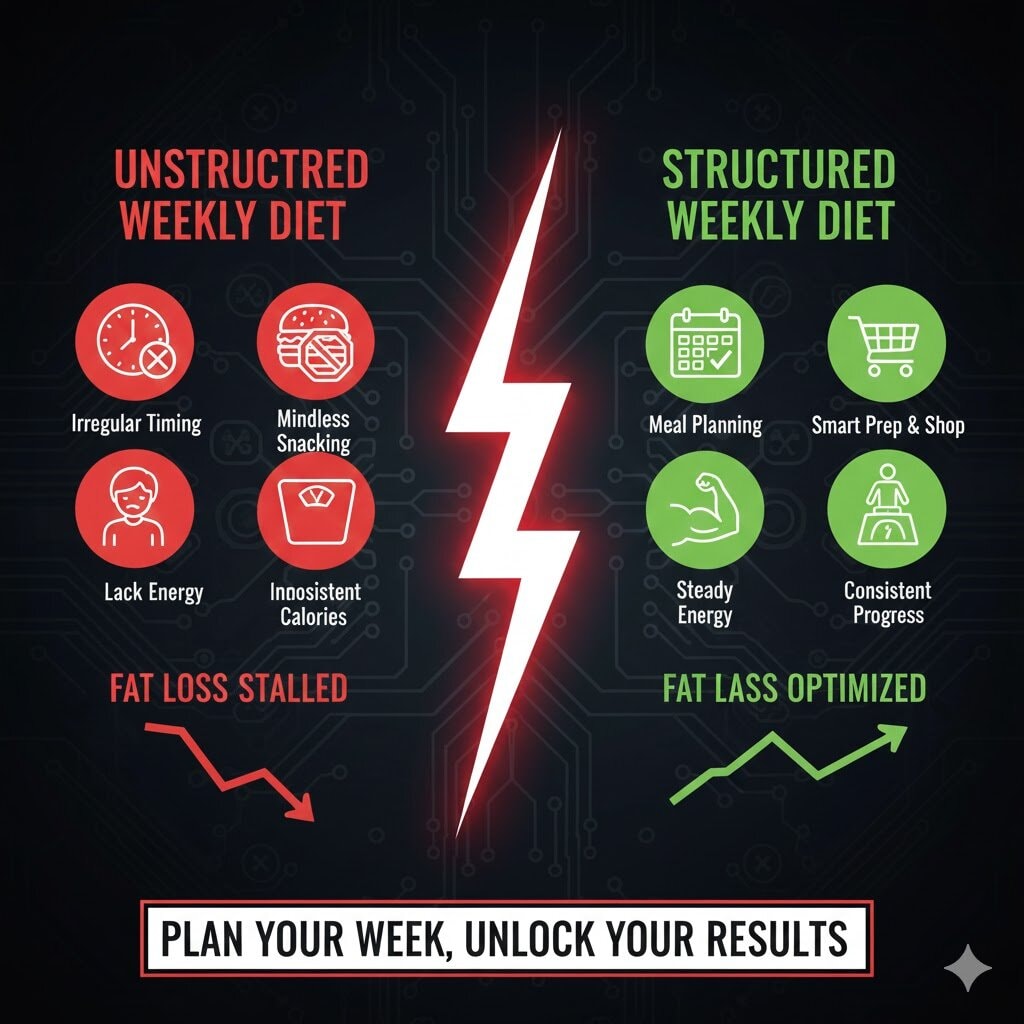
A weak weekly routine makes fat loss unpredictable because processed foods, refined carbohydrates, refined grains and added sugars raise hunger and encourage water retention.
These choices push the body toward short term weight loss that quickly reverses, especially when cravings trigger a quick fix mindset. Understanding this slowdown helps you see why weekly structure shapes real progress.
Key factors that slow fat loss include:
-
Irregular meal timing: Skipping or delaying meals spikes hunger and reduces energy.
-
High processed food intake: Refined carbs and sugars lead to water retention and quick weight rebound.
-
Inconsistent portion control: Uneven portions trigger cravings and disrupt fat-burning patterns.
Example:
Someone following a random diet may lose 1–2 kg quickly but regains it within a week due to skipped meals and impulsive snacking on refined foods.
Building a structured weekly routine sets the foundation for energy stability and predictable fat loss, which naturally leads into a practical one-week Indian diet plan that aligns meals with these principles
One Week Indian Diet Plan for Weight Loss
A one week indian diet plan works well because familiar indian cuisine blends a meal plan with balanced diet principles, steady complex carbohydrates and simple routines people can repeat. These elements keep energy stable and make the plan feel practical for regular use.
Seeing how each food fits into the week creates a stronger foundation for weight loss.
| Day | Meal | What To Eat | Portion / Measurement | Approx. Calories |
|---|---|---|---|---|
| Monday | Breakfast | Moong dal chilla with mint chutney | 2 chillas + 2 tbsp chutney | ~300 kcal |
| Mid-Morning | 1 banana | 1 medium | ~90 kcal | |
| Lunch | Brown rice, dal, mixed vegetable sabzi, salad | 1 cup rice + 1 cup dal + 1 cup sabzi + salad | ~450 kcal | |
| Evening Snack | Roasted chana | 1/2 cup | ~150 kcal | |
| Dinner | Grilled paneer with sautéed vegetables | 150 g paneer + 1 cup vegetables | ~400 kcal | |
| Tuesday | Breakfast | Poha with peanuts | 1 plate | ~320 kcal |
| Mid-Morning | 1 apple | 1 medium | ~80 kcal | |
| Lunch | Whole wheat roti, dal, vegetable sabzi, salad | 2 rotis + 1 cup dal + 1 cup sabzi + salad | ~450 kcal | |
| Evening Snack | Buttermilk | 1 glass | ~50 kcal | |
| Dinner | Grilled chicken with steamed vegetables | 150 g chicken + 1 cup vegetables | ~400 kcal | |
| Wednesday | Breakfast | Vegetable upma | 1 plate | ~300 kcal |
| Mid-Morning | 1 orange | 1 medium | ~60 kcal | |
| Lunch | Brown rice, rajma, vegetable sabzi, salad | 1 cup rice + 1 cup rajma + 1 cup sabzi + salad | ~450 kcal | |
| Evening Snack | Greek yogurt | 1 cup | ~120 kcal | |
| Dinner | Grilled fish with sautéed vegetables | 150 g fish + 1 cup vegetables | ~400 kcal | |
| Thursday | Breakfast | Idli with sambar | 2 idlis + 1 cup sambar | ~320 kcal |
| Mid-Morning | 1 pear | 1 medium | ~80 kcal | |
| Lunch | Whole wheat roti, chole, mixed vegetable sabzi | 2 rotis + 1 cup chole + 1 cup sabzi | ~450 kcal | |
| Evening Snack | Green tea with roasted almonds | 1 cup + 10 almonds | ~120 kcal | |
| Dinner | Paneer tikka with salad | 150 g paneer + salad | ~400 kcal | |
| Friday | Breakfast | Besan chilla with vegetables | 2 chillas | ~300 kcal |
| Mid-Morning | 1 banana | 1 medium | ~90 kcal | |
| Lunch | Brown rice, moong dal, vegetable sabzi, salad | 1 cup rice + 1 cup dal + 1 cup sabzi + salad | ~450 kcal | |
| Evening Snack | Buttermilk | 1 glass | ~50 kcal | |
| Dinner | Grilled chicken with stir-fried vegetables | 150 g chicken + 1 cup vegetables | ~400 kcal | |
| Saturday | Breakfast | Vegetable upma | 1 plate | ~300 kcal |
| Mid-Morning | 1 apple | 1 medium | ~90 kcal | |
| Lunch | Whole wheat roti, dal, vegetable sabzi, salad | 2 rotis + 1 cup dal + 1 cup sabzi + salad | ~450 kcal | |
| Evening Snack | Roasted chana | 1/2 cup | ~150 kcal | |
| Dinner | Grilled fish with sautéed vegetables | 150 g fish + 1 cup vegetables | ~400 kcal | |
| Sunday | Breakfast | Poha with peanuts | 1 plate | ~320 kcal |
| Mid-Morning | 1 orange | 1 medium | ~60 kcal | |
| Lunch | Brown rice, rajma, vegetable sabzi, salad | 1 cup rice + 1 cup rajma + 1 cup sabzi + salad | ~450 kcal | |
| Evening Snack | Greek yogurt | 1 cup | ~120 kcal | |
| Dinner | Paneer tikka with salad | 150 g paneer + salad | ~400 kcal |
This one-week Indian diet plan balances familiar flavors with structured meals, making it easier to follow while maintaining energy and nutrition. When each food choice is mapped to the day and portion, habits form naturally, supporting consistent weight loss and long-term health.
With this foundation, creating a shopping list and maintaining a healthy eating framework becomes effortless, allowing the week to run smoothly while meeting personal health goals.
Weekly Shopping List for Easy Meal Prep
A strong weekly routine starts with a practical list of food items that cover food groups, essential nutrients, whole grains and simple vegetables like green peas. Planning this way reduces confusion during the week and makes meals predictable without feeling repetitive.
Once your list is structured well, the cooking routine becomes easier to maintain.
Essential Shopping List for the Week
-
Whole grains: Brown rice, whole wheat roti flour, oats
-
Legumes & pulses: Moong dal, chole, rajma, roasted chana
-
Vegetables: Green peas, spinach, carrots, bell peppers, zucchini
-
Fruits: Banana, apple, orange, pear
-
Proteins: Paneer, grilled chicken, fish, eggs
-
Healthy fats: Olive oil, nuts, seeds
-
Beverages: Green tea, buttermilk
-
Spices & condiments: Turmeric, cumin, coriander, mint chutney
Example:
On the third day, a mix of brown rice, moong dal, and sautéed vegetables ensures energy remains stable while keeping the meal satisfying and aligned with your goals.
Note from a registered dietitian:
Balancing portion sizes and including high-fiber foods helps manage appetite and supports healthy blood pressure for those who need it.
Organizing your weekly shopping list this way saves time, reduces decision fatigue, and ensures every meal contributes to your fat loss plan. With the list ready, you can now move into building a healthy eating framework that turns these ingredients into predictable, sustainable habits.
Healthy Eating Framework to Maintain a Healthy Weight
Healthy eating becomes easier when you understand how healthy fats, selecting healthy foods, avoiding foods that slow progress and adding more fruits shape sustainable weight loss. These choices support a healthy weight without forcing restrictive habits that rarely last.
A clear framework lets your meals guide you rather than overwhelm you.
A clear framework lets your meals guide you rather than overwhelm you. Following this approach aligns perfectly with weight loss goals and ensures consistency throughout the week.
Core Principles of the Framework
-
Include healthy fats: Olive oil, nuts, and seeds provide satiety and support heart health.
-
Focus on complex carbohydrates: Options like brown rice, whole wheat roti, and oats stabilize energy.
-
Prioritize fruits and vegetables: High in fiber and nutrients, they improve digestion and reduce cravings.
-
Avoid foods that hinder progress: Processed snacks, fried foods, and refined sugars can slow fat loss and disrupt blood sugar.
-
Portion control and balance: Combine proteins, carbs, and fats in each meal to prevent overeating and support steady energy.
Example:
A breakfast of oats cooked in low-fat milk with a handful of nuts and a small banana keeps energy steady, supports fat metabolism, and reduces the likelihood of snacking before lunch.
Note for high blood pressure:
Including leafy greens, light proteins, and limiting added salt helps regulate blood pressure while supporting sustainable weight loss.
When this framework is applied consistently, each meal becomes a tool for steady progress rather than a source of stress. Once the framework is clear, the next step is understanding how this diet can be tailored to specific health conditions to make it even more effective.
How This Weight Loss Diet Fits Different Health Conditions

A well designed routine supports many health conditions because it focuses on steady choices that deliver consistent health benefits for anyone managing a medical condition. A flexible plan allows different bodies to respond comfortably while keeping the structure intact.
Exploring how each condition interacts with daily eating helps shape targeted adjustments.
1. Blood Sugar Management
Managing blood sugar depends on steady meals across breakfast, lunch and dinner with simple choices like green tea or a boiled egg. Diabetes often reacts sharply to extra calories, so predictable eating patterns help the body avoid sudden spikes and maintain more stable energy.
Tips:
-
Keep portion sizes consistent at every meal
-
Avoid processed snacks between meals
-
Include plant-based proteins for steady glucose levels
Example:
A breakfast with oats and a small portion of brown rice at lunch maintains energy without triggering sugar spikes.
2. Blood Pressure Control
Blood pressure control works better when the daily routine stays low fat and avoids fried foods that trigger water weight changes. Green tea, veggies and lighter meals help smooth fluctuations and keep the body from feeling overworked by heavy or salty choices.
Tips:
-
Limit added salt in cooking
-
Prioritize fiber-rich vegetables and legumes
-
Include low-fat proteins like paneer or fish
Example:
A lunch of grilled fish with steamed vegetables provides protein and nutrients without increasing sodium load.
3. PCOS and Insulin Resistance
PCOS benefits from meals that support digestion and keep calories steady. Including plant based foods and balanced proteins helps everyone’s body manage insulin activity without strong cravings. Predictable energy from well spaced meals reduces the intensity of blood sugar swings.
Tips:
-
Combine complex carbs with protein at each meal
-
Avoid sugary beverages and high-GI foods
-
Add small portions of nuts or seeds for satiety
Example:
A snack of roasted chana with a piece of fruit maintains fullness and stabilizes insulin response.
4. Thyroid and Low Metabolism
Thyroid function improves when digestion stays comfortable and meals do not leave long gaps between breakfast, lunch and dinner. Light add ons like roasted chana or a boiled egg provide energy without unnecessary calories that slow metabolism further. Routine becomes easier for the body to follow.
Tips:
-
Eat every 3–4 hours to maintain metabolism
-
Include iodine-rich foods and lean proteins
-
Keep portion sizes moderate to prevent weight fluctuations
Example:
Breakfast with a boiled egg and a small portion of sautéed vegetables keeps energy steady while supporting thyroid health.
5. Gut Health and Bloating
Gut comfort improves when veggies, fruits and simple snacks replace fried foods or heavy late meals. Digestion becomes smoother when habits like sitting for long stretches to watch tv after eating are reduced. A steady rhythm supports lighter and more comfortable bloating patterns.
Tips:
-
Eat fiber-rich vegetables and fruits daily
-
Limit late-night heavy meals
-
Drink water consistently throughout the day
Example:
An evening snack of fresh fruit with a handful of seeds eases digestion and prevents bloating.
6. Cholesterol and Heart Health
Heart focused choices like olive oil, veggies and low fat meals help stabilise calories and reduce stress linked to heart disease. Avoiding fried foods supports smoother cholesterol responses, and guiding non vegetarians toward lighter proteins reduces unnecessary strain on the cardiovascular system.
Tips:
-
Include omega-3 rich foods such as fish or flaxseeds
-
Use healthy oils for cooking and dressing
-
Focus on plant-based meals several times per week
Example:
Lunch with brown rice, steamed vegetables, and a small portion of grilled fish supports heart health while maintaining energy.
This condition-focused framework ensures the diet plan adapts safely and effectively to different bodies while keeping the weekly routine structured. Understanding these adjustments helps implement meals that match your health needs and makes the diet sustainable over time.
Personalizing This Diet Plan for Different Fat Loss Goals

Fat loss depends on whether your goals involve weight gain correction, regular physical activity or exercise intensity. Personalisation helps match the routine to specific needs so progress stays steady without frustration. When you align daily habits with the goal itself, the plan adapts naturally.
This creates a structure that supports long term change.
1. Steady Fat Loss
Steady fat loss works best when the daily routine keeps calories controlled while still allowing satisfying meals. Light snacks such as roasted chana and balanced plates help the body respond consistently without feeling deprived.
Tips:
-
Include protein with every meal to maintain fullness
-
Space meals evenly to prevent hunger spikes
-
Add small portions of fiber-rich vegetables for satiety
Example:
A breakfast of oats with nuts and a small banana, followed by brown rice and dal at lunch, keeps energy steady and avoids mid-day cravings.
2. Rapid Fat Loss
Rapid fat loss depends on cutting extra calories while relying on veggies, fruits, and lean proteins to stay full. Breakfast and dinner choices influence water weight and energy stability, making controlled adjustments easier to maintain.
Tips:
-
Replace refined carbs with whole grains
-
Focus on high-volume, low-calorie vegetables
-
Keep snacks protein-rich but light
Example:
A dinner of grilled fish with steamed vegetables minimizes calorie intake while maintaining satiety and energy.
3. Muscle Gain With Fat Loss
Combining muscle gain with fat loss means managing calories while supporting strength. Both non-vegetarians and plant-based eaters benefit from steady protein, veggies, and simple add-ons like a boiled egg that help the body maintain muscle during the fat loss process.
Tips:
-
Include lean protein at every meal
-
Pair strength training with meals for better recovery
-
Ensure adequate complex carbs for energy
Example:
Post-workout, a plate with paneer, sautéed vegetables, and brown rice helps preserve muscle while controlling fat intake.
4. Belly Fat Reduction
Belly fat reduces more predictably when digestion stays smooth, veggies remain consistent, and meals limit extra calories that settle around the midsection. Habits like green tea and structured lunches help regulate hunger and prevent overeating.
Tips:
-
Drink green tea between meals to boost metabolism
-
Keep lunch and dinner lighter but nutrient-dense
-
Avoid late-night snacking
Example:
A lunch of brown rice, steamed vegetables, and a boiled egg keeps energy steady and prevents midsection fat accumulation.
5. Post-Pregnancy Fat Loss
Post-pregnancy fat loss improves through gentle, low-fat meals that support recovery. Balanced breakfasts, veggies, and gradual calorie control help the body adjust without pressure while supporting natural healing.
Tips:
-
Focus on nutrient-dense foods to aid recovery
-
Avoid crash dieting; prioritize steady portions
-
Include small, frequent meals to maintain energy
Example:
A breakfast of moong dal chilla with mint chutney and a mid-morning fruit provides protein and fiber to support gradual weight loss.
6. Fat Loss With a Busy Schedule
Busy schedules often cause skipped meals or fried foods that add extra calories. Simple additions like green tea, roasted chana, or easy-to-prepare vegetables fit naturally into tighter routines and help maintain momentum without demanding complicated planning.
Tips:
-
Prepare meals ahead in small containers
-
Keep healthy snacks like nuts or fruit on hand
-
Use quick-cook grains like oats or pre-boiled brown rice
Example:
A quick lunch of brown rice, sautéed vegetables, and a boiled egg keeps the day on track despite limited prep time.
By personalizing the plan according to these goals, you ensure that each meal contributes to your specific fat loss target without feeling restrictive. Aligning daily habits with your objectives makes the routine sustainable, effective, and easier to maintain over the long term.
FAQs
1. Can Brown Rice Be Used in Snacks When Following a Weekly Diet Plan?
Yes, small portions of cooked brown rice can be added to snacks or mini-meals, combined with vegetables or legumes. It provides slow-digesting carbs that keep energy steady without spiking hunger.
2. What Healthy Foods Work Best for People Who Travel Often and Still Want Structure?
Portable, nutrient-dense foods like nuts, seeds, fruits, boiled eggs, and pre-cooked grains help maintain a balanced routine. Meal prep ahead of travel ensures consistency even when schedules are unpredictable.
3. How Do You Stay Motivated to Lose Weight When Progress Stalls for a Few Days?
Focus on habit consistency rather than short-term results. Track meals, plan small victories like finishing the day within calorie targets, and review weekly goals to stay encouraged.
4. Is It Okay to Include Occasional Restaurant Meals in a Weekly Diet Plan?
Yes, occasional meals are fine if they fit within your overall calorie and nutrient balance. Choose lighter options, watch portions, and pair with vegetables or salads to maintain stability.
5. How Do Sleep and Stress Levels Influence Weekly Fat Loss Results?
Sleep and stress directly affect hormones that regulate hunger and fat storage. Prioritize 7–8 hours of sleep, practice stress management, and keep meal timing consistent to support fat loss.
Conclusion
By aligning your meals with your body’s needs, you set up a rhythm that guides energy, focus, and motivation throughout the week. Use this plan as a framework to experiment with small adjustments, observe how your body responds, and fine-tune portions or timings to suit your lifestyle.
Consistency in these daily choices forms the foundation for sustainable habits and prepares you to move confidently into structured meal planning for long-term results.




Leave a comment
Translation missing: en.blogs.comments.discription