

Most women with PCOS try to eat better yet still face stubborn symptoms that refuse to settle. The issue often lies in missing foods that quietly support hormones and blood sugar, not in eating too much or too little.
These 14 overlooked ingredients can make everyday meals work better for PCOS and help the body respond with more stability. They form the base of a clear PCOS food list PDF, and the sections ahead show how each one strengthens your routine.
What PCOS Means And How Your Diet Influences It?
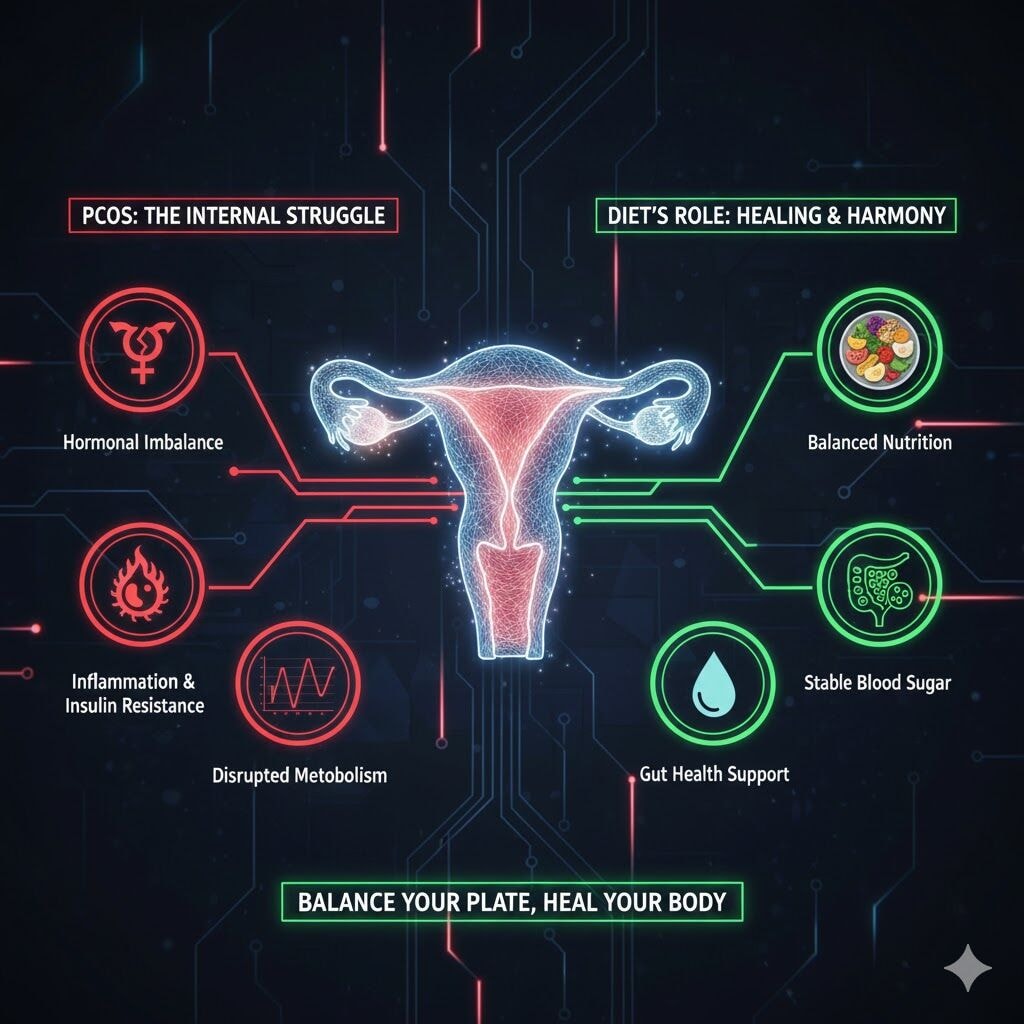
Polycystic ovary syndrome(PCOS) is a hormonal condition where the ovaries do not respond to signals in a steady rhythm. This leads to irregular menstrual cycles, changes in hormone levels and shifts in how the body uses energy.
These patterns influence mood, metabolism and long term health. Understanding how diet affects PCOS gives you a clearer sense of what strengthens these systems each day.
1. Hormonal Signals
PCOS begins when communication between the brain and ovaries loses its steady rhythm. This affects ovulation and cycle timing and often shows up as irregular menstrual cycles or skin changes. These early signs highlight how closely hormone balance and daily metabolism interact.
2. Insulin and Energy Use
Insulin sensitivity often decreases in PCOS, so the body produces more insulin after meals. High insulin levels encourage faster energy storage, especially around the abdomen. These patterns explain why weight changes can appear even with familiar eating habits.
3. Inflammation Patterns
Low grade inflammation is common in women with PCOS and influences skin, digestion and long term cardiovascular health. It also interacts with hormone signals in a subtle but steady way, which is why anti inflammatory eating plays a central role in symptom control.
4. Diet’s Daily Influence
Food shapes these responses through repeated choices. Whole grains, high fiber foods and lean proteins help manage insulin levels with less strain. Small swaps such as choosing sweet potato or fruit instead of refined snacks reduce blood sugar swings and support steadier hormonal patterns.
"Food is not a quick fix for PCOS, but it is the most consistent signal your hormones receive every single day."
— Dr. Rhea Venkatesh, Endocrinologist
Building a Practical Eating Rhythm
A pcos diet chart becomes useful when it encourages repeatable habits instead of strict rules. Regular meal timing, balanced plates and nutrient dense foods create a stable routine for symptom control. These patterns help women manage energy, weight and comfort with more predictability.
Once these foundations are set, the next step is exploring which anti inflammatory foods create the most reliable support in daily meals and influence long term patterns in reproductive age women.
Start building your own PCOS-friendly plate with Balance Bite’s simple food swaps and meal ideas. Try a free starter plan today.
14 Best Anti Inflammatory Foods To Eat For Better PCOS Management
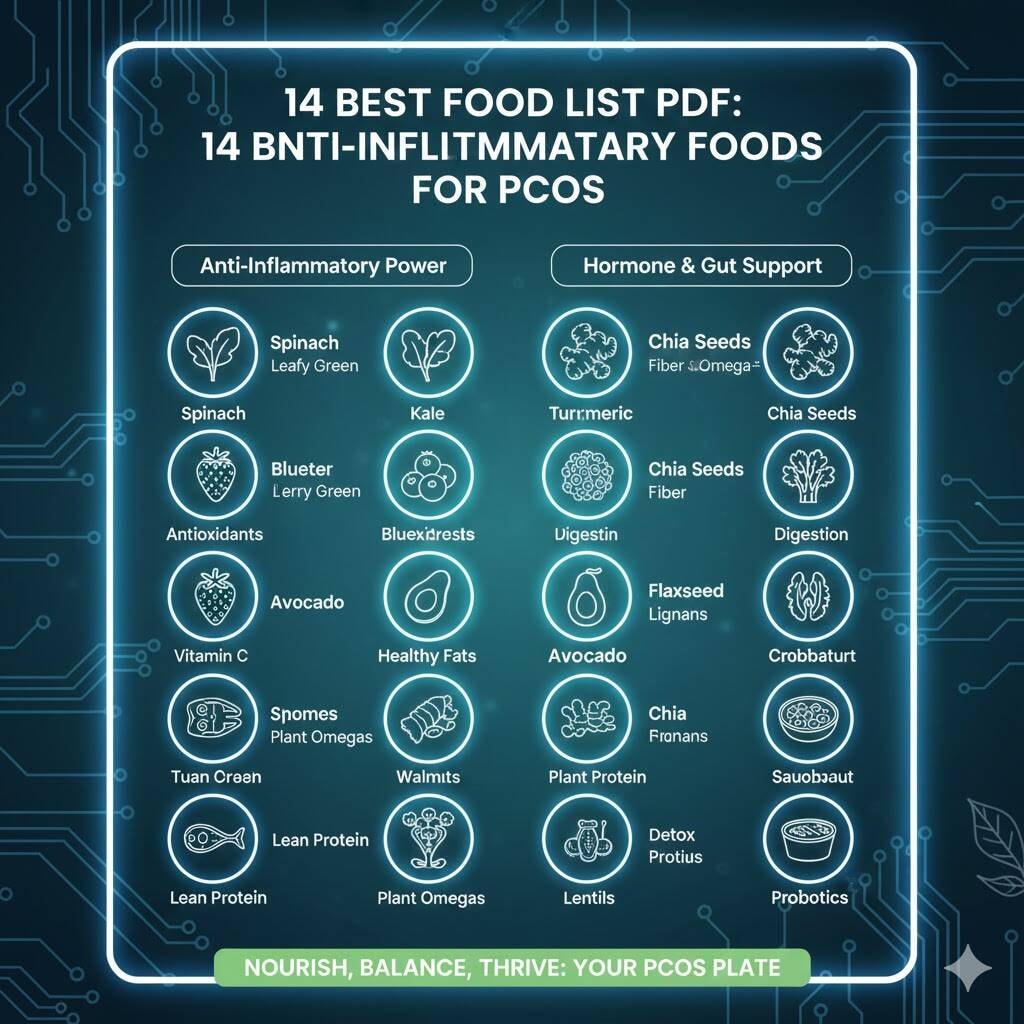
Anti inflammatory foods help calm chronic inflammation, support antioxidant rich foods intake and add nutrient dense foods that guide PCOS polycystic ovary syndrome symptoms in the right direction. Choosing foods rich in natural compounds supports a healthier diet rhythm for women.
Here is how these foods fit into a practical pattern for PCOS.
1. Leafy Greens
Leafy greens like spinach, methi and amaranth are classic anti inflammatory foods. They provide antioxidant rich foods that protect cells and support hormone balance.
-
High in folate, magnesium and vitamin K.
-
Low in calories, helpful for a healthy weight.
-
Support better blood sugar control in daily meals.
2. Berries
Berries are nutrient dense foods that bring colour and concentrated plant compounds. Their natural sweetness helps reduce reliance on sugary snacks.
-
Rich in antioxidants that protect against chronic inflammation.
-
Support insulin sensitivity when used instead of refined desserts.
-
Work well as a small snack or topping for breakfast.
3. Fatty Fish
Fatty fish such as salmon, mackerel or Indian options like rohu are foods rich in omega 3 fats. These fats support hormonal balance and heart health for women with PCOS.
-
Help reduce chronic inflammation over time.
-
Support healthier triglyceride and cholesterol levels.
-
Fit well into a weekly PCOS friendly diet pattern.
4. Extra Virgin Olive Oil
Extra virgin olive oil provides healthy fats that protect cells and support hormone production. Used in small amounts, it can replace refined oils in cooking.
-
Contains natural antioxidants and anti inflammatory compounds.
-
Helps build a low gi diet when paired with whole grains and vegetables.
-
Works best when used raw on salads or after cooking.
5. Nuts And Seeds
Nuts and seeds give a mix of healthy fats, plant protein and fibre in small portions. They are compact nutrient dense foods that fit easily into busy routines.
-
Help manage hunger between meals and reduce blood sugar spikes.
-
Provide minerals like magnesium and zinc that support hormonal balance.
-
Best used as measured snacks or toppings, not as free handfuls.
6. Green Tea
Green tea is a simple daily drink that pairs well with a PCOS diet plan. It contains plant compounds that support antioxidant defences without adding sugar.
-
May support modest improvements in metabolic health.
-
Helps replace sugary drinks in a practical way.
-
Works well between meals rather than with very heavy food.
7. Turmeric
Turmeric is a staple in many Indian kitchens and belongs on any PCOS food list. Its active compound, curcumin, has well known anti inflammatory properties.
-
Supports the body’s response to chronic inflammation.
-
Works best when cooked with healthy fats such as olive oil or ghee.
-
Fits naturally into dals, vegetables and slow cooked dishes.
8. Ginger
Ginger supports digestion and adds warmth to meals and drinks. It pairs well with both sweet and savoury foods in a PCOS friendly diet.
-
Provides natural anti inflammatory compounds.
-
Helps ease bloating and discomfort after heavy meals.
-
Can be used in herbal tea, curries or marinades.
9. Avocado
Avocado is rich in healthy fats and fibre, which help steady energy release. It suits women with PCOS who want to feel full on smaller portions.
-
Supports insulin levels by slowing digestion of carbohydrates.
-
Provides potassium and vitamin E for cell health.
-
Works in salads, toast toppings or simple snack bowls.
10. Tomatoes
Tomatoes supply lycopene, a strong antioxidant that supports heart and skin health. They fit easily into many Indian dishes and everyday cooking styles.
-
Help reduce inflammation when eaten regularly.
-
Low in calories and support a healthy weight.
-
Work well cooked in sauces, soups and curries.
11. Lean Proteins
Lean proteins such as lentils, egg whites, curd, fish and skinless chicken anchor a PCOS diet chart. They stabilise hunger and support muscle strength without excess fat.
-
Help control cravings and support weight management.
-
Improve insulin sensitivity when balanced with high fiber foods.
-
Fit into every main meal as a consistent building block.
12. High Fiber Foods
High fiber foods, including pulses, vegetables and some fruits, slow digestion and support gut health. They are central to any pcos friendly diet.
-
Help reduce blood sugar spikes after meals.
-
Support managing symptoms like bloating and irregular hunger.
-
Work best when spread across breakfast, lunch and dinner.
13. Brown Rice
Brown rice is a whole grain with more fibre and nutrients than polished white rice. It supports a low glycemic index pattern when paired with vegetables and protein.
-
Releases energy more slowly than refined carbohydrates.
-
Helps improve insulin sensitivity over time.
-
Works well in controlled portions in daily Indian meals.
14. Kidney Beans
Kidney beans provide plant protein, fibre and minerals in one ingredient. They support both gut health and insulin levels when cooked correctly.
-
Help manage blood sugar levels after meals.
-
Keep you full longer, which supports healthy weight goals.
-
Work well in rajma, salads and mixed grain bowls.
These anti inflammatory foods give women with PCOS practical ways to build a plate that calms chronic inflammation and supports steadier hormones, and the next section looks at which foods quietly work against this progress and are best kept off the regular menu.
Foods To Strictly Avoid In PCOS
Certain choices like sugary foods, refined carbohydrates, unhealthy foods, junk food, processed foods, processed meats, fried foods and sugary snacks raise inflammation and trigger symptoms faster. These foods also disturb insulin behaviour and make the body work harder than it should during PCOS.
Knowing what to avoid helps you protect your progress.
1. Sugary Foods And Drinks
Sugary foods and drinks drive fast blood sugar spikes that strain insulin levels. This pattern can worsen cravings and make it harder to keep a healthy rhythm through the day.
-
Sweets, desserts and sweetened beverages hit the bloodstream quickly.
-
Frequent use fuels higher insulin levels and more fat storage.
-
Over time this combination can raise male hormones and visible symptoms.
Simple swaps such as fruit with nuts or unsweetened almond milk instead of milkshakes ease this pressure without feeling restrictive.
2. Refined Carbohydrates And Low Quality Grains
Refined carbohydrates include white bread, bakery items and many packaged snacks. They digest quickly and rarely bring fibre or nutrients.
-
These foods behave much like sugar in the body.
-
They increase hunger again soon after eating.
-
They crowd out whole grains that support steadier control.
A pcod diet or pcos diet chart that features whole grains instead of refined choices gives your system more support with each meal.
3. Processed Foods, Processed Meats And Fried Items
Processed foods, processed meats and fried foods combine refined oils, excess salt and additives. Together they raise inflammation and work against long term heart health.
-
Many contain trans fats that strain blood vessels and hormones.
-
They often replace more balanced home cooked dishes.
-
Regular use raises risk for cardiovascular disease over time.
Light home options such as peanuts dinner vegetable khichdi provide comfort without the same inflammatory load.
4. Reading Your Diet Chart For Hidden Triggers
Many pcod diet chart examples focus on what to eat but spend less time naming what to keep off the regular list. Looking for repeated patterns of junk food, sugary snacks and deep fried items reveals where change will help most.
-
Mark how often these foods appear in a week.
-
Identify places where a whole grain or high fiber option could fit.
-
Note which meals feel rushed and lean more on packaged choices.
Over time, reducing these items and replacing them with nutrient dense foods improves insulin sensitivity and makes every meal work harder for you. Once the major red flag foods are clear, it becomes easier to see why anti inflammatory foods have such a strong role in easing PCOS symptoms.
Science Behind How Anti Inflammatory Foods Reduce PCOS Symptoms
PCOS symptoms often link back to insulin resistance and hormonal behaviour. Anti inflammatory foods support the body by improving insulin sensitivity and helping manage insulin resistance while supporting hormone production naturally.
This scientific response allows PCOS patients to build a steady baseline
How These Foods Settle Inflammation
Anti inflammatory foods contain natural compounds that calm low grade inflammation. This reduces strain on cells and allows hormone signals to work with more clarity. Ingredients like leafy greens, berries and tomatoes add antioxidants that protect tissues from daily stress.
-
They reduce inflammatory markers in the bloodstream.
-
They improve how blood vessels respond to pressure and flow.
-
They support tissues that are sensitive to hormonal change.
These shifts create a stronger base for symptom control.
"Lowering inflammation is like turning down background noise so hormones can communicate more clearly."
— Ananya Rao, Clinical Nutrition Researcher
How They Improve Insulin Sensitivity
Many anti inflammatory foods slow the rise of blood sugar after meals. Fibre, healthy fats and plant chemicals work together so glucose enters the bloodstream at a steady pace. This helps the body use insulin more effectively throughout the day.
-
Fibre delays the breakdown of carbohydrates.
-
Healthy fats create a slower release of energy.
-
Plant compounds support smoother cellular reactions to insulin.
This pattern helps reduce the cycle of hunger, fatigue and bloating.
How They Support Hormone Production
A calmer internal environment helps the ovaries respond to daily hormone signals. When inflammation and insulin pressure drop, the body can produce hormones in a more stable rhythm. Foods rich in antioxidants and healthy fats help maintain the structure of hormone producing cells.
-
They support the quality of hormone signalling.
-
They help stabilise fluctuations that drive discomfort.
-
They protect ovarian tissues from stress-related changes.
These effects build gradually but create a more dependable hormonal pattern.
As these mechanisms take hold, it becomes easier to design a 7 day PCOS diet plan that uses anti inflammatory foods in a consistent and practical way.
7 Day PCOS Diet Plan Built On These Anti Inflammatory Foods
A 7 day PCOS diet plan becomes easier when anti inflammatory foods match your goals for a healthy diet, healthy weight and practical weight loss progress. A structured meal plan builds consistency and simplifies diet plan for weight decisions.
This balanced setup helps women lose weight in a sustainable way.
| Day | Breakfast | Low Carb Indian Lunch Ideas | Dinner |
|---|---|---|---|
| Day 1 | Moong dal chilla 2 pieces + 3 slices avocado (≈320 kcal) | Brown rice 1 cup + kidney beans 1 cup + leafy greens 1 cup (≈480 kcal) | Grilled fish 120 g + tomatoes 1 cup + vegetables 1 cup (≈420 kcal) |
| Day 2 | Oats 1 cup cooked in almond milk + berries ½ cup (≈350 kcal) | Brown rice 1 cup + kidney beans 1 cup + salad 1 cup (≈460 kcal) | Lean chicken or paneer 120 g + ginger turmeric seasoning + vegetables 1 cup (≈420 kcal) |
| Day 3 | Smoothie with spinach 1 cup + berries ½ cup + seeds 1 tbsp (≈300 kcal) | Tomato soup 1 bowl + leafy greens 1 cup + whole grains 1 cup (≈420 kcal) | Fish or tofu 120 g + olive oil 1 tsp + vegetables 1 cup (≈410 kcal) |
| Day 4 | Vegetable upma 1 cup cooked in olive oil 1 tsp + green tea (≈330 kcal) | Rajma 1 cup + sweet potato ½ cup + leafy greens 1 cup (≈470 kcal) | Turmeric ginger khichdi 1.5 cups with brown rice (≈420 kcal) |
| Day 5 | Eggs 2 or curd 1 cup + berries ½ cup (≈320 kcal) | Whole grain roti 2 + spinach 1 cup + tomatoes 1 cup (≈450 kcal) | Avocado ½ + nuts 1 tbsp + small fish serving 100 g (≈430 kcal) |
| Day 6 | Almond milk smoothie with berries ½ cup + seeds 1 tbsp (≈330 kcal) | Brown rice 1 cup + kidney beans 1 cup + vegetables 1 cup (≈460 kcal) | Ginger turmeric vegetable soup 1 bowl + whole grains 1 cup (≈380 kcal) |
| Day 7 | Poha 1 cup with peanuts 1 tbsp + leafy greens (≈340 kcal) | Fish or tofu bowl 120 g + sweet potato ½ cup + tomatoes 1 cup (≈450 kcal) | Light khichdi 1.5 cups + turmeric ginger tempering + salad 1 cup (≈390 kcal) |
"PCOS improves not through dramatic diets but through meals you can repeat without stress."
— Meera Shah, Registered Dietitian
These portions and calorie ranges give structure without feeling restrictive, which helps women with PCOS maintain steady energy and healthier insulin responses through the week. The plan uses familiar meals built around anti inflammatory foods that make daily eating easier and more predictable.
With this rhythm in place, the next section focuses on supplements that strengthen these dietary foundations.
Supplements That Support PCOS Alongside a Balanced Diet
Supplements can support pcos treatment by adding nutrient dense foods or targeted nutrients that help support hormone production when diet alone feels limited. These additions work best when paired with steady habits and consistent meals. They help fill common gaps seen in PCOS patients
How Supplements Fit Into PCOS Care
Supplements sit alongside a balanced diet, not in place of it. They help when blood work or clinical checks, such as an oral glucose tolerance test, suggest specific gaps in insulin control, vitamin status or inflammation. Used carefully, they give the body more of what it already needs to function smoothly.
-
Work best when guided by a doctor or dietitian.
-
Support, rather than replace, whole foods in a pcos diet plan.
-
Are most effective when used consistently over time.
1. Omega 3 For Inflammation Support
Omega 3 supplements add healthy fats that support heart health and reduce low grade inflammation. They suit women who rarely eat fatty fish but still need these protective fats.
-
Help calm inflammatory markers linked to PCOS.
-
Support triglyceride and cholesterol balance.
-
Often used as fish oil or algae based capsules.
2. Inositol For Insulin And Cycle Regularity
Inositol is widely studied in PCOS for its role in insulin signalling. It supports better use of glucose and may help regulate menstrual cycles in some women.
-
Can improve insulin sensitivity when combined with a healthy diet.
-
May support more regular ovulation patterns.
-
Often used in powder form, divided across the day.
3. Vitamin D For Hormone And Bone Health
Vitamin D supports bone strength, immune balance and hormone function. Many women with PCOS show low levels, especially if they have limited sunlight exposure.
-
Helps maintain healthy hormone signalling.
-
Supports bone density along with calcium intake.
-
Usually taken as drops, capsules or tablets in measured doses.
4. Magnesium For Nerves, Sleep And Cramping
Magnesium supports nerve function, muscle relaxation and sleep quality. It can be useful for women who experience cramps, restless sleep or high stress with PCOS.
-
Helps the body relax more easily at night.
-
Supports muscle and nerve balance.
-
Common forms include magnesium glycinate or citrate.
5. Probiotics For Digestive And Immune Support
Probiotic supplements can support gut health when diet patterns or medicines disturb the natural balance of bacteria. A healthier gut environment can make it easier to tolerate fibre and absorb nutrients.
-
Help restore a more diverse gut microbiome.
-
Support digestion and reduce bloating for some women.
-
Work best alongside fermented foods and high fiber meals.
Supplements work best when they extend the strengths of a balanced diet rather than patch over a weak one, and once these supports are in place, attention can shift to gut health and blood sugar control, which decide how stable PCOS management feels in everyday life.
How Gut Health and Blood Sugar Control Supports PCOS Management
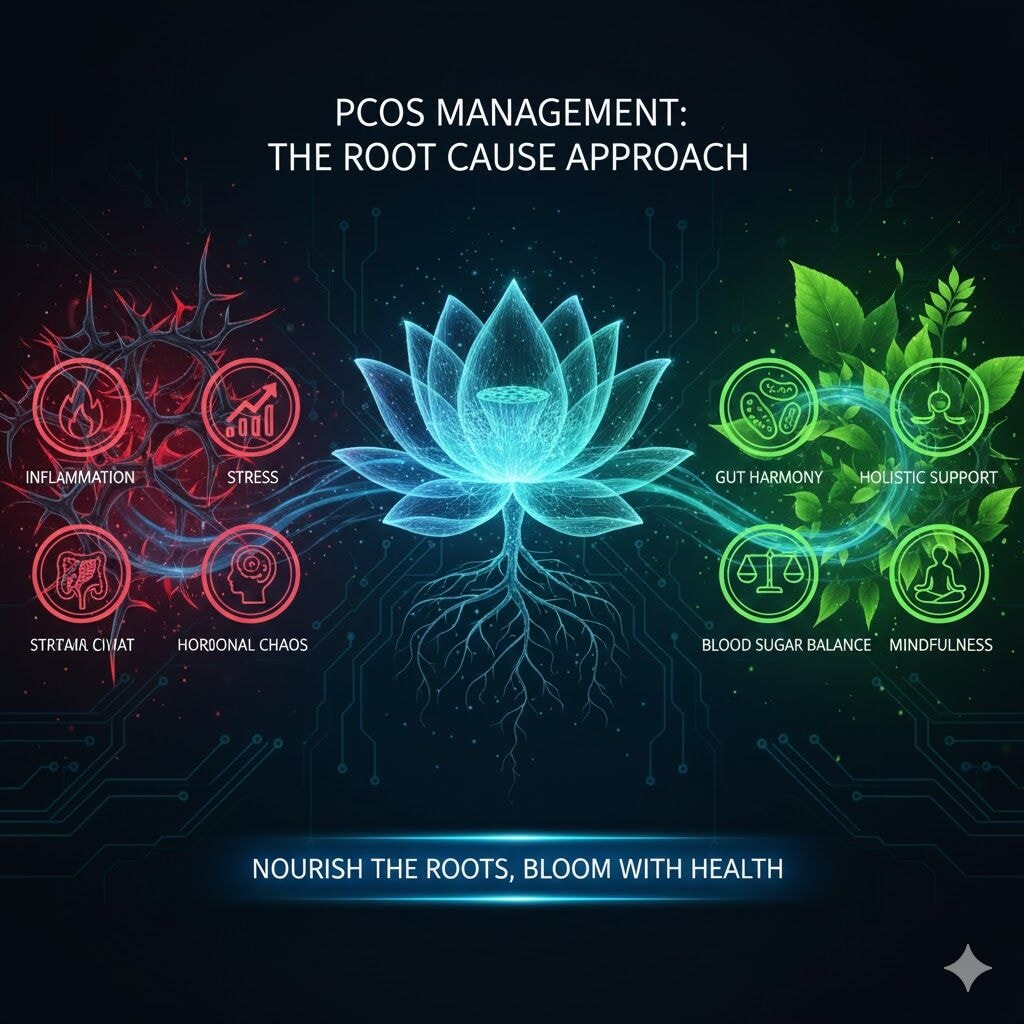
Gut health influences how blood sugar behaves and how well you manage blood sugar levels each day. These patterns affect insulin sensitivity and overall insulin levels which shape hormonal reactions in PCOS. A strong gut supports smoother energy and symptom control.
How The Gut Talks To Hormones
The gut is lined with bacteria that help break down food, produce vitamins and send signals to the brain and hormones. When this community is diverse and stable, digestion feels easier and the body handles glucose more smoothly. When it is out of balance, blood sugar spikes and dips become more common.
-
Helpful bacteria produce short chain fatty acids that calm inflammation.
-
A healthy lining in the gut reduces unwanted immune reactions.
-
Stable digestion supports more predictable hunger and fullness cues.
These effects make it easier for PCOS hormones to respond in a consistent way.
Gut Health And Insulin Sensitivity
A strong gut environment helps improve insulin sensitivity by lowering background inflammation and supporting better nutrient absorption. When the gut is calmer, the body needs less insulin to move glucose into cells after meals.
-
High fiber foods feed beneficial bacteria that support glucose control.
-
Fermented foods like curd, buttermilk and homemade pickles add helpful strains.
-
Regular bowel movements remove waste that can otherwise keep inflammation active.
Together these habits ease the pressure on insulin and reduce the swings that many women notice through the day.
How Food Choices Shape Blood Sugar Patterns
Blood sugar control in PCOS depends as much on meal quality as on timing. Meals that combine fibre, protein and healthy fats slow the release of glucose into the blood. This reduces sharp rises and falls that leave you tired or craving more sugar.
-
Pairing brown rice with kidney beans and vegetables slows digestion.
-
Adding nuts or seeds to snacks keeps energy steadier for longer.
-
Choosing fruit with curd instead of juice limits blood sugar spikes.
These patterns give insulin levels a calmer curve to follow, which supports hormone balance over time.
Daily Habits That Support Gut And Sugar Balance
Simple routine choices keep gut health and blood sugar control working together. Regular meals, enough fluid and time for chewing each bite all influence how the gut processes food and how fast sugar appears in the bloodstream.
-
Eat at similar times each day to prevent long gaps and heavy swings.
-
Drink water through the day to support smooth digestion.
-
Keep late night heavy meals rare so the gut has time to rest.
These steady habits help the body respond better to every meal and keep symptoms more predictable. As food patterns settle into place, the next step is to look at lifestyle changes such as movement, sleep and stress management, which decide how stable PCOS management feels in everyday life.
Beyond Diet: Key Lifestyle Changes That Help Manage PCOS

Lifestyle habits support weight management and prevent unnecessary weight gain or excess weight while guiding modest weight loss in a steady, realistic way. Managing stress and building simple routines help the body respond better to PCOS.
These everyday behaviours add stability to all dietary changes.
1. Daily Movement And Light Exercise
Daily movement keeps insulin levels steadier, lowers blood sugar spikes and helps women with PCOS manage symptoms through simple activity. Light exercise improves circulation and supports hormonal balance in a sustainable way.
Practical ways to use this
-
Aim for 30 to 45 minutes of walking on most days.
-
Break it into short walks after meals to smooth blood sugar.
-
Use stairs, light cycling or gentle yoga on busy days.
These small efforts train the body to respond more calmly to food and stress.
2. Strength Training Twice A Week
Strength training improves insulin sensitivity, supports modest weight loss and builds lean muscle that helps regulate hormonal balance. These workouts also reduce inflammation and assist long term weight control.
Practical ways to use this
-
Start with bodyweight moves like squats, wall push ups and glute bridges.
-
Use light dumbbells or resistance bands two to three times a week.
-
Focus on large muscle groups such as legs, hips, chest and back.
This kind of training gives structure to your week and supports the diet changes you make.
3. Stress Management Habits
Stress affects hormonal balance and can worsen managing symptoms for women with PCOS. Simple habits help calm the nervous system and reduce the intensity of hormonal imbalances. This steady approach creates the emotional stability needed for better health outcomes.
Practical ways to use this
-
Use ten minutes of slow breathing or meditation daily.
-
Keep a short evening journal to clear mental clutter.
-
Set limits on constant phone use, especially at night.
These practices help the body use the support offered by food, movement and any plan made after a pcos diagnosis.
4. Consistent Sleep Routine
A steady sleep routine supports hormonal balance and reduces the chance of overnight blood sugar spikes. Proper rest allows the body to recover and improves how women with PCOS respond to daily stress. A reliable sleep cycle sets the rhythm for the day ahead.
-
Fix a regular sleep and wake time, even on weekends.
-
Keep screens away for at least thirty minutes before bed.
-
Use a simple wind down routine like reading or stretching.
Quality sleep turns your daytime efforts into more stable results.
5. Tracking Blood Sugar Patterns
Tracking blood sugar patterns helps identify what causes blood sugar spikes and shows how your meals influence insulin sensitivity. This awareness helps you adjust your pcos friendly diet without guesswork.
What to watch for
-
Notice which meals leave you tired or hungry very soon.
-
Track when cravings for sugar feel strongest in the day.
-
Compare days with balanced meals to days with many snacks.
Patterns over a week tell you where small food changes will have the greatest effect.
6. Staying Hydrated Throughout The Day
Good hydration supports metabolic function and prevents cravings linked to unstable blood sugar patterns. It also helps maintain a healthy weight by reducing unnecessary snacking. This simple practice builds a solid foundation for better daily balance.
Practical ways to use this
-
Keep a bottle visible on your desk or table.
-
Aim for small sips through the day instead of large gulps at once.
-
Use plain water, herbal tea or infused water instead of sugary drinks.
Steady hydration keeps digestion, energy and appetite more predictable.
7. Reducing Processed And Fried Foods
Processed foods, fried foods and sugary choices often worsen inflammation and trigger weight gain. Removing them from your routine helps reduce insulin resistance and lowers the risk of cardiovascular disease. Cutting them out clears the way for cleaner eating patterns.
Practical ways to use this
-
Limit deep fried snacks to rare occasions.
-
Replace packaged sweets with fruit and nuts in measured portions.
-
Swap fried street food dinners with simple home cooked plates.
Each swap creates more space on your plate for foods that actively support recovery.
8. Building A Stable Meal Schedule
A predictable meal schedule helps manage pcos symptoms by reducing blood sugar spikes and supporting a balanced diet. It also improves insulin sensitivity and prevents overeating caused by long gaps between meals.
Practical ways to use this
-
Aim for three main meals and one or two planned snacks.
-
Avoid long stretches with only tea and biscuits.
-
Keep breakfast and dinner roughly at the same time each day.
This rhythm allows your body to trust that food is coming at steady intervals and respond with less urgency.
9. Supporting Gut Health With Fiber And Probiotics
Gut health shapes hormonal balance and improves how the body handles whole grains, sweet potato, low glycemic index fruits and high fiber foods. A healthier gut reduces inflammation and strengthens long term PCOS treatment outcomes.
Practical ways to use this
-
Include vegetables or salad in at least two meals a day.
-
Use curd, buttermilk or other fermented foods regularly.
-
Add pulses, lentils and beans across the week in moderate portions.
A well supported gut makes every dietary change work harder for you. When food, supplements and these lifestyle habits move in the same direction, the final step is tying them together in a simple conclusion that shows how to use your PCOS food list PDF with confidence.
FAQs
1. Can PCOS Symptoms Improve Without Medication If Lifestyle Habits Are Consistent?
Yes, many symptoms can improve through steady habits such as balanced meals, movement, sleep and stress control. These changes support insulin and hormone balance, which reduces cycle irregularity, cravings and inflammation for many women.
2. How Often Should You Get Hormone Levels Tested When Managing PCOS Naturally?
Most women benefit from testing every six to twelve months unless symptoms change suddenly. Regular checks ensure that lifestyle progress aligns with hormone patterns and helps your doctor adjust guidance when needed.
3. Can PCOS Affect Long Term Fertility Even When You Maintain a Healthy Weight?
Yes, PCOS can still influence ovulation timing, but maintaining a healthy weight improves hormone signalling and increases the chances of regular cycles. Many women see better fertility outcomes with steady lifestyle habits.
4. Is It Necessary To Track Healthy Fats When Creating Meals For PCOS?
Tracking helps prevent overeating, even with healthy fats, because they are calorie dense. Using measured portions of nuts, seeds, olive oil and avocado supports hormone balance without adding extra calories that can affect symptoms.
5. How Does PCOS Influence Energy Levels And Daily Fatigue Patterns?
PCOS can cause uneven energy because insulin resistance, inflammation and hormone shifts affect how the body uses fuel. Balanced meals, movement and sleep help stabilise these swings and keep energy more predictable through the day.
Conclusion
Small, consistent choices often create the biggest shift in how PCOS feels day to day. When these 14 foods become regular parts of your meals, the body receives steadier support with no need for complicated rules. The next step is simple: pick two or three foods you can add this week and build from there.
Over time, these quiet adjustments create a rhythm that supports better cycles, clearer energy and more predictable hunger. This food list gives you a practical starting point, but it is the routine you form around it that shapes long term progress.
Use Balance Bite’s free PCOS Meal Builder to design balanced plates that stabilise blood sugar and support hormone health in minutes.




Leave a comment
Translation missing: en.blogs.comments.discription