

A good diet is easier to follow when the meals taste good. Most people abandon routine plans because the food feels flat, not because the structure is demanding. Flavor drives consistency, and consistency shapes real progress.
A daily routine built around a 7 day balanced diet chart brings order to meals, steady energy and space for foods that support weight control. It also keeps choices simple enough to repeat through a busy week.
With a plan built on taste and balance, the week starts to feel predictable in the best way, and each meal becomes easier to enjoy.
What Makes a Balanced Diet Routine Hard to Follow
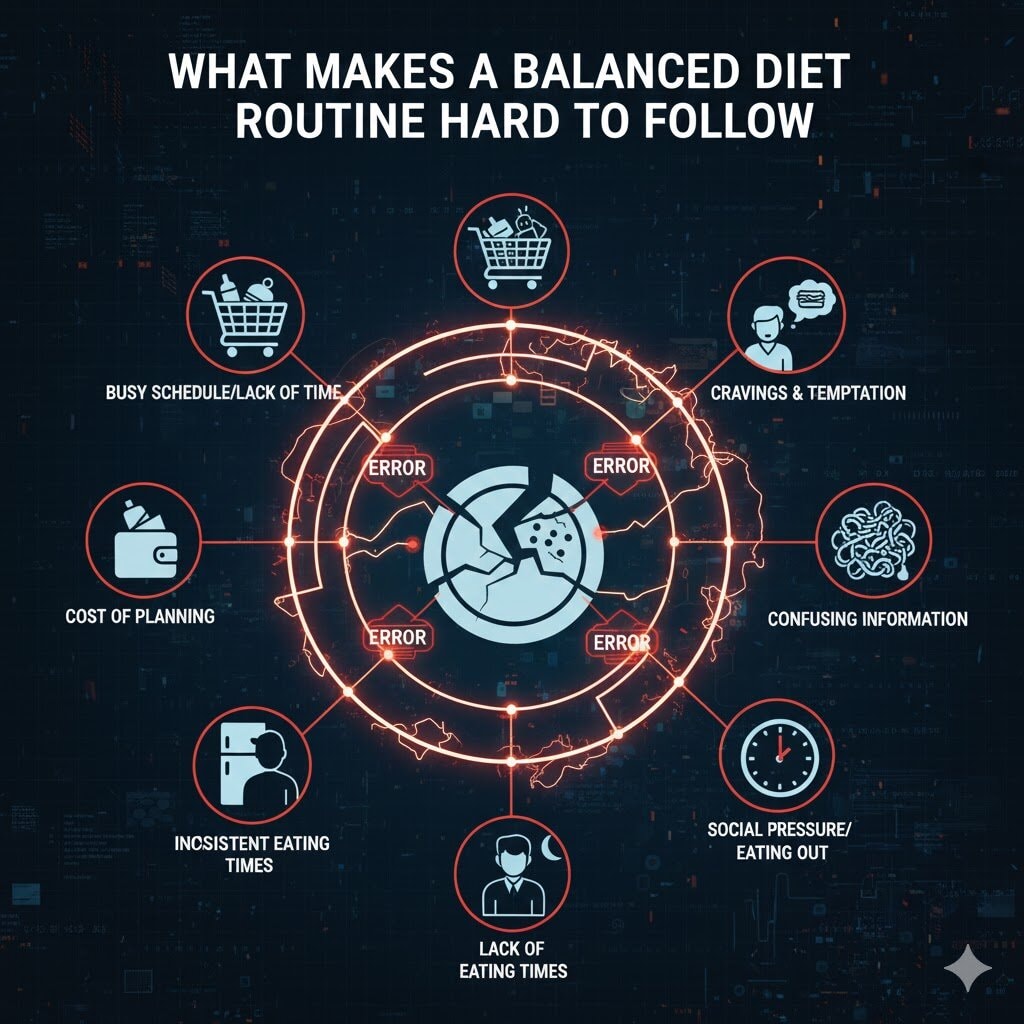
A balanced diet routine becomes harder when healthy eating habits are inconsistent and processed foods keep replacing the right food groups. Added sugars also creep into daily choices and slowly shift long term eating habits in the wrong direction.
These patterns create barriers that make balance feel complicated.
Several pressure points make the routine slip:
-
Choosing packaged snacks because they fill the gap faster than mixing vegetables, fruits and proteins from different food groups.
-
Letting added sugars sit in morning tea, bakery items or evening desserts, which gradually shifts what tastes satisfying.
-
Building meals without a clear idea of portions, colours or ingredients, which makes the plate feel balanced even when it is not.
-
Planning weekly meal ideas that do not match the day’s time, mood or energy, so the plan gets replaced by the quickest option.
-
Treating balance as an occasional correction rather than an everyday habit, which weakens consistency across the week.
These patterns form quietly. They reshape taste, routine and appetite in small steps, and eventually the diet feels harder not because the rules are complex but because the habits beneath them drift away from balance.
Once these root patterns become clear, strengthening a diet plan becomes far more practical, because you can see exactly what needs structure in the next section.
“Try the Balance Bite meal planner if you want your routine to stay simple but still deliver results.”
Why the Problem Gets Worse Without a Structured Diet Plan
Without a structured diet plan the body deals with water retention, irregular water weight shifts and a higher chance of weight gain that affects overall health. Over time these patterns raise concerns like heart disease and lower daily energy.
A routine without clarity builds silent pressure on health.
Unstructured eating also disrupts appetite hormones and slows metabolic rhythm. Irregular calories confuse hunger cues, which leads the body to store more energy rather than burn it through the day. Over time this increases weight gain risk even when overall food volume does not seem excessive.
Several physiological effects appear when the diet lacks structure:
-
Fluid retention increases when sodium and water intake swing sharply between days.
-
Energy dips become more common because the body cannot predict when nutrients will arrive.
-
The heart works harder when weight and fluid levels rise and fall without pattern.
-
Digestive comfort declines when meal timing changes frequently, creating bloating or heaviness after ordinary meals.
-
Overnight recovery weakens because the body receives inconsistent fuel through the day.
The result is a pattern where the body never settles into a steady rhythm of using, storing and distributing energy. Small irregularities add up, and the system carries more strain than the person often realises.
Once these internal shifts are clear, the value of a structured 7 day balanced diet chart for everyday healthy eating becomes far more tangible.
The 7 Day Balanced Diet Chart for Everyday Healthy Eating
A simple weekly plan works well when healthy meals and meal plans use a mix of balanced diet principles along with healthy diet choices. Fresh fruits, whole grains and a mix of fruits vegetables make each day easy to follow. The right chart removes confusion and brings steady rhythm.
| Day | Breakfast | Lunch | Dinner | Snacks (Mid-Morning + Evening) | Total Calories |
|---|---|---|---|---|---|
| Day 1 | Vegetable poha, 1 cup, 250 kcal | Brown rice + dal + veg, 420 kcal | Multigrain roti + paneer curry, 380 kcal | Fresh fruits 80 kcal + Green tea & chana 100 kcal | ~1,230–1,300 kcal |
| Day 2 | Moong dal chilla, 2 pcs, 260 kcal | Vegetable khichdi, 1.5 cups, 380 kcal | Whole wheat rotis + stir fry veg, 350 kcal | Buttermilk 70 kcal + Fruits/coconut water 80 kcal | ~1,150–1,200 kcal |
| Day 3 | Scrambled eggs + toast, 310 kcal | Veg fried rice + curd, 410 kcal | Veg soup + grilled paneer, 330 kcal | Fresh fruits 80 kcal + Green tea 20 kcal | ~1,150–1,250 kcal |
| Day 4 | Oats with milk and fruits, 300 kcal | Phulka + dal + veg, 380 kcal | Stir fried tofu + salad, 300 kcal | Buttermilk 70 kcal + Fruits/fox nuts 100 kcal | ~1,250–1,300 kcal |
| Day 5 | Vegetable upma, 1 cup, 250 kcal | Brown rice + rajma, 400 kcal | Veg soup + paneer bhurji, 330 kcal | Fresh fruits 80 kcal + Green tea & biscuits 100 kcal | ~1,200–1,270 kcal |
| Day 6 | Idli with sambar, 280 kcal | Millet khichdi + veg, 380 kcal | Rotis + veg curry, 330 kcal | Coconut water 60 kcal + Roasted chana 90 kcal | ~1,140–1,200 kcal |
| Day 7 | Vegetable oats, 1 bowl, 250 kcal | Rice + dal + vegetables, 420 kcal | Veg soup + grilled tofu or paneer, 330 kcal | Green tea + fruits 80 kcal + Sprouts salad 120 kcal | ~1,150–1,200 kcal |
“Build your own 7 day chart with Balance Bite so you never guess portions again.”
What Each Day Focuses on in the 7 Day Balanced Diet Plan
Each day supports essential nutrients that match nutritional needs while using complex carbohydrates, lean proteins and whole foods in a steady pattern. When spread correctly these elements help the body respond better across the week.
This creates a natural flow that reduces stress around planning.
“Consistency beats intensity in any diet, because habits outlast motivation.”
— Dr. Rujuta Diwekar, Nutrition Expert
Day 1. Reset With Light, Balanced Meals
A light beginning helps digestion settle and prepares the body for the week.
-
Choose gentle meals like vegetable poha, upma or soup.
-
Keep portions smaller than usual to reduce digestive load.
-
Add fruits and fluids to support an easy start to the routine.
Day 2. Improve Energy With Whole Grains Like Brown Rice
Whole grains build steady energy through the afternoon.
-
Use brown rice, millet or whole wheat rotis to anchor meals.
-
Pair grains with lentils and vegetables for complex carbohydrates and protein.
-
Notice how balanced meals reduce cravings later in the day.
Day 3. Focus on Midweek Digestion Support
Midweek heaviness is common, so meals work better when they feel lighter.
-
Include options like vegetable fried rice with curd or soft khichdi.
-
Add probiotic foods and fiber to calm the digestive system.
-
Adjust portions if any meal feels too heavy for your routine.
Day 4. Build Consistency With High Protein Meals
Protein provides stability and helps manage appetite through the day.
-
Add tofu, paneer, lentils or curd to every major meal.
-
Combine protein with vegetables and moderate grains for balanced plates.
-
Use this day to reduce mindless snacking by improving meal satisfaction.
Day 5. Boost Metabolism and Control Cravings
Stronger flavours and warm foods help manage comfort cravings.
-
Use soups, stews and balanced curries to anchor meals.
-
Add spices that support digestion without raising calories.
-
Keep treats inside meals rather than as extras to maintain structure.
Day 6. Increase Activity Support Foods
Meals match your activity level on busier or movement-heavy days.
-
Add enough whole grains and fruit for energy on active days.
-
Place carbohydrates near walks or workouts to support recovery.
-
Use the day to fit gentle movement that uses the extra fuel.
Day 7. Recovery Meals for Better Long Term Balance
The week ends with meals that calm the digestive system.
-
Choose soups, stews and simple home style dishes.
-
Add fruits and fluids to restore hydration and reset appetite.
-
Keep meals soft and predictable to prepare for the next cycle.
Once each day carries a clear purpose, planning ingredients and building a weekly grocery list becomes easier to manage and easier to repeat.
Quick Grocery List for All 7 Days
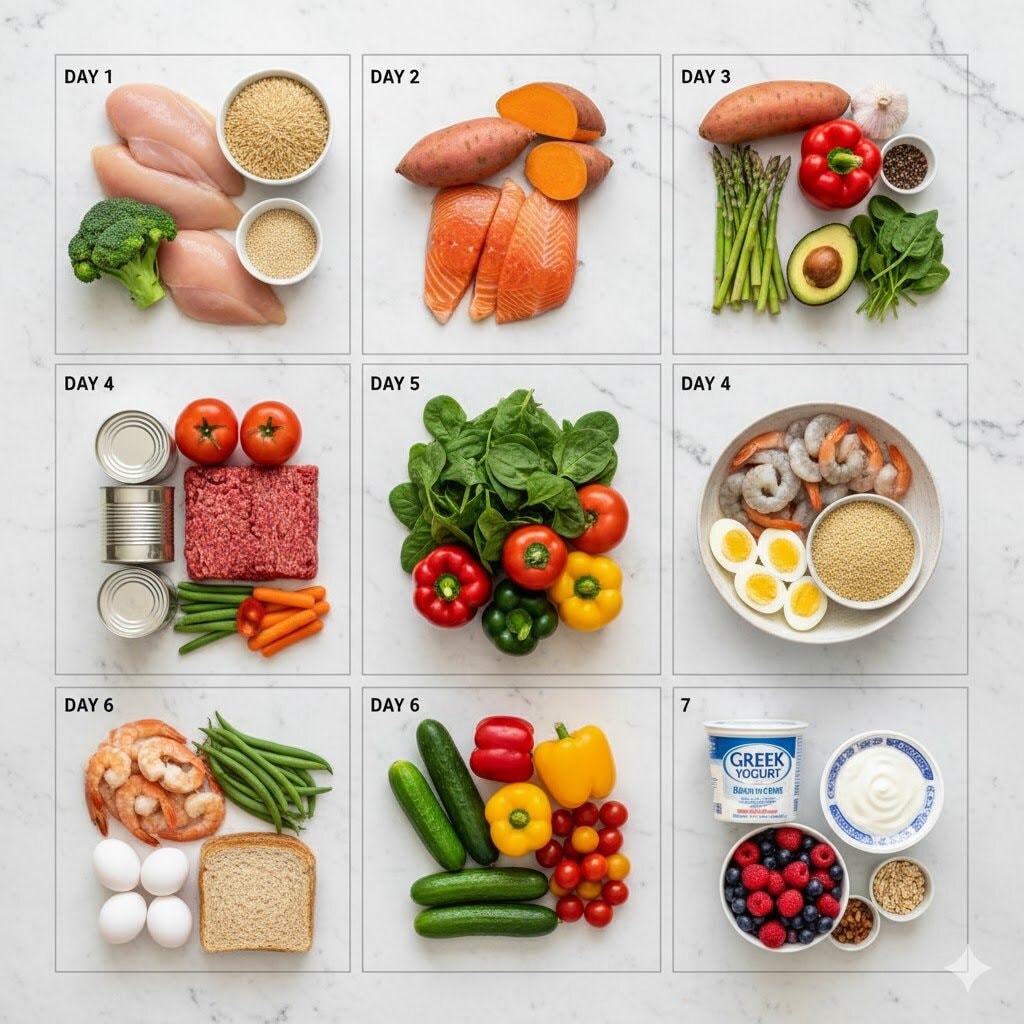
A weekly grocery list becomes simpler when it highlights fruits vegetables, whole wheat, olive oil, healthy fats, fresh fruits and whole foods that work across all seven days. These basics help maintain balance without overthinking purchases or planning.
A strong list creates an easy start for any routine.
| Category | Items to Buy |
|---|---|
| Vegetables and Fruits | Leafy greens, seasonal vegetables, tomatoes, onions, carrots, beans, bananas, apples, papaya, oranges, sprouts |
| Whole Grains and Staples | Whole wheat flour, brown rice, millets, poha, oats, upma rava, dal, rajma, chole, moong |
| Proteins and Dairy | Paneer, tofu, curd, eggs, sprouted legumes |
| Healthy Fats and Oils | Olive oil, cold pressed local oils, groundnuts, almonds, walnuts, chia seeds, flax seeds, sunflower seeds |
| Flavour and Essentials | Herbs, spices, green tea, lemons, buttermilk ingredients, salt, turmeric, cumin |
If you live with diabetes or take medical guidance, a healthcare provider or registered dietitian can help match this list with your calorie count, daily routine and activity level.
How to Personalize This 7 Day Routine for Your Lifestyle

Personalizing a routine needs attention to meal patterns that fit different lifestyles. Working professionals, students, homemakers and beginners each need a practical structure that aligns with nutritional needs and healthy eating habits.
Clear paths make the routine easier to follow without breaking rhythm.
1. For Working Professionals
Working professionals need a routine that fits long hours and unpredictable schedules. Choosing healthy diet habits with a steady breakfast, simple lunch options and quick evening snack ideas helps maintain good health.
“Real change begins when your meals reflect your routine, not your willpower.”
— Dr. Michael Greger, Physician & Nutrition Researcher
Fresh fruits, green tea and low fat meals keep energy steady without relying on processed picks.
-
Keep breakfast fixed, for example oats, poha or eggs, so mornings stay predictable.
-
Use packed lunches built from leftovers, such as roti, dal and vegetables.
-
Plan portable snacks like fruits, nuts or roasted chana for commute or late meetings.
2. For Students
Students benefit from balanced breakfast choices, low fat snacks and quick lunch ideas that support focus and well being. Fresh fruits, milk and simple whole foods help them avoid spikes in calories or sugar. Building healthy lifestyle habits early keeps energy steady through study-heavy days.
-
Choose breakfasts that need little time, such as upma, sandwiches or milk with oats.
-
Keep fruits and curd cups handy for short breaks between classes.
-
Avoid long gaps by pairing evening study with light snacks instead of large meals.
3. For Homemakers
Homemakers often juggle multiple tasks, making nutrition easy to overlook. Simple breakfast choices, vegetable soup, fresh fruits and balanced dinner options support steady energy.
Staying mindful of calories and choosing low fat ingredients help maintain good health while managing daily routines at home.
-
Cook shared base dishes, then build your plate with extra vegetables and less oil.
-
Use soup or salad as a first course at dinner to moderate portions.
-
Keep cut fruits ready so you reach for them instead of packaged snacks.
4. For Weight Loss Goals
Those aiming to lose weight need meals that avoid unnecessary calories and sugar. Fresh fruits, vegetable soup, low fat preparations and controlled lunch portions build sustainable weight loss patterns.
Light breakfast options and planned evening snacks prevent overeating while supporting overall well being.
-
Use the same 7 day chart, but reduce portion size slightly at lunch and dinner.
-
Replace heavy desserts with fruit or curd to trim calories.
-
Keep a simple record of meals to notice patterns that slow weight loss.
5. For Fitness and Active Lifestyles
Active individuals need protein rich meals supported by clean breakfast choices, fresh fruits, green tea and simple high energy lunch options. Paying attention to calories, fats and vitamins helps fuel workouts without slowing progress.
Low fat meals and steady hydration also help maintain good performance levels.
-
Add extra protein at breakfast or post workout, such as paneer, tofu or eggs.
-
Time larger portions of grains around training sessions rather than at night.
-
Use green tea and water through the day to support focus and recovery.
6. For Beginners Starting a Balanced Diet
Beginners often struggle with eating habits and portion choices. Simple breakfast ideas, fresh fruits, vegetable soup and low fat meals make the transition easier. Building awareness of calories, vitamins and basic nutrition creates confidence and sets a strong foundation for long term healthy lifestyle changes.
-
Start with one change at a time, such as fixing breakfast for the full week.
-
Use a smaller plate to support natural portion control without counting every bite.
-
Keep two or three easy low carb Indian dinner options you can repeat on busy days.
7. For Vegetarians and Vegans
Vegetarians and vegans can build variety with vegetable fried rice, stir fried tofu, vegetable soup and nutrient rich breakfast options. Fresh fruits and plant based proteins help balance calories and avoid gaps in vitamins or nutrition. Choosing low fat meals ensures comfort without compromising taste.
-
Rotate protein sources like lentils, tofu, sprouts and beans across the week.
-
Combine grains and legumes, for example rice with dal, to improve protein quality.
-
Use seeds and nuts in small portions to support healthy fats and micronutrients.
8. For People With Busy or Irregular Schedules
Irregular schedules benefit from quick breakfast choices, easy lunch meals and ready fresh fruits. Green tea, evening snack planning and low fat foods help maintain calories without overeating. Simple vegetable soup or stir fried tofu options support good health even when time is tight. For those looking to maximize energy and recovery, following a high protein diet chart can be an effective strategy.
-
Rely on meals that need minimal cooking, such as pre-cut vegetables and one pot dishes.
-
Keep shelf stable options like poha, oats and lentils ready for late meals.
-
Prepare snack boxes once and use them across several days to reduce effort.
Once your version of the 7 day plan fits your lifestyle with this level of clarity, the next step is to watch for common mistakes that quietly weaken even a well designed routine.
Common Mistakes People Make While Following 7 Day Balanced Diet Chart
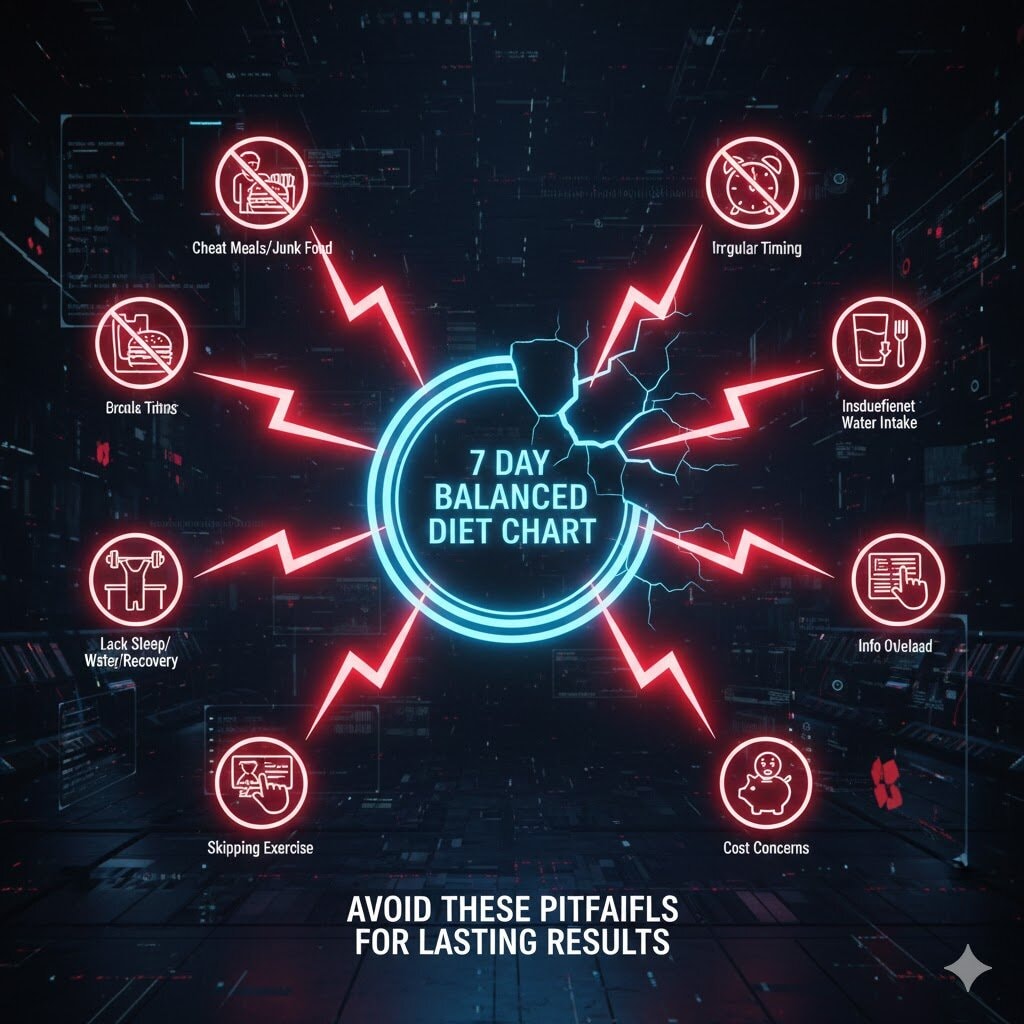
Many people slip by choosing processed foods, relying on added sugars or ignoring their medical history and medical conditions that influence results. Some mistakes also come from skipping balanced food groups that support better outcomes.
Small choices around drinks, snacks and extras often decide how many calories you end up eating in a day, even when the main meals look balanced on paper. Seeing where these calories hide makes the 7 day routine more effective without turning it into a strict numbers exercise.
1. Skipping Meals
Skipping meals disrupts breakfast, lunch and dinner rhythms and often increases calories later in the day. It also weakens eating habits and may cause low energy. Fresh fruits, simple vegetable soup or a light evening snack prevent long gaps and support better nutrition.
-
Common pattern: skipping breakfast, then eating a very large dinner.
-
Effect: stronger hunger, less control and higher intake in the evening.
-
Better approach: use small, regular meals so appetite stays steady.
2. Overeating Brown Rice
Brown rice is healthy but large portions add unnecessary calories. Pairing it with fresh fruits, vegetable soup or low fat sides creates better balance. Overfilling rice bowls can slow weight loss and disrupt your healthy lifestyle goals even if the meal feels clean.
-
Common pattern: filling most of the plate with rice and a small portion of vegetables.
-
Effect: more starch than you need, even in a healthy diet.
-
Better approach: keep rice to a modest serving and expand the vegetable share.
3. Ignoring Protein Balance
Ignoring protein balance leads to higher calories from fats or carbohydrates. Stir fried tofu, scrambled eggs or light dinner proteins help improve nutrition without overwhelming the meal. A healthy diet becomes easier to maintain when protein supports everyday energy levels.
-
Common pattern: roti and rice heavy plates with very little dal or paneer.
-
Effect: low satiety and more snacking between meals.
-
Better approach: add a clear protein source at each main meal.
4. Eating Too Many Fruit Juices
Fruit juices raise sugar and calories compared to whole fresh fruits. They disrupt healthy eating habits and can slow sustainable weight loss. Choosing fruits vegetables in natural form supports better vitamins, steady nutrition and long term well being.
-
Common pattern: drinking juice daily as a “healthy” habit.
-
Effect: quick sugar spikes and hidden calorie intake.
-
Better approach: eat whole fruits and keep juices for rare use, if at all.
5. Relying Only on Salads
Salads alone lack essential nutrition and often miss proteins, healthy fats and vitamins. Adding vegetable soup, tofu or balanced lunch portions creates better variety. A healthy lifestyle needs diversity, not just raw vegetables, to prevent calorie dips and fatigue.
-
Common pattern: using salads as full meals without any protein or grains.
-
Effect: short term fullness, followed by strong hunger and cravings.
-
Better approach: treat salad as a base and build a complete plate around it.
6. Inconsistent Meal Timing
Irregular breakfast, lunch and dinner timings affect calories, sugar balance and overall nutrition. Mid morning or evening snack planning keeps gaps shorter and supports better energy. Consistency protects good health and reduces overeating episodes later.
-
Common pattern: long gaps in the day, then eating very quickly at night.
-
Effect: poor appetite control and heavy late meals.
-
Better approach: fix rough time windows for each meal and stay close to them.
7. Snacking Without Portion Control
Mindless snacking increases calories, sugar and fats quickly. Fresh fruits, green tea or low fat evening snack options help manage portions naturally. Structured choices improve nutrition and steady weight patterns without restricting healthy meals.
-
Common pattern: grazing on biscuits, fried snacks or sweets while working or watching screens.
-
Effect: large calorie intake that rarely feels like a “real” meal.
-
Better approach: decide snack options and quantities in advance and keep them visible.
Every mistake here has a clear correction, and once those corrections become part of your routine, the 7 day balanced diet chart starts working with your habits instead of against them.
“Small nutritional corrections done daily are more powerful than dramatic diets done occasionally.”
— Dr. Mark Hyman, Functional Medicine Leader
Conclusion
A routine becomes easier to follow when each meal feels familiar, balanced and enjoyable. Once the structure settles, the week stops feeling like a series of food decisions and starts running on simple habits you can maintain without effort.
Small adjustments in timing, portions and ingredients keep the plan flexible enough for real life while still moving you toward better health. The next step is to apply the rhythm you’ve built here and let it guide your choices through the week.
“Start small, track your week, and let Balance Bite show your real progress.”




Leave a comment
Translation missing: en.blogs.comments.discription