

Rapid weight loss grabs attention because it promises control at a moment when everything feels urgent. The idea that a 10 kg weight loss in 7 days diet plan can reset your body in a week sounds bold, direct, and almost achievable.
Yet the body never moves as quickly as the promise suggests, and the gap between expectation and biology decides whether this path helps or harms. Knowing what truly changes in seven days reveals whether you are stepping toward progress or stepping into a shortcut that backfires.
Is Losing 10 Kg in 7 Days Even Possible?

Losing this much weight in such a short period often reflects water weight changes rather than true fat loss, which is why real weight loss occurs more slowly for most people who want to lose weight safely. Understanding how the body responds in such a short period helps set fair expectations.
"The body keeps an honest score, even when our goals try to rush it."
— Dr. Samantha Rhodes, Clinical Nutrition Specialist
Most people who want to lose weight quickly picture fat burning away hour by hour. In reality, the body can only use a limited amount of stored fat each day without serious strain. A claim like 10 kg in 7 days usually ignores how slowly true fat loss occurs even under a strict plan.
In such a short period, most of the change on the scale usually comes from shifts inside the body, not from pure fat loss.
Main drivers of rapid weight change in 7 days
-
Drop in water weight when you cut salt and high carbohydrate foods
-
Lower glycogen stores, which is the form in which the body stores carbohydrates with water
-
Less food and waste in the digestive system, which makes the body feel lighter
-
A small amount of actual fat loss if your calorie intake is reduced carefully
A healthy body still needs energy, minerals and fluids to function well. Pushing for 10 kg in a week forces extreme choices that strain sleep, mood and daily work, while most of the visible change comes from fast water weight shifts that return quickly.
Understanding what really moves the number on the scale, and what does not, is the first step. Once that picture is clear, it becomes easier to judge the true benefits and limitations of any rapid 7 day diet plan.
Start your progress the right way with our free 7-Day Balanced Meal Starter on My Balance Bite.
Learn how to build structure without extreme cuts.
Benefits and Limitations of a Rapid 7 Day Diet Plan
A rapid plan can help create fewer calories and support overall health for a short stretch when built on nutrient rich foods, healthy fats, essential vitamins, and essential nutrients. Still, it is not a balanced diet and rarely supports sustainable weight loss.
"Shortcuts change the scale, but habits change the outcome." — Michael Carter, Weight Management Researcher
Knowing both sides helps you see where this plan can work and where it cannot.
Key short term benefits of a rapid 7 day diet plan
-
Creates fewer calories for a limited time without full deprivation if meals are planned well
-
Uses nutrient rich foods to support overall health during the short phase
-
Includes healthy fats to keep meals satisfying and reduce constant hunger
-
Helps some people notice triggers like late night snacks or sugary drinks
The same structure becomes weaker when the plan stops behaving like a balanced diet and turns into a narrow rule sheet. Cutting food groups for a week rarely supports sustainable weight loss because the body and routine both return to old patterns.
The quick change on the scale often fades once regular eating resumes.
Important limitations to keep in mind
-
Short plans often ignore long term patterns that drive weight back up
-
Rapid cuts can miss essential nutrients when food choice becomes too strict
-
A narrow focus on numbers can overshadow signals like sleep, mood and digestion
-
The shift to fewer calories is hard to repeat safely month after month
A rapid 7 day diet plan can act as a tool in very specific situations, but it is not suitable for every body or health history, which is why the next step is understanding exactly who should handle this style of plan with extra care.
Who Should Avoid a Rapid Diet Plan for Weight Loss
People with cardiovascular disease, unstable blood sugar, or a history of weight gain should be careful with fast routines. A rapid plan may not suit those managing different food groups or anyone prioritizing a healthy lifestyle and long term weight management.
When a rapid plan cuts entire food groups, the body has to adapt to fewer familiar options. Someone used to a wide mix of different food groups can feel weak or dizzy during the week, especially if they already struggle with weight gain or digestion.
Groups that should be extra careful with rapid diet plans
-
People with a history of cardiovascular disease, high blood pressure or chest discomfort
-
Anyone with unstable blood sugar or on regular diabetes medication
-
Those who have experienced rebound weight gain after strict diets in the past
-
People working on long term weight management and a steady healthy lifestyle
-
Adults taking multiple medicines that affect heart rate, blood pressure or fluid balance
A rapid plan also creates emotional pressure when the focus is only on fast numbers. Someone trying to build a stable healthy lifestyle can feel trapped between strict rules and daily life, which harms both confidence and long term weight management.
For many people in these groups, a slower approach gives more room to balance safety, daily responsibilities and health goals. A weekly reset may still sound appealing, but it should never replace medical advice or a plan shaped around personal history.
Once you know whether you sit inside any of these higher risk circles, the choice around a rapid plan becomes clearer and more deliberate. With that clarity in place, it becomes easier to evaluate what the 7 day GM diet actually offers and why it attracts so much attention.
Not sure if a rapid plan suits your health? Try the assessment tools on My Balance Bite.
They help you understand what your body needs before starting any diet.
The 7 Day GM Diet Plan for Fast but Temporary Weight Loss
The GM diet plan or general motors diet encourages large portions of fresh fruits, fresh vegetables, fresh fruit salad, lean proteins, and other foods that help in burning fat. It often brings quick changes but the results are temporary because the routine is very rigid.
Understanding how this plan actually works helps explain why the effect fades quickly.
| Day | Breakfast | Lunch | Dinner | Calories (Approx.) | Protein (Approx.) |
|---|---|---|---|---|---|
| Day 1 | Mixed fruits like melons and papaya | Apple, orange or berries | Watermelon bowl | 900–1100 kcal | 8–12 g |
| Day 2 | Boiled potato or sweet potato | Mixed vegetables, raw or steamed | Stir fried vegetables | 800–1000 kcal | 10–14 g |
| Day 3 | Fruit and vegetable mix | Colorful vegetable salad | Fruit bowl with cucumbers | 900–1100 kcal | 12–16 g |
| Day 4 | 2 bananas + 1 glass milk | 2 bananas + 1 glass milk | 1 banana + 1 glass milk | 900–1000 kcal | 20–24 g |
| Day 5 | Lean protein (chicken, tofu) + tomatoes | Lean protein + tomatoes | Light broth with tomatoes | 1100–1300 kcal | 45–55 g |
| Day 6 | Lean protein (chicken, tofu) | Protein with mixed vegetables | Vegetable soup or stir fry | 1100–1300 kcal | 45–55 g |
| Day 7 | Brown rice + vegetables | Brown rice + fresh vegetables | Brown rice + fresh fruit salad | 1200–1300 kcal | 20–25 g |
The GM diet relies on sharp food shifts to create quick changes in water, glycogen and digestion. These shifts are what make the results appear fast, not sustained fat loss. Once you understand the pattern behind these seven days, the next step is seeing why the plan struggles to deliver balanced nutrition.
Why the GM Diet Plan Struggles to Provide Balanced Nutrition
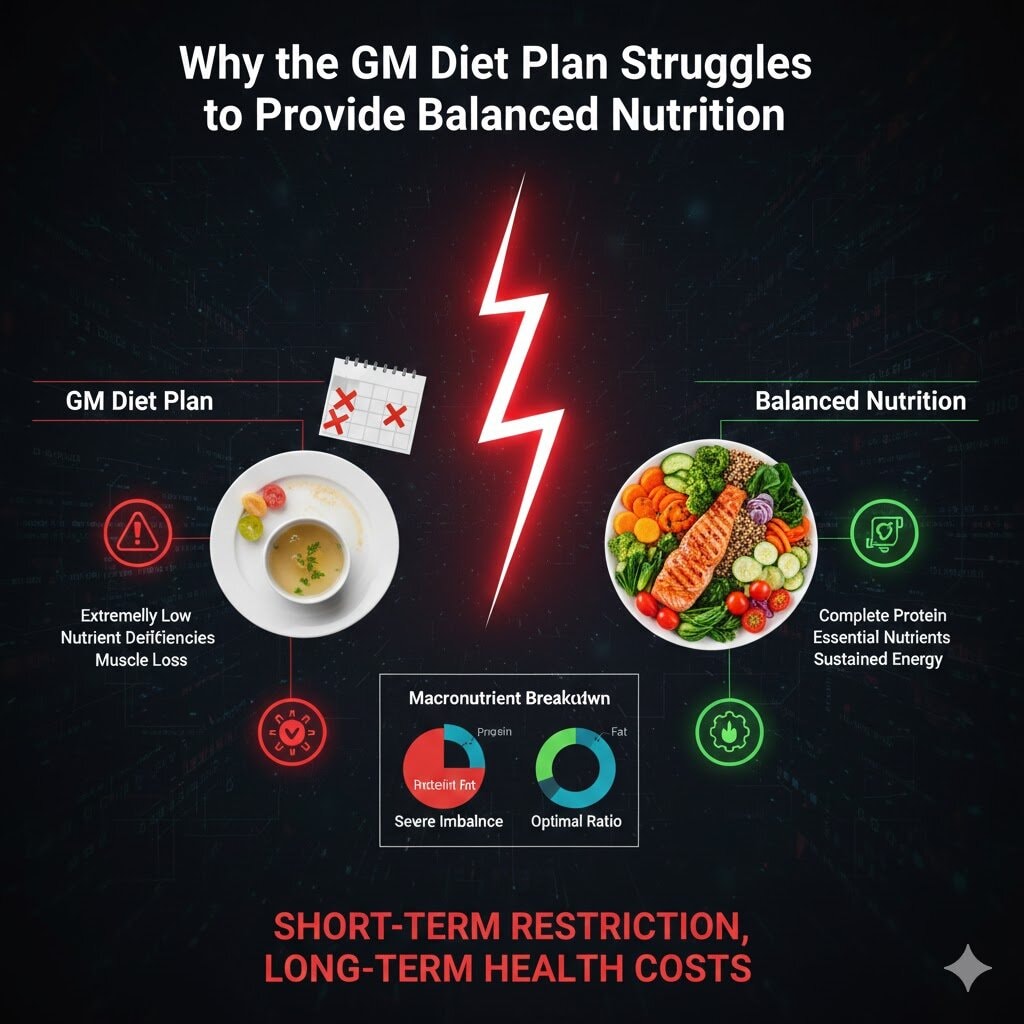
The plan lacks nutrient dense foods in the right proportion and often misses protein rich foods, making it weaker than an indian diet plan or a vegetarian indian diet built on complex carbohydrates and balanced meals. This creates gaps that affect energy and recovery.
"A diet is only as strong as the nutrients it delivers, not the rules it follows."
— Dr. Leena Varma, Public Health Dietitian
Seeing these shortcomings reveals why the plan feels incomplete.
Key nutrition gaps in the GM diet plan
-
Limited protein rich foods on several days, which affects muscle repair and satiety
-
Mild healthy fats intake, so hormones and vitamin absorption may not get full support
-
Complex carbohydrates appear only toward the end of the week, so energy can feel unstable earlier
-
Fewer nutrient dense foods from mixed plates, such as a regular indian diet plan with dal, roti, sabzi and curd
-
A vegetarian indian diet usually spreads lentils, paneer, vegetables and whole grains across the day, which supports more balanced meals
A typical home style thali might include dal, vegetables, roti or rice and a small curd bowl. This kind of plate combines complex carbohydrates, protein rich foods and fiber in a single meal, while the GM pattern often breaks these pieces apart across different days.
The result is a week that looks structured but does not behave like a true balanced diet.
Once these gaps are clear, the solution is not to abandon structure but to rebuild it around better choices that protect energy, recovery and fat loss together. The next step is to see how a modified GM diet plan can use the same seven day outline while supporting better fat loss with stronger nutrition.
How a Modified GM Diet Plan Supports Better Fat Loss
Adding brown rice, whole grains, stir fried tofu, cottage cheese, herbal tea, green tea, and lower high calorie beverages helps promote weight loss in a far safer way. These choices add structure without removing variety and help the body burn fat steadily.
Understanding these swaps explains how this version improves results.
| Day | Focus | Breakfast | Lunch | Dinner |
|---|---|---|---|---|
| Day 1 | Hydrating fruits with better fullness | Mixed fresh fruits with a small bowl of greek yogurt | Fruit bowl with chia seeds and a handful of nuts | Fresh fruit plate with a glass of herbal tea |
| Day 2 | Vegetables with light protein | Vegetable upma or poha with extra peas | Large mixed salad with sprouts or lentils | Stir fried vegetables with a small side of cottage cheese |
| Day 3 | Fruits and vegetables together | Fruit and vegetable smoothie with seeds | Mixed vegetable khichdi made with whole grains | Warm vegetable soup with a small side salad |
| Day 4 | Bananas, milk and protein support | Banana with milk and a spoon of nut butter | Banana slices with curd and a few seeds | Banana, warm milk and a cup of green tea |
| Day 5 | High protein and controlled carbs | Stir fried tofu or grilled chicken with tomatoes | Brown rice, lentil soup and salad | Cottage cheese with sautéed vegetables and tomato slices |
| Day 6 | Protein with plenty of vegetables | Besan chilla with curd | Grilled paneer or chicken with mixed vegetables | Vegetable stew with a side of whole grain toast |
| Day 7 | Brown rice and light mixed plates | Brown rice with vegetables and curd | Vegetable pulao with brown rice and fresh salad | Brown rice, fresh fruit salad and herbal tea |
This version moves the focus from short term restriction to better nutrition inside the same seven day frame. Protein, whole grains and thoughtful beverage choices protect energy and recovery while still helping the body burn fat steadily.
Once this structure feels clear, the next step is learning how to approach any 7 day diet plan in a way that keeps safety and practicality at the center.
Steps to Approach a 7 Day Diet Plan to Aid Weight Loss Safely

Using a diet plan for weight goals or a complete weight loss diet plan requires portion control, mindful eating, and selecting a healthy diet that fits your sample diet plan. Meal prep and choosing favourite foods wisely help build a plan for weight loss that lasts beyond a week.
The safest way to use a 7 day structure is to plan your plate before the week begins. That means deciding portions, choosing foods that you enjoy, and matching them with your routine so the plan feels realistic, not forced. A calm structure helps you hold the line when hunger or cravings appear.
Core steps to approach a 7 day diet plan safely
-
Start with a clear sample diet plan that fits your usual timings and daily workload
-
Use portion control by fixing plate sizes in advance instead of guessing at each meal
-
Choose a healthy diet pattern that includes fruits, vegetables, protein and whole grains every day
-
Add simple meal prep, such as chopping vegetables or planning a light turmeric breakfast for busy mornings
-
Keep favourite foods in smaller portions so the plan feels human and supports long term healthy habits
Large academic centres, including guides from places like johns hopkins research center, often stress that small, repeatable choices matter more than extreme rules.
A breakfast made of curd, fruit and lightly spiced eggs, for example, fits into a 7 day plan more easily than a pattern that shifts from one narrow rule to the next. The goal is to build a routine that you could repeat without feeling trapped.
Once this kind of structure is in place, the weekly plan stops feeling like a test and starts behaving like a tool. When that happens, the next useful step is to understand why fat loss can still slow down even when a strict 7 day diet plan seems to be in place.
8 Reasons That Causes Fat Loss To Slow Down Even on a Strict Plan
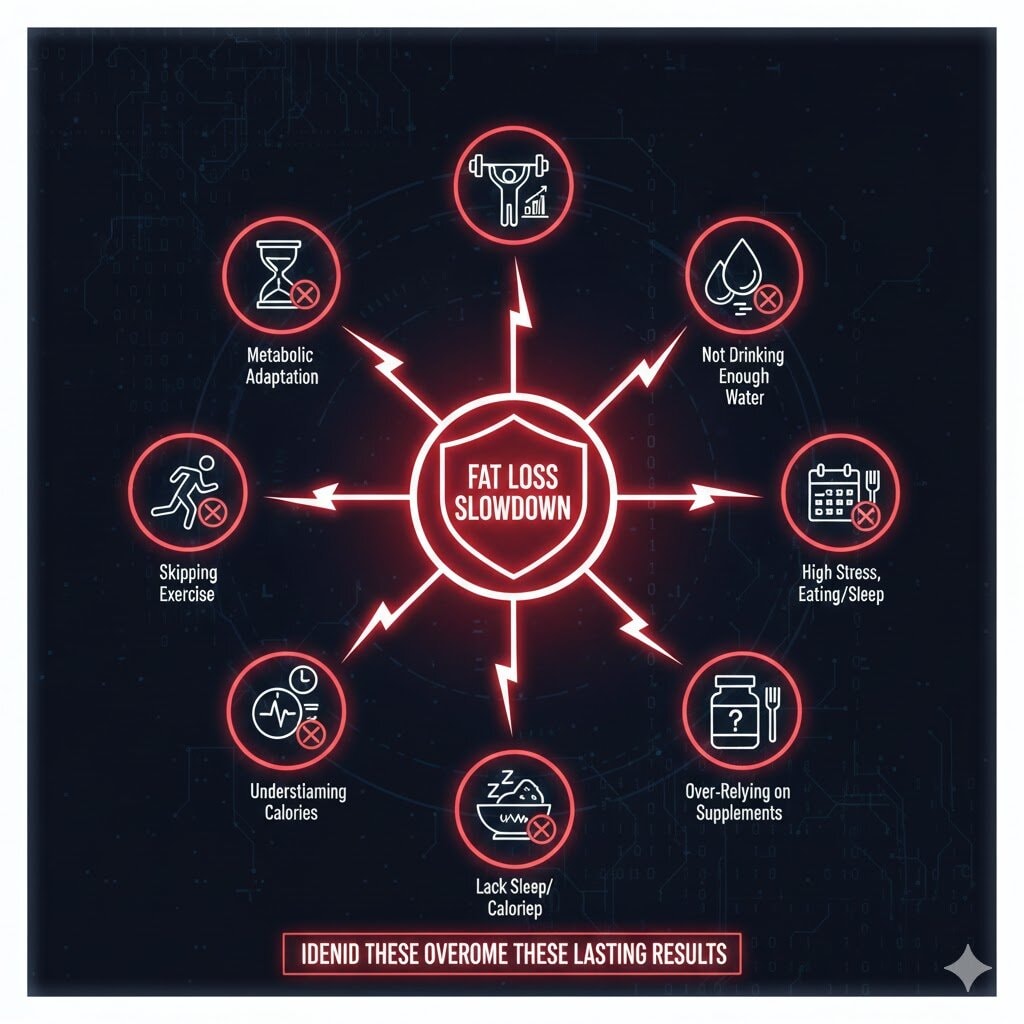
Fat loss slows when processed foods, weak physical activity habits, and low protein intake disrupt progress. Even with effort, a weight loss journey can stall because the body adapts and energy use shifts. Understanding these patterns helps you see what triggers a slowdown.
1. Water Loss Plateau
The first sharp drop on the scale often comes from losing water, not body fat, especially when salt and refined carbs are reduced. After this shift, weight change appears slower even when the deficit is still present, which is why the second week often feels less dramatic.
2. Lower Metabolic Rate
When the body senses fewer calories for several days, it starts using energy more slowly to protect basic functions. This quiet adjustment means the same diet creates a smaller deficit over time, so results flatten if food or movement are not reviewed and adjusted.
3. Inconsistent Calorie Deficit
A strict weekday plan can be undone by frequent bites, extra dressings or weekend indulgence that add more calories than expected. The overall average then drifts closer to maintenance, so progress looks slow even though the plan feels “on track” most of the time.
4. Reduced Physical Activity
Tighter eating often leaves people sitting more, skipping walks or avoiding small tasks that normally keep them active. As total daily movement falls, calories burned also fall, and the gap between intake and output shrinks, which reduces the visible impact of a diet week.
5. Poor Sleep Quality
Short or broken sleep disrupts appetite hormones and raises cravings for quick comfort foods. Recovery from workouts also suffers, so the same plan feels harder to follow and less rewarding, which slows the pace of change even when meals look similar on paper.
6. High Stress Levels
High stress keeps the body on alert and can alter how fuel is stored and used. People under pressure often snack mindlessly or eat faster, and these small responses add up, turning a structured plan into a pattern that quietly slows progress.
7. Low Protein Intake
Low protein intake leaves meals less filling and recovery weaker, which can increase hunger and reduce lean mass over time. Adding options like greek yogurt, lentil soup or paneer helps protect muscle, support daily movement and make the same calories work harder.
8. Hormonal Fluctuations
Natural hormone shifts across the month change water balance, hunger and digestion speed, especially for women. These changes can hold the scale in place for several days even when habits are steady, which is why trends over weeks matter more than single readings.
Once these slowdown factors are clear, the focus naturally shifts from blaming the plan to correcting the behaviours that disturb it day by day. Knowing where the friction comes from makes it easier to spot the common errors that quietly damage a diet plan for weight loss.
Common Errors That Ruin Your Diet Plan for Weight Loss
Many people rely on sugary drinks, fried foods, or packaged snacks without noticing how these choices delay progress. When you avoid processed foods and reduce such habits, your weight loss diet stays more stable. Spotting these errors early builds better control.
1. High Sodium Foods
High sodium foods cause water retention that hides real progress. Salt heavy meals make the body hold more fluid which delays visible change and can leave you feeling puffy even on low calorie days.
2. Sugary Beverages
Sugary beverages add more calories quickly without providing fullness. These drinks raise hunger soon after and slow consistent progress, especially when it is easy to forget how many calories sit inside a single glass or bottle.
3. Deep Fried Snacks
Deep fried snacks combine heavy fats with low nutrient value. These choices increase cravings and reduce the benefits of a controlled week because one plate can absorb a large share of your daily energy target.
4. Heavy Carbohydrate Meals
Heavy carbohydrate meals make a deficit harder to maintain because portions often exceed what the body requires. Large servings of rice, bread or pasta in a single sitting push energy intake up even when the rest of the day looks reasonable.
5. Packaged or Processed Foods
Packaged or processed foods carry hidden ingredients that disrupt calorie control. Extra oils, sugars and refined flour make the plan less predictable and reduce nutrient quality across the week.
6. Excess Caffeine
Excess caffeine affects sleep and stress levels. Both factors alter appetite and make consistent eating patterns harder to maintain, which slowly weakens the impact of an otherwise careful plan.
7. Late Night Eating
Late night eating shifts hunger and digestion the next day which often leads to overeating or irregular patterns that slow progress. Late snacks also tend to be heavier, saltier and more processed than daytime meals.
8. Low Water Intake
Low water intake reduces digestion efficiency, increases cravings and slows visible results. Hydration helps the body handle fiber, sodium and daily activity, so skipping water undercuts the work done with food choices.
Once these errors are clearly visible, the goal is no longer to chase perfection, it is to build steadier habits that keep your diet chart and your energy on the same side. That shift in focus naturally leads into the question of how to stay consistent without feeling exhausted through a demanding 7 day plan.
Steps to Stay Consistent While Following This Diet Chart Without Feeling Exhausted

Choosing high protein meals and light routines helps you move through the week without fatigue. These steps keep the diet chart practical enough to follow each day. Maintaining consistency is easier when your choices support energy and comfort.
1. Prioritize Hydration
Hydration supports digestion, controls cravings, and maintains energy during the week. It keeps the plan smoother and more manageable through daily changes.
A simple target, such as one glass on waking, one with each meal and one between meals, keeps water intake steady without counting every sip. Plain water, infused water or light herbal tea all contribute, and even small upgrades, like replacing one sugary drink with water, change how the day feels.
2. Add Light Electrolytes
Light electrolytes help maintain balance and energy during reduced calorie phases. They keep fluid levels steady without unnecessary sugars.
Coconut water, a pinch of salt with lemon in water or low sugar electrolyte drinks support you on hotter days or during longer walks. Small amounts through the day work better than one heavy drink, because they keep your system stable without flooding it.
3. Include Protein in Every Meal
Protein supports fullness and maintains lean mass which helps with stable energy. Consistent protein intake keeps hunger steady and meals predictable.
Adding curd with breakfast, lentils at lunch and paneer, tofu or lean chicken at dinner spreads protein across the day instead of packing it into one meal. Even simple choices, like a boiled egg or a small bowl of chana, can turn a carb heavy snack into a more balanced plate.
4. Keep Meals Small and Frequent
Small and frequent meals prevent sudden hunger spikes and keep energy steady. This approach avoids overeating and supports stable control.
For many people, three main meals with one or two light snacks, such as fruit and nuts, work better than long stretches without food. The goal is not to graze all day, it is to give the body regular fuel so the mind does not fixate on the next meal.
5. Maintain Regular Sleep Timing
Regular sleep supports appetite balance and recovery. Good rest keeps cravings manageable and preserves focus during the weekly routine.
Choosing a fixed window for sleep, even on weekends, helps hormones that control hunger and satiety stay in balance. Simple habits, like dimming screens before bed and keeping the last heavy meal earlier in the evening, support this rhythm without strict rules.
6. Take Short Walks Instead of Intense Workouts
Short walks are easier to sustain during low calorie phases. They support gentle calorie burn without draining energy or motivation.
Two or three walks of ten to fifteen minutes through the day, after meals or during breaks, can match the effect of one long session for many beginners. This keeps movement consistent while leaving enough strength for work, family and the demands of the plan.
7. Avoid Long Gaps Between Meals
Long gaps increase hunger spikes which often lead to overeating. Keeping meals steady helps maintain comfort throughout the plan.
If more than four hours pass between meals, a light snack such as fruit, buttermilk or a handful of nuts can bridge the gap. This prevents the “empty then overloaded” cycle that makes portion control harder at the next meal.
8. Use Simple, Repeatable Food Choices
Simple, repeatable meals reduce confusion and help maintain consistency. This keeps daily routines easier and prevents decision fatigue.
Rotating two or three breakfast ideas, a couple of lunch options and a few easy dinners is often enough for a 7 day stretch. When you know what fits your plate and your schedule, the plan feels more like a routine and less like a puzzle to solve at every meal.
When these small practices line up with your diet chart, the week starts to feel steady instead of draining, and that stability becomes the base for what comes after the seventh day.
With that foundation in place, the next question is how to handle life after the plan so progress continues instead of fading.
What to Do After the 7 Days End
Post-diet choices matter because your healthy snacks, eating slowly, and a steady weight loss plan help promote weight loss without sudden jumps. This phase is where your favourite foods and better routines shape long term results. Understanding this stage prevents rebound patterns.
After a rapid week, your body and routine both need a gentle shift toward regular eating. The aim is to keep the progress you have built while giving your system enough fuel to feel steady again.
Your body has just spent a week in reduced calorie intake, so the first step is to increase portions slowly rather than return to large, heavy meals. A calm, planned transition keeps appetite, digestion and mood more stable than sudden freedom at the table.
Key steps after a 7 day diet week
-
Keep one or two anchor meals similar to the diet week so your day still feels structured
-
Reintroduce complex carbohydrates in small portions at lunch and dinner instead of loading them into a single meal
-
Use healthy snacks such as fruit, curd or nuts to replace processed options that creep back by habit
-
Continue eating slowly, putting the fork down between bites and giving fullness signals time to appear
-
Plan favourite foods across the next week in measured portions rather than packing them into one celebration meal
-
Track weight or waist once a week instead of daily so you notice trends, not normal day to day swings
Handled this way, the end of the seven days becomes a starting point rather than a brief escape. That steady view sets up a conclusion that ties the whole 10 kg in 7 days conversation back to long term health and realistic progress.
FAQs
1. Does Rapid Weight Loss Affect Muscle Strength or Everyday Energy Levels?
Yes. Rapid weight loss often reduces water, glycogen and protein availability, which can lower muscle strength and day to day energy. Without enough protein and rest, the body pulls from lean mass to keep up.
2. How Much Water Should You Drink Daily During a Short-Term Diet Week?
Most people do well with 2.5 to 3 liters a day, adjusted for heat and activity. Steady hydration supports digestion and keeps cravings under control.
3. Can Brown Rice Be Included After the 7 Day Plan to Maintain Steady Progress?
Yes. Brown rice provides fiber and slow releasing carbohydrates, which support stable energy and help maintain progress after the plan ends.
4. How Does Sudden Calorie Intake Increase Affect Results After a Rapid Diet?
A sudden jump in calories leads to quick water regain and higher appetite, which can undo progress. Increasing calories slowly over a few days keeps the transition smoother.
5. Is It Safe to Exercise Intensely While Following a Strict Weekly Diet Plan?
Not recommended. Low calorie weeks reduce energy reserves, so intense workouts strain recovery. Light walks or gentle movement work better during strict routines.
Conclusion
A week of discipline can be useful, but it only becomes meaningful when it shapes what you choose afterward. Treat the seven days as a starting point that shows you how your body responds to structure, not as a promise of long term results.
If the goal is lasting change, build a routine that you can hold through ordinary days, not just strict ones. Pick meals you can repeat, movement you can maintain, and habits you can trust. Progress grows when the plan stops feeling like a shortcut and starts behaving like a steady practice.
If long-term progress is your goal, explore the easy Indian diet plans on My Balance Bite.
Nutritious, repeatable and designed for real life.




Leave a comment
Translation missing: en.blogs.comments.discription