

A home cooked meal often delivers more steady energy and fewer hidden calories than most packaged foods. When those meals are shaped with the right portions and timing, the body responds faster than people expect.
A weight loss 7 days diet plan built around homemade meals uses familiar flavours, balanced plates and a calm routine that keeps hunger steady. The approach works because the food already fits your daily life.
This structure turns simple ingredients into a natural fat burner, and the next section shows how seven days can create visible changes.
Are 7 Days Even Enough For Noticeable Weight Loss?
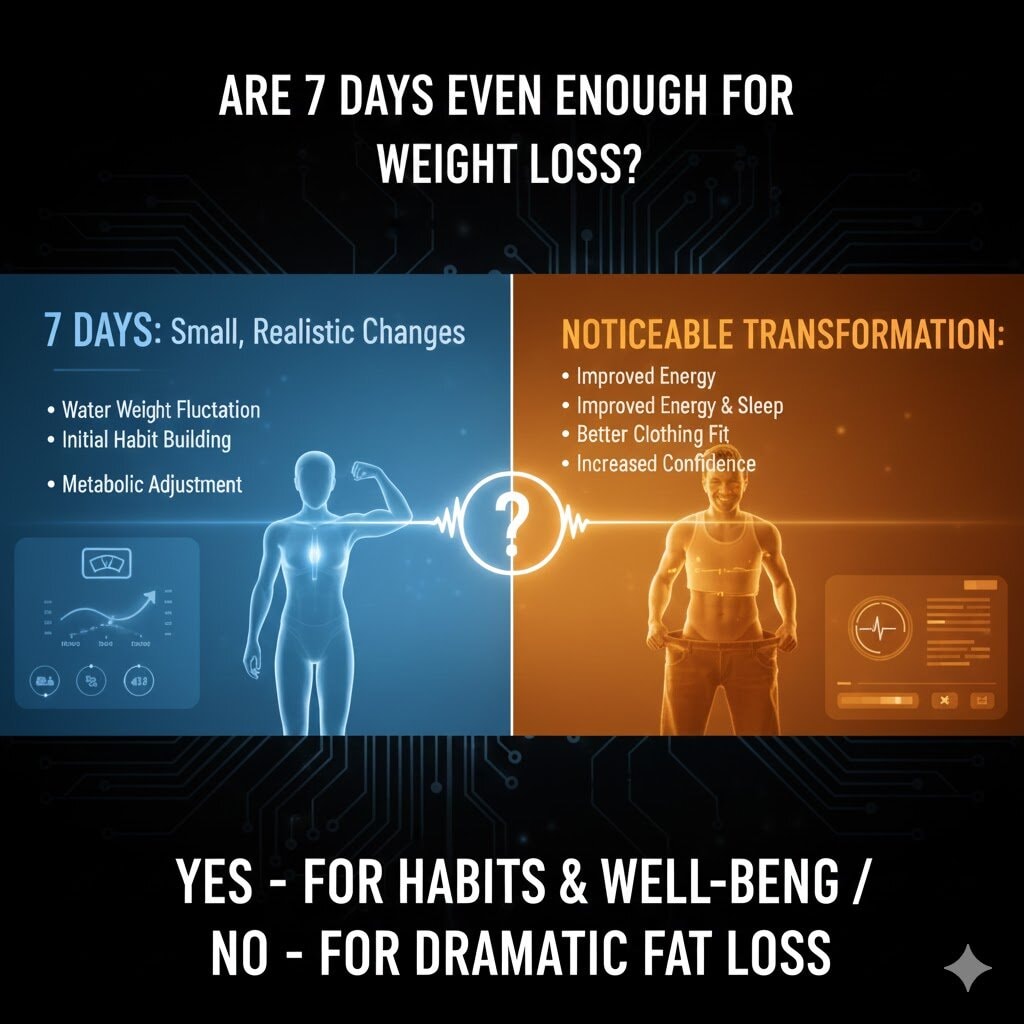
Seven days can create small changes when you manage fried foods, sugary beverages, processed foods, white bread and fruit juice while keeping fresh fruits, balanced diet habits and healthy weight goals in mind.
Managing water weight, fewer calories, better sleep and overall health helps the body respond faster. This section shows how these short term shifts actually work.
What Really Changes In Just 7 Days
In the first week, most change comes from water weight and improved digestion, not deep fat loss.
Cutting fried foods, processed foods, white bread and salty packaged items reduces bloating and extra fluid the body was holding.
Replacing sugary beverages and fruit juice with water or unsweetened drinks lowers sudden blood sugar spikes. This steadier pattern helps appetite feel calmer and reduces the urge to snack mindlessly between meals.
Small Food Shifts That Show Up On The Scale
-
Swap fried foods for grilled, steamed or lightly sautéed versions using less oil.
-
Replace sugary beverages with water, sparkling water or herbal tea most of the time.
-
Move from white bread and refined snacks to whole grains and simple home cooked options.
-
Choose fresh fruits over desserts that mix sugar and fat together in one serving.
These changes reduce overall calorie load without strict rules, and many people notice their clothes feel slightly easier within a week. The scale may move by a small amount, yet the bigger win is how the body feels lighter and more stable through the day.
How Balanced Habits Shape Short Term Results
A balanced diet in this short window focuses on fewer calories from low quality foods, not on skipping meals. Steady meals built from vegetables, lean proteins, healthy fats and fresh fruits support a healthy weight without sudden energy crashes.
Better sleep across seven nights also matters because the body regulates hunger hormones more smoothly when rest improves. When overall health is supported this way, the body finds it easier to respond to a calorie deficit and to hold that change.
Putting One Week In Perspective
A seven day plan is long enough to reduce water weight, calm cravings and prove that simple home food can move the needle.
Once that foundation is clear, the next question is whether the method is balanced or just another rigid pattern pretending to be a shortcut.
Why A GM Diet Plan Is Unsustainable Compared To Balanced Nutrition?
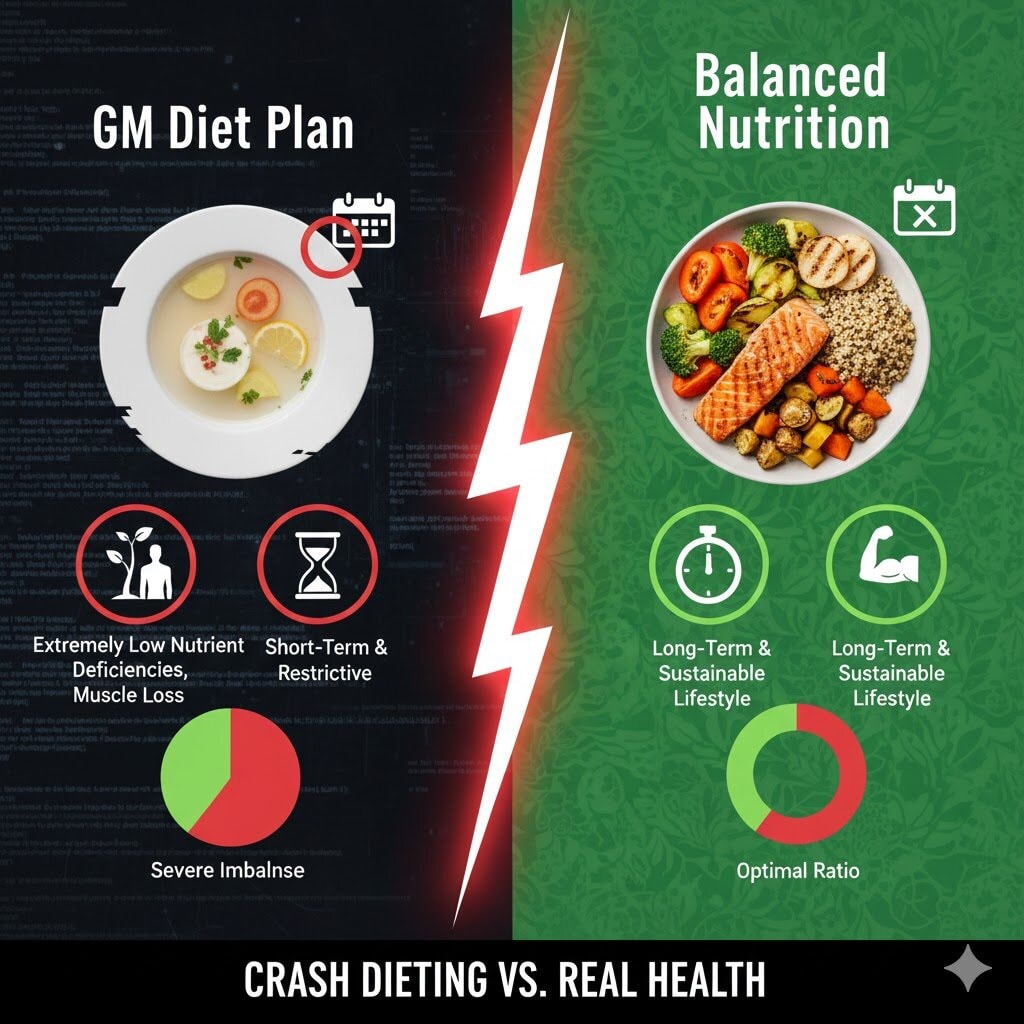
The GM diet, general motors diet and similar gm diet plan approaches rely on only vegetables, only fruits and refined carbs with excess salt. They ignore essential vitamins, essential nutrients, balanced meals and favourite foods, making long term weight management difficult.
“Shortcuts rarely teach you anything your body can keep.” – Dr. Marion Nestle
This part explains why balanced nutrition and steady calorie intake create safer progress than restrictive plans.
How the Body Reacts to Limited Variety
Balanced nutrition offers a wider mix of food groups and a more predictable effect on energy. A steady intake of protein, vegetables and whole grains keeps hunger calmer and reduces the intense swings that rigid plans trigger.
People often feel slightly lightheaded on GM style days because the body has little variety to work with.
Why Fast Drops Do Not Mean Real Fat Loss
The GM template drops water weight quickly because the meals have fewer calories and less density. That change looks dramatic on the scale but does not reflect actual fat loss or improved metabolic balance.
A broader plate gives the body the nutrients it needs to manage weight, preserve energy and maintain digestion.
What Lasts After the Week Ends
Short cycles may feel tempting, yet they rarely teach skills the body can hold beyond the week. Balanced nutrition builds habits that support weight control and help people feel grounded after meals.
Once this contrast is clear, it becomes easier to see how real progress depends on a structure that respects both variety and consistency.
7 Day Diet Plan For Weight Loss With Regular Home Food
A simple 7 day plan works better when it includes balanced meals, fresh fruits, whole grains, complex carbohydrates, nutrient rich foods, healthy diet routines and everyday Indian cuisine.
Options like lean proteins, olive oil, moong dal snack, sautéed spinach, vegetarian Indian diet and multigrain toast make the plan sustainable.
| Day | Breakfast | Portion | Lunch | Portion | Snack | Portion | Dinner | Portion | Calories |
|---|---|---|---|---|---|---|---|---|---|
| Day 1 | Multigrain toast with egg or paneer scramble | 1 toast + 1 egg or 50 g paneer | Roti, dal, sautéed spinach | 2 rotis + 1 cup dal + 1 cup spinach | Moong dal snack | 1 small bowl | Brown rice khichdi with veggies | 1 medium bowl | ~1350 kcal |
| Day 2 | Oats with fresh fruits | 1 cup oats + ½ cup fruits | Vegetable upma with curd | 1 plate upma + ½ cup curd | Roasted chana and nuts | 1 handful | Roti with paneer bhurji | 2 rotis + ½ cup paneer | ~1300 kcal |
| Day 3 | Poha cooked in olive oil with peas | 1 plate | Rice, dal, mixed veg sabzi | 1 cup rice + 1 cup dal + 1 cup veg | Fresh fruit salad | 1 bowl | Vegetable dalia | 1 medium bowl | ~1320 kcal |
| Day 4 | Greek yoghurt with fruits and chia seeds | 1 cup yoghurt + ½ cup fruits | Roti, chole, cucumber slices | 2 rotis + 1 cup chole + ½ cup cucumber | Moong dal snack | 1 small bowl | Grilled paneer with greens | 80 g paneer + 1 cup greens | ~1380 kcal |
| Day 5 | Vegetable besan chilla | 2 medium chillas | Brown rice, dal, sautéed spinach | ¾ cup rice + 1 cup dal + 1 cup spinach | Fruit bowl | 1 bowl | Roti with veg curry | 2 rotis + 1 cup curry | ~1300 kcal |
| Day 6 | Upma with vegetables | 1 plate | Roti, rajma, salad | 2 rotis + 1 cup rajma + salad | Fresh fruits or nuts | 1 fruit or 1 handful nuts | Light khichdi with curd | 1 bowl + ½ cup curd | ~1350 kcal |
| Day 7 | Turmeric breakfast milk + toast or sprouts | 1 cup milk + 1 toast or 1 bowl sprouts | Rice, dal, aloo sabzi | ¾ cup rice + 1 cup dal + ¾ cup sabzi | Roasted seeds | 1 handful | Vegetable soup with roti | 1 bowl + 1 roti | ~1250 kcal |
This seven day plan keeps calories controlled without shrinking meals, and the portions stay close to what most kitchens prepare each day. The mix of vegetables, whole grains and lean proteins supports steady digestion and calmer hunger.
Once these patterns settle, you can adjust portions or calories with the same simple structure to build the next stage of progress.
Want more easy Indian meal patterns? Browse fresh guides on MyBalanceBite.com for weekly meal plans and nutrient-rich recipes.
Foods You Can Eat When Cravings Hit During The 7 Day Plan
Cravings feel easier to manage when you choose healthy snacks, fresh fruit salad, cucumber slices, chia seeds, roasted seeds, fruit juice and herbal tea or green tea. These options fit portion control and mindful eating without affecting progress.
“Cravings are not commands, they are signals.” – Dr. Judson Brewer
This section shows how these choices keep the plan on track without feeling restrictive.
Types Of Cravings You Are Likely To Feel
Physical cravings often show up when meals are too far apart or too light on protein and fibre.
Emotional cravings appear when stress, boredom or habit link certain times of day with snacking.
Both patterns can slow a weight loss journey if every urge leads to random eating or extra sugar.
Planned options give your body something satisfying without nudging you toward weight gain.
Smart Snack Ideas That Support The Plan
-
Fresh fruit salad with seasonal fruits for fibre, sweetness and volume.
-
Cucumber slices with a light sprinkle of salt and lemon for crunch and hydration.
-
Roasted seeds or a small mix of nuts and seeds for healthy fats and texture.
-
Moong dal style snacks at home for a light hit of protein and fibre.
-
Chia seeds mixed into yoghurt or a small fruit bowl for better fullness.
These snacks stay close to home cooking, rely on simple ingredients and fit comfortably into standard portions.
How Drinks Can Help Manage Cravings
Herbal tea or green tea between meals gives warmth and a small pause before you decide to snack.
A glass of water, followed by a short walk at home, often blunts the sharp edge of an urge.
Some people like a diluted drink with apple cider vinegar before a meal for a sense of control.
The useful part is the pause and awareness, not the idea of any single miracle liquid.
Balancing Different Food Groups When You Snack
Snacks that combine different food groups tend to feel more satisfying than sugar alone.
Pairing fruits with a small amount of yoghurt, seeds or nuts stretches fullness without heavy calories.
Large centres such as the Johns Hopkins Research Center often highlight fibre, protein and healthy fats as anchors.
This mix keeps appetite calmer through the day and supports the main meals in your plan.
Keeping Cravings Part Of The Structure, Not A Problem
Cravings do not mean the plan has failed, they show you when extra support is needed.
Once you have a short list of reliable options, it becomes easier to stay steady through each week.
When cravings fit inside a clear structure, you can judge results more fairly and understand what seven days can realistically change next.
Get quick homemade snack ideas on MyBalanceBite.com that keep cravings under control without breaking your routine.
How Much Weight You Can Realistically Loose After 7 Days on This Diet Plan
Short term weight changes depend on water weight, balanced diet habits, healthy weight markers, calorie intake, vegetarian Indian diet choices and your overall health. Fresh fruits, healthy habits and general well being influence how the body responds.
This section clarifies what real, honest progress looks like in one week.
What Usually Changes In The First 7 Days
In the first week the body mostly drops water weight and reduces bloating. Less salt, fewer packaged foods and more fresh fruits help the body release stored fluid.
A balanced diet with home cooked meals calms digestion, so the stomach often feels lighter after a few days. These shifts show up quickly on the scale even before deeper fat loss begins.
Typical Weight Range You Might See
Most people see a change of around 0.5 to 1.5 kilos across seven days. Someone at 70 kilos who controls calorie intake and follows the vegetarian Indian diet plan may see the scale move slightly more at the start.
Part of that drop is water weight, part is a calorie gap between what you eat and what you burn. The pattern matters more than the exact number on any single morning.
Why Results Differ From Person To Person
Starting weight, muscle mass, sleep, stress and previous eating habits all influence early results. A person shifting away from heavy takeout and sugary drinks often sees a faster early change than someone already near a healthy weight.
Hormones, medication and medical conditions also shape how the body responds to a short deficit. This is why two people on the same plan rarely see identical numbers after seven days.
How To Read The Scale Without Overreacting
Daily weigh ins move because of water, digestion and meal timing. A better method is to track the average across the week instead of reacting to a single shift.
Pair the number with other signals of overall health, such as stable energy and how clothes fit around the waist. These markers show whether the plan is moving you toward a healthier weight.
What One Week Can And Cannot Do
Seven days can reset habits, reduce water weight and prove that home cooked food supports steady progress. It cannot complete a long weight loss journey or replace the habits needed for steady fat loss.
Once you know what the first week can deliver, the next step is shaping the plan to your own body type and daily rhythm.
How To Personalise This 7 Day Meal Plan For Your Body And Routine

Personalisation depends on portion control, essential nutrients, essential vitamins, lean proteins, healthy fats, complex carbohydrates and your blood sugar response. Lifestyle factors like healthy habits, poor sleep and guidance from a healthcare professional also shape your plan.
This section explains how different bodies need different adjustments.
1. Endomorph Body Type
Endomorphs gain weight more easily, so portion control, healthy fats and balanced meals matter a lot. Their body responds better to steady meal timing, lighter carbs and foods that help manage weight fluctuations. Staying consistent with movement and controlled calories supports smoother progress.
Key Adjustments For Endomorphs
-
Keep rotis, rice and other complex carbohydrates in modest portions at lunch and smaller at dinner.
-
Use healthy fats like olive oil and nuts in teaspoons, not free pours from the bottle.
-
Build plates around vegetables and lean proteins, for example dal, sabzi and a small serving of brown rice.
2. Mesomorph Body Type
Mesomorphs respond well to lean proteins, balanced diet patterns and moderate carbohydrates. They maintain muscle easily but still need structure to avoid overeating. A blend of steady protein, vegetables and simple carb choices keeps their energy stable and progress predictable.
Key Adjustments For Mesomorphs
-
Keep protein present at every meal, such as paneer, eggs, curd or lentils.
-
Share carbohydrates evenly across the day instead of loading them only at night.
-
Use strength or body weight exercise to support the natural build without raising calorie needs too sharply.
3. Ectomorph Body Type
Ectomorphs often have a fast metabolism that burns through energy quickly. Nutrient rich foods, complex carbohydrates and healthy snacks help maintain balance without unwanted weight loss. Regular meals with enough calories keep appetite and energy steady throughout the day.
Key Adjustments For Ectomorphs
-
Include extra complex carbohydrates like brown rice, millets or dalia in lunch and dinner.
-
Add calorie dense but healthy extras, such as nuts, seeds and curd with fruits.
-
Avoid long gaps between meals so that energy and mood stay steady.
4. Apple Body Shape
Apple shapes experience central fat storage and more frequent blood sugar swings. Meals with steady protein, vegetables and slow digesting carbs help maintain balance. Managing cravings and stabilising portions reduces daily energy dips and makes eating patterns more predictable.
Key Adjustments For Apple Shapes
-
Favour whole grains over refined options to smooth blood sugar changes.
-
Pair fruits with yoghurt or nuts instead of eating sugar heavy snacks alone.
-
Keep a close watch on sugary drinks and desserts that cluster around the evening.
5. Pear Body Shape
Pear shaped bodies store more weight around the hips and thighs. Balanced meals, portion control and healthy eating habits help maintain better distribution. Consistent protein intake and controlled carbs support a more even appetite and reduce unnecessary calorie intake.
Key Adjustments For Pear Shapes
-
Avoid turning meals into mostly carbs such as only rice or only roti.
-
Add extra vegetables to lunch and dinner to increase volume without extra calories.
-
Use protein rich foods in each meal so that hunger feels calmer between eating times.
6. Rectangle Body Shape
Rectangle body types benefit from meals rich in lean proteins, whole grains and healthy fats. Their frame responds well to structured eating rather than restrictive patterns. Choosing nourishing foods adds shape, strength and steady energy across the week.
Key Adjustments For Rectangle Shapes
-
Spread protein across the day to support muscle tone, not just at dinner.
-
Include whole grains in measured portions to support training or activity.
-
Use healthy fats thoughtfully, for example a teaspoon of oil for cooking and a few seeds as topping.
7. Hourglass Body Shape
Hourglass shapes work best with balanced diet choices, nutrient rich foods and fresh fruits that keep meals satisfying. They maintain natural symmetry but still need structured portions to prevent overeating. Consistent, moderate meals help preserve energy and stability.
Key Adjustments For Hourglass Shapes
-
Keep all food groups present on the plate, rather than favouring only carbohydrate heavy meals.
-
Use fresh fruits as part of breakfast or snacks instead of frequent desserts.
-
Maintain regular meal times so that strong hunger does not lead to large evening portions.
Bringing Personalisation Back To The Plan
Personalisation is less about strict labels and more about noticing how your own body responds to portion control, meal timing and different food groups.
Once those patterns feel clear, the next step is to turn them into a simple, repeatable meal structure that supports high protein, balanced nutrition and daily comfort.
Steps To Build Your Own Meal Plan That Supports High Protein And Balanced Nutrition
A strong meal plan comes from choosing lean proteins, complex carbohydrates, whole grains, olive oil, healthy fats, fresh fruits, low fat milk and nutrient rich foods. Portion control, mindful eating and a simple sample diet plan support a steady calorie intake.
This section outlines how to create a repeatable meal plan that keeps you consistent.
1. Set Your Daily Calorie Target
A clear calorie intake target makes planning easier and prevents extreme cuts that slow progress. A balanced approach supports energy, helps manage weight and keeps meals flexible throughout the week.
How To Set It
-
Use a simple range instead of a single number, for example 1300 to 1500 kcal for many adults.
-
Keep most days near the middle of that range rather than always near the lowest point.
-
Adjust slightly if you feel constant tiredness or constant hunger after a few days.
2. Fix Your Daily Protein Goal
Daily protein targets guide appetite control and steady energy. Lean proteins and low fat milk help maintain fullness and support your routine. Hitting this number daily builds consistency.
How To Fix It
-
Aim for about 1.2 to 1.6 grams per kilo of body weight.
-
Spread protein across all meals, not just a heavy dinner.
-
Include sources like dal, curd, paneer, eggs or sprouts in most plates.
3. Choose Your Core Protein Sources
Lean proteins, greek yoghurt and multigrain toast make your meals simple and reliable. Choosing a small list of core protein sources reduces decision fatigue and keeps your diet predictable.
Good Core Options
-
Paneer, curd, greek yoghurt, toned milk.
-
Eggs, dals, chana, rajma and moong.
-
For non vegetarians, small portions of fish or chicken in home style recipes.
4. Add Whole-Carb Bases For Steady Energy
Whole grains, brown rice and complex carbohydrates support sustained energy. These carb sources digest slowly and keep appetite stable through the day.
Smart Carb Bases
-
Roti from whole wheat or millet instead of only refined flour.
-
Measured portions of brown rice or hand pounded rice.
-
Dalia, oats or poha cooked with vegetables for breakfast.
5. Fill Half Your Plate With Vegetables
Vegetables, sautéed spinach and cucumber slices increase volume without adding many calories. This makes meals more filling and nutrient dense while supporting appetite control.
Easy Ways To Do It
-
Keep one full katori of cooked sabzi and one of salad at lunch and dinner.
-
Use sautéed spinach, bhindi, lauki or mixed veg as everyday staples.
-
Add sliced cucumber or carrot to plates instead of extra roti.
6. Add Healthy Fats In Controlled Portions
Healthy fats like olive oil, roasted seeds and chia seeds create satisfying meals without overshooting calories. Small portions improve taste and nutrition without excess.
Portion Guide For Fats
-
Use one teaspoon of oil per serving when cooking.
-
Add one small spoon of roasted seeds or chia seeds to a snack or yoghurt.
-
Limit visible fats such as butter or ghee to very small amounts.
7. Plan Meal Timing Around Your Routine
Healthy habits and mindful eating work best when meals follow a predictable rhythm. Steady timing keeps hunger balanced and supports promote weight loss patterns naturally.
Rhythm That Works For Most People
-
Keep three main meals and one or two light snacks.
-
Try not to leave more than four hours between meals.
-
Keep dinner lighter in carbs but still complete in protein and vegetables.
8. Create A Simple Repeatable Meal Framework
A dependable structure built from balanced meals, a sample diet plan, nutrient rich foods and a clean meal plan helps maintain consistency. Simplicity keeps you on track.
Sample Daily Pattern
-
Breakfast, whole grains plus protein, for example upma with curd.
-
Lunch, roti or rice with dal, sabzi and salad.
-
Snack, fruit, yoghurt or a small moong dal snack.
-
Dinner, lighter portion of carbs, vegetables and a clear protein source.
9. Prep Ingredients In Advance
Prepping fresh fruits, fruit juice alternatives and moong dal snack items saves time and lowers pressure during busy hours. Small prep steps make each day smoother.
Helpful Prep Tasks
-
Chop basic vegetables for two days and store them safely.
-
Soak dals or pulses in advance for faster cooking.
-
Boil eggs, roast seeds or prepare a batch of moong dal snack once or twice a week.
10. Keep Backup Meals Ready For Busy Days
Healthy snacks, fresh fruit salad and convenient vegetarian Indian diet options protect your routine when days get hectic. Easy choices prevent last minute overeating.
Reliable Backups
-
Curd with fruits, or a simple fruit bowl.
-
One or two besan chillas with leftover sabzi.
-
Vegetable soup with a roti, or quick upma from pre chopped vegetables.
Turning Steps Into A Daily Habit
These steps turn a loose idea of healthy eating into a clear pattern built on lean proteins, whole grains, fresh fruits and controlled fats. Once this pattern feels natural, the next useful move is to watch for common mistakes that quietly weaken it and correct them before they undo your work.
Common Mistakes People Make While Following A 7 Day Diet Plan

Many people fall into processed foods, packaged snacks, sugary beverages, fruit juice, white bread, high calorie beverages and excess salt without realising the impact. Poor sleep, weak portion control, unhealthy calorie intake and ignoring healthy habits disrupt progress.
This section reveals the mistakes that quietly slow down results.
1. Creating Too Large A Calorie Deficit
A big calorie deficit reduces energy, increases cravings and slows progress. Controlled reductions work better and keep your routine manageable.
How This Shows Up
-
Skipping major portions from meals and feeling lightheaded by evening.
-
Cutting oil, carbs and snacks all at once without a clear structure.
Better Way To Handle It
-
Reduce each meal slightly instead of removing full meals.
-
Keep vegetables, lean protein and a small serving of whole grains on most plates.
2. Ignoring Daily Protein Intake
Skipping protein affects hunger, fullness and stability. Daily intake helps maintain muscle and improve satiety through the day.
How This Shows Up
-
Plates built mainly from rice, roti and sabzi with little dal or curd.
-
Long gaps after meals because the food did not feel satisfying.
Better Way To Handle It
-
Add dal, curd, paneer, eggs or sprouts to most meals.
-
Include a small protein rich snack, such as yoghurt with seeds or chana.
3. Eating Healthy Foods In Excess
Even healthy foods slow progress when portions grow too large. Eating mindfully keeps calorie intake aligned with your goals.
How This Shows Up
-
Large bowls of nuts, seeds or trail mix through the evening.
-
Repeated fruit servings after meals, treating them as unlimited.
Better Way To Handle It
-
Use small katoris for nuts, seeds and berries.
-
Keep fruit to one or two pieces at a time and enjoy them slowly.
4. Skipping Meals To Lose Weight Faster
Skipping meals leads to rebound hunger and overeating later. A predictable schedule keeps appetite stable and energy steady.
How This Shows Up
-
Leaving breakfast or lunch out and then eating heavily at night.
-
Feeling strong cravings for sweets or fried foods after long gaps.
Better Way To Handle It
-
Keep three main meals and one or two light snacks daily.
-
Use smaller plates rather than empty slots in your schedule.
5. Relying Only On Brown Rice And Cutting Other Carbs
Depending on only brown rice restricts variety and satisfaction. Mixing carb sources supports more balanced meals and better long term adherence.
How This Shows Up
-
Replacing all roti or other grains with brown rice at every meal.
-
Feeling bored with texture but staying stuck with one option.
Better Way To Handle It
-
Rotate brown rice with roti, dalia or millet based dishes.
-
Keep portions measured while still enjoying different textures across the week.
6. Drinking High Calorie Beverages
High calorie beverages add unnecessary energy that slows fat loss. Drinks should support hydration without hidden calories.
How This Shows Up
-
Regular fruit juice, sweetened coffee or soft drinks with meals.
-
Smoothies that mix fruits, sugar and full fat dairy in one glass.
Better Way To Handle It
-
Choose water, herbal tea or plain green tea most of the time.
-
If using juice, keep it diluted and occasional, not daily.
7. Not Tracking Portions Properly
Loose portion control leads to inconsistent progress. Simple measurement habits help maintain predictable results, just like a high protein diet chart can provide.
How This Shows Up
-
Serving straight from large pots or family bowls at the table.
-
Guessing quantities for oil, rice or snacks every day.
Better Way To Handle It
-
Use katoris for rice, dal and sabzi, and keep counts consistent.
-
Measure oil with a spoon rather than pouring directly into the pan.
8. Expecting Fast Fat Loss In The First Week
Expecting dramatic changes early creates pressure and disappointment. Realistic expectations keep motivation stable.
How This Shows Up
-
Weighing multiple times daily and feeling restless about small shifts.
-
Judging the entire plan based on the first few days alone.
Better Way To Handle It
-
Track weight a few times a week and watch the trend, not each reading.
-
Pair the scale with how clothes fit and how your energy feels.
9. Following A GM Diet Style Pattern Without Balanced Nutrition
A GM diet pattern lacks essential nutrients and relies on limited choices. Balanced eating supports better energy and sustainability.
How This Shows Up
-
Copying only fruits or only vegetables days from online charts.
-
Feeling tired and unsatisfied, then swinging back to heavy foods.
Better Way To Handle It
-
Keep fruits and vegetables, but anchor meals with protein and whole grains.
-
Use the seven days to practise balanced plates, not just restricted ones.
10. Not Managing Cravings Or Hunger Patterns
Unmanaged cravings disrupt consistency. Awareness and preparation help keep meals aligned with your goals.
How This Shows Up
-
Grabbing packaged snacks or sweets during late night cravings.
-
Reaching for food whenever boredom or stress appears.
Better Way To Handle It
-
Keep a short list of planned snacks, such as fresh fruit salad or moong dal mixes.
-
Use a brief pause, water or tea before deciding whether you still want food.
Linking Mistakes To Long Term Progress
Each of these patterns can be corrected with small, steady changes, and those corrections make the seven days a fair test of your plan. Once these foundations feel secure, the next focus is learning how to carry your progress beyond the week and keep the results stable.
Tips To Maintain Progress Once The 7 Days Are Over
Maintaining progress depends on healthy habits, mindful eating, balanced diet choices, sustainable weight loss methods, whole grains, fresh fruits and nutrient rich foods. Herbal tea, green tea and steady healthy eating patterns support overall health and long term well being.
“Consistency is a quiet skill, and it builds the strongest results.” – James Clear
This section shows how to extend your results into the weeks that follow.
Shift From A Strict Plan To A Stable Pattern
A seven day structure teaches you which meals keep you full and which patterns feel calm. The goal now is to keep that same balance with slightly more flexibility, not to return to random eating.
You can keep whole grains, fresh fruits and nutrient rich foods as the base of most plates. Mindful eating and portion awareness stay in place while the exact dishes rotate through the week.
Core Habits To Keep After 7 Days
-
Eat mostly home cooked meals built from vegetables, whole grains and lean protein.
-
Keep a similar meal timing pattern so hunger stays predictable through the day.
-
Use mindful eating, for example sitting down to eat and putting the phone away.
-
Drink water through the day and add herbal tea or green tea when you want warmth.
-
Keep at least one serving of fresh fruits daily to support fibre and micronutrients.
These habits support sustainable weight loss rather than short runs of restriction. They also protect overall health and well being without needing constant willpower.
How To Handle Weekends And Social Meals
Weekends and social events can change routine, yet they do not need to reset your progress. Planning ahead makes these days part of the structure instead of exceptions that feel random.
You can:
-
Eat a lighter, balanced meal before going out so you arrive comfortably hungry, not starving.
-
Focus on vegetables, protein and whole grains first when you build a plate from a buffet.
-
Choose water or unsweetened drinks alongside one small treat you genuinely enjoy.
This keeps the feeling of freedom while still keeping most choices aligned with your balanced diet approach. The week remains steady even when one meal is more relaxed.
Simple Checks To See If You Are Maintaining Well
A few gentle checks show whether your habits are holding after the first week. They keep the focus on trends instead of daily perfection.
Useful checks include:
-
How clothes sit around the waist and hips over two to three weeks.
-
How often you rely on packaged snacks instead of planned options.
-
How steady your energy feels between meals on most days.
If these signals stay stable, your pattern is supporting both your weight and your overall health. If they drift, you know it is time to return to the structure that worked during the seven days.
When To Adjust Portions Or Calories
Your needs may change as you lose weight or become more active. Adjusting portions calmly is more effective than starting a completely new plan each time.
You can:
-
Slightly reduce portions of calorie dense foods if progress slows for several weeks.
-
Add a small snack built from fruits or yoghurt if you feel genuine hunger between meals.
-
Revisit your plate balance, checking that vegetables and lean protein still fill most of the space.
These small shifts keep the plan aligned with your current body, not only your starting point. They support long term, sustainable weight loss while keeping meals satisfying and familiar.
Once the first week proves that whole grains, fresh fruits and mindful eating work in your life, the plan becomes less about willpower and more about rhythm. These habits turn short term structure into a long term pattern that you can keep refining as your body and routine change.
FAQs
1. Can You Follow This 7 Day Diet Plan While Eating Out Or Ordering Food?
Yes, if you choose simple dishes. Pick grilled, steamed or lightly sautéed options with vegetables and lean protein. Avoid heavy gravies, fried foods and sugary beverages. Keep portions moderate and balance the rest of the day with lighter home cooked meals.
2. How Do You Reduce Water Retention During A Short Weight Loss Plan?
Cut excess salt, packaged snacks and sugary beverages. Drink enough water, add potassium rich foods like banana and cucumber and keep meals simple with whole grains and vegetables. Light activity, such as a short walk after meals, also helps reduce fluid buildup.
3. What’s The Safest Way To Handle Social Events Or Festival Meals During These 7 Days?
Eat a small balanced meal at home before going. Start your plate with vegetables and protein, then add small portions of heavier dishes. Sip water or green tea and keep desserts to one controlled serving. Return to your routine at the next meal.
4. How Many Calories Should A Beginner Track If They’ve Never Counted Before?
Start with a broad range like 1300 to 1500 kcal depending on appetite and activity. Focus on balanced plates instead of exact numbers. Track only major items like oil, rice, roti and snacks. Keep the pattern consistent for a week before adjusting.
5. Can This 7 Day Plan Be Adapted For People With Irregular Sleep Schedules Or Night Shifts?
Yes. Shift the meal timing to your waking hours and keep the structure the same. Eat a light first meal, a balanced main meal in the middle of your active period and a lighter dinner. Avoid heavy snacks late in the shift and keep hydration steady with water or herbal tea.
Conclusion
A seven day structure built around homemade meals shows how much the body can do with steady portions and simple food groups. The next step is to keep these patterns present through the week and adjust them gently as your appetite, routine and energy shift.
When meals stay predictable and balanced, progress becomes a rhythm you can follow rather than a phase you move in and out of.
If you want weekly balanced diet habits to feel natural, explore practical eating guides on MyBalanceBite.com designed for real Indian homes




Leave a comment
Translation missing: en.blogs.comments.discription