

Most women with PCOS eat carefully yet still wake up bloated, feel heavy through the day or watch their symptoms spike without warning. The body reacts sharply even when the diet looks normal.
A structured 7 day PCOS diet plan fixes this pattern by steadying insulin, calming inflammation and reducing symptoms quickly. It gives the body a rhythm that everyday meals often fail to create.
Experts trust this plan because it follows principles that support hormones and help progress stay predictable. It offers the stability most women never get from trial and error eating.
What Women With PCOS Often Get Wrong About Their Diet?
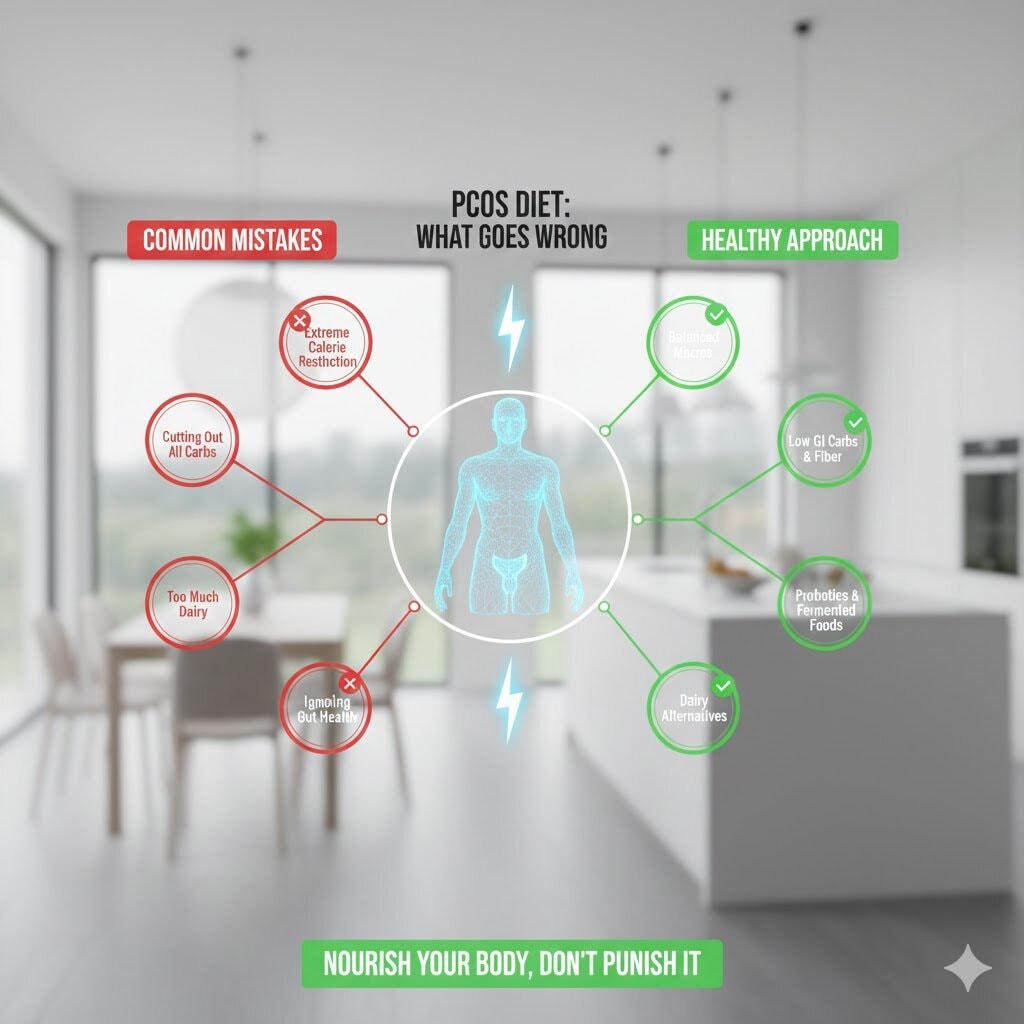
Many women with PCOS unknowingly rely on processed foods, refined carbohydrates, sugary foods and white bread that worsen symptoms. These choices can aggravate PCOS symptoms, trigger irregular periods, disrupt male hormones and affect menstrual cycles.
Switching from these habits toward natural foods supports a healthy weight and reduces daily discomfort. This makes it important to understand where these patterns begin.
1. Choosing convenience over nourishment
Processed snacks, ready meals and packaged “health” foods often carry refined carbohydrates and added sugars. They raise insulin quickly, then fall fast, which intensifies pcos symptoms and keeps hormonal shifts more pronounced through the day.
2. Misreading fullness as balance
A heavy meal that fills the stomach may not support the body. When natural foods are missing, the body struggles with healthy weight control and reacts with excess hair growth or other signs linked to male hormones.
3. Eating in long, irregular gaps
Extended breaks between meals encourage the body to grab sugary foods for quick comfort. This raises blood sugar sharply and keeps menstrual cycles unsettled, which many women mistake for stress rather than a diet pattern.
4. Using the wrong carbs at the wrong time
Carbohydrates are not the issue. Repeated intake of white bread, sugary snacks or refined meals is what disrupts the body’s rhythm. Better carb quality helps manage pcos symptoms more predictably.
Example
A day that starts with white bread and jam, moves to a creamy fast meal at lunch and ends with biscuits at night looks ordinary but keeps blood sugar unstable. This pattern affects hormones in ways that remain unnoticed until symptoms rise.
Once these patterns are clear, the next step is shaping a 7 day PCOS diet chart that supports both weight loss and hormonal balance with deliberate structure.
You can also check MyBalanceBite’s easy food swaps that help stabilise energy and reduce daily triggers without cutting out major foods.
7 Day PCOS Diet That Supports Both Weight Loss And Hormonal Balance
A structured 7 day PCOS diet brings together a balanced diet, a healthy diet and smarter food combinations that address weight gain and support weight loss. This approach helps hormonal balance, keeps blood glucose steady, manages stress and strengthens overall pcos management.
It also guides you toward weight management that feels achievable. This foundation prepares you for how the seven days are built.
| Day | Meal Timing | Food Item | Portion | Calories |
|---|---|---|---|---|
| Day 1 | Morning | Warm water with cinnamon | 1 glass | 0 |
| Breakfast | Banana smoothie | 1 medium glass | 180–200 | |
| Lunch | Brown rice, mixed vegetable, dal | 1 cup each | 420–480 | |
| Evening Snack | Green tea, nuts | 1 cup, 1 handful | 80–120 | |
| Dinner | Vegetable khichdi | 1 medium bowl | 280–320 | |
| Day 2 | Morning | Almond milk | 1 cup | 40–60 |
| Breakfast | Nuts breakfast paneer paratha | 1 medium | 260–300 | |
| Lunch | Whole grains, leafy vegetables | 1 cup each | 350–400 | |
| Evening Snack | Salad evening snack | 1 bowl | 60–90 | |
| Dinner | Tofu stir fry | 1 medium bowl | 250–300 | |
| Day 3 | Morning | Low GI fruit bowl | 1 bowl | 90–120 |
| Lunch | Sweet potato, dal | 1 medium, 1 cup | 300–350 | |
| Evening Snack | Seeds dinner rice | 1 small bowl | 150–180 | |
| Dinner | Chicken breast with sautéed vegetables | 120 g, 1 cup | 320–360 | |
| Day 4 | Morning | Warm lemon water, oatmeal | 1 glass, 1 bowl | 200–240 |
| Lunch | Brown rice, leafy vegetables | 1 cup each | 350–400 | |
| Evening Snack | Green tea | 1 cup | 0 | |
| Dinner | Salmon salad | 1 plate | 320–380 | |
| Day 5 | Morning | Herbal tea, egg whites or tofu | 1 cup, 2 egg whites or 80 g tofu | 120–150 |
| Lunch | Quinoa, mixed vegetable, olive oil | 1 cup, 1 cup, 1 tsp | 380–420 | |
| Evening Snack | Roasted peanuts | 1 handful | 120–150 | |
| Dinner | Peanuts dinner vegetable khichdi | 1 bowl | 280–330 | |
| Day 6 | Morning | Almond milk smoothie | 1 glass | 160–200 |
| Lunch | Whole grains, dal | 1 cup each | 380–430 | |
| Evening Snack | Fruit and nuts | 1 cup, 1 handful | 140–180 | |
| Dinner | Mixed vegetable soup | 1 large bowl | 160–200 | |
| Day 7 | Morning | Green tea, light fruit bowl | 1 cup, 1 bowl | 80–120 |
| Lunch | Brown rice, dal | 1 cup each | 360–420 | |
| Evening Snack | Salad evening snack | 1 bowl | 70–100 | |
| Dinner | Vegetable khichdi, curd | 1 bowl, 1 small bowl | 320–360 |
These seven days show how small food choices shape blood glucose, hormone rhythm and daily comfort when the portions stay steady. Once this structure feels familiar, the next step is understanding the benefits that make this plan work with such consistent results.
If planning meals every day feels overwhelming, MyBalanceBite offers structured templates that help you follow a PCOS diet without guessing portions.
Key Benefits of This 7 Day PCOS Diet Plan
This plan supports women dealing with polycystic ovary syndrome(Pcos) by focusing on blood sugar control, insulin resistance and insulin sensitivity. It reduces pcos symptoms through anti inflammatory choices, supports healthy meals and improves the body’s ability to regulate insulin levels.
These shifts also create a more stable routine for long term pcos treatment.
1. Supports Insulin Resistance Management
Stabilising insulin becomes easier when meals avoid white bread and sugary snacks and use foods that manage blood sugar levels more steadily. Small adjustments strengthen how the body responds and improve control across the day.
2. Reduces Inflammation With Anti Inflammatory Foods
Anti inflammatory foods reduce worsen pcos symptoms that follow processed meals. Natural options like salmon salad or leafy vegetables ease daily discomfort and lower the triggers behind flare ups.
3. Helps You Lose Weight More Consistently
Steady weight control grows with fewer refined foods and more whole choices like banana smoothie or tofu stir fry. A low carb diet is not required, but choosing better carbohydrates helps the body lose weight without sudden shifts.
4. Stabilizes Hormones With Healthy Fats
Healthy fats support a calmer hormonal rhythm and reduce signs linked to male sex hormones such as excess hair growth. Balanced fats paired with natural foods help build stability across the week.
5. Improves Satiety Through Lean Proteins
Lean proteins create fullness that reduces frequent snacking. Meals with chicken breast, tofu stir fry or small additions like feta cheese keep hunger predictable and support steady eating habits.
6. Enhances Energy Levels Throughout The Day
Energy becomes smoother when meals avoid sugary foods and include natural foods that support stable blood sugar. This rhythm helps mornings feel clearer and evenings less tiring.
7. Makes Managing PCOS Easier With Structured Meals
Structured meals reduce random intake and help pcos patients respond better to symptoms. Simple routines like green tea or almond milk at the right times build consistent habits that support managing pcos each day.
These benefits explain why this approach works in daily life and how each choice shapes a stronger meal plan. The next section focuses on the steps that help you build this structure with clarity and confidence.
Steps To Create Your Own PCOS Diet Plan That Supports Hormones And Weight Balance
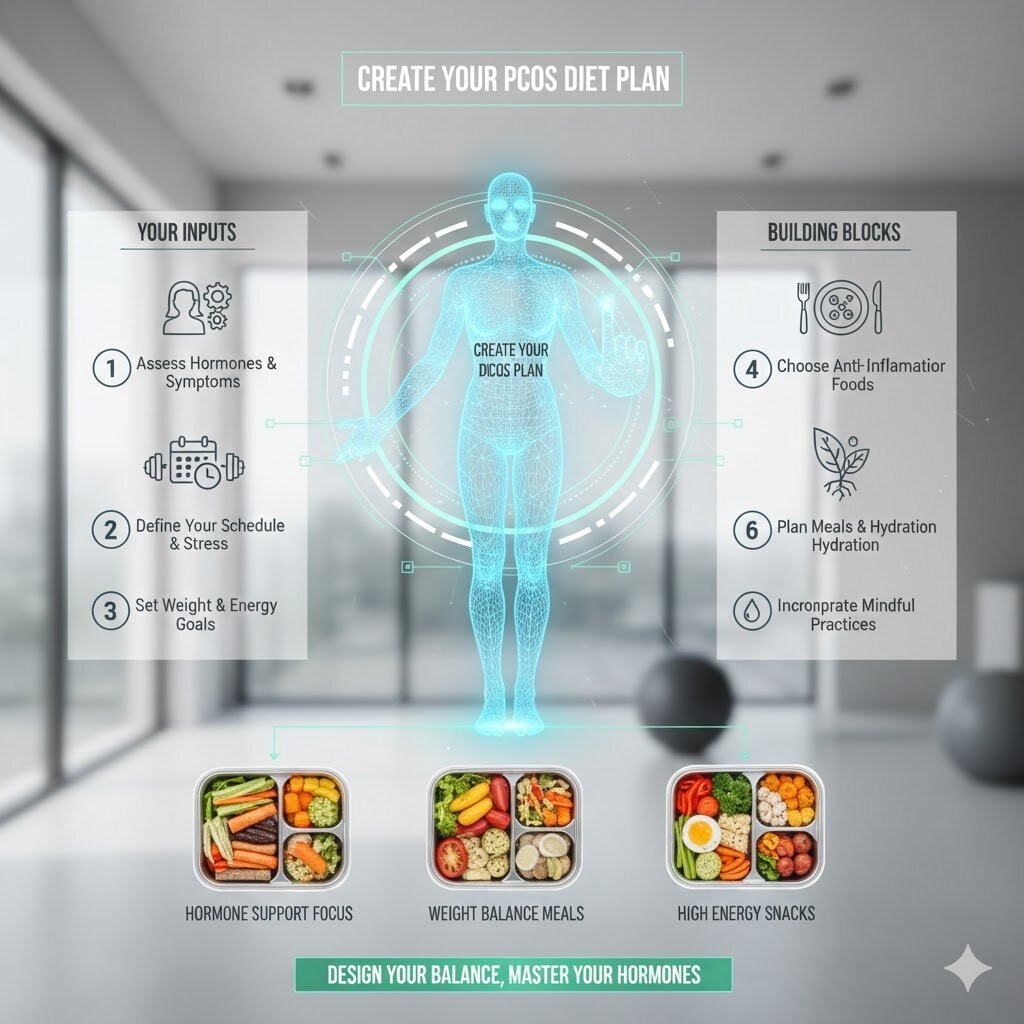
Building a personalised PCOD diet plan begins with understanding how diet affect pcos and how key choices shape results.
Using whole grains, brown rice, mixed vegetable, leafy vegetables, sweet potato, olive oil and low glycemic index foods keeps insulin steady while avoiding trans fats and refined carbohydrates supports a healthy weight.
These steps form the structure of a practical long term routine.
1. Identify Your Triggers And Key PCOS Symptoms
Start by noticing what aggravate pcos symptoms, whether it is refined carbohydrates, sugary snacks or irregular meals. Patterns such as irregular periods or excess hair growth reveal how your body reacts to specific foods or timings.
Label examples like “late night sweets” or “no lunch days” so they are easy to correct later. Small observations now save effort when you refine the plan.
2. Set Clear Goals For Weight Loss Or Symptom Control
Decide whether your first aim is to lose weight, reduce pain, calm skin issues or stabilise hormonal balance. A clear goal stops you from chasing every rule and makes the pcod diet plan easier to follow.
When you know the primary aim, you can judge every meal by whether it supports that outcome. This keeps the plan focused instead of scattered.
3. Choose Low GI Carbs That Keep Insulin Stable
Carbohydrates with a low glycemic index help regulate insulin levels and keep blood glucose more predictable. Sweet potato, mixed vegetable curries and whole grain options reduce sudden spikes that worsen pcos symptoms.
This approach keeps blood sugar stable between meals, which protects energy and reduces cravings. Over time, your body learns to rely on this steadier rhythm.
4. Add Lean Proteins To Every Major Meal
Lean proteins improve satiety and support hormonal rhythm throughout the day. Choices such as chicken breast or tofu stir fry strengthen nutritional balance and reduce the urge to snack on sugary foods.
You can pair these proteins with vegetables or whole grains to keep plates simple yet filling. This makes each meal work harder for you without feeling heavy.
5. Include Healthy Fats For Hormone Support
Healthy fats assist hormone balance and support menstrual cycles when used in the right amounts. Olive oil, nuts and seeds in moderation reduce the impact of male sex hormones and help your body feel more settled.
You do not need large servings, just small regular portions that appear across the day. This steady pattern matters more than occasional heavy meals.
6. Prioritize Anti Inflammatory Foods Daily
Anti inflammatory foods reduce flare ups that can worsen pcos symptoms after stressful days or heavier meals. Salmon salad, leafy vegetables and colourful produce help the body respond with more calm.
Think of each plate as an opportunity to lower irritation, not only to feel full. Over time, these quiet choices build a noticeable difference in comfort.
7. Plan Portions Based On Your Activity Level
Right sized portions maintain a healthy weight and make weight management more predictable. Salad evening snack, seeds dinner rice or a measured serving of khichdi keep intake controlled without feeling strict.
On busy days you may need slightly more, on lighter days slightly less. Matching portions to movement prevents slow gain from creeping in.
8. Decide How Much Dairy Or Milk Fits Your Body
Some people feel better using almond milk, while others can drink milk in small, planned amounts. Tracking how you feel after each type of dairy shows how diet affect pcos in your specific case.
Tip: note changes in bloating, skin or sleep for a week. Use these signals to set your comfort range instead of copying someone else’s rules.
9. Structure Meals So You Eat At Consistent Times
Consistent timings reduce overeating and make planning easier. Practical anchors like meal food options morning, a fixed lunch window and a light evening snack give the day a clear frame.
This rhythm keeps energy more level and reduces the chance of reaching for sugary snacks when you feel rushed or tired. Your routine becomes a quiet support, not a pressure.
10. Review And Adjust The Diet Plan Every Week
Weekly adjustments help your pcod diet chart stay realistic as work, sleep or stress levels shift. Watching how you respond to foods like peanuts dinner vegetable khichdi or sleeping warm milk shows what truly supports rest and comfort.
You are not rewriting the plan each week, only tightening what already works and dropping what does not. This simple review keeps the plan alive instead of rigid.
These steps turn the diet from a fixed list into a living structure that adapts to your body and routine. Once this structure is in place, the next focus is learning how to maintain results day after day without losing the progress you build in the first week. You can also consider weight-reducing foods that Indian diets often overlook as part of your strategy.
For personalised plans that match your exact routine, browse MyBalanceBite’s PCOS focused tools that guide you through planning each meal with clarity.
Tips To Maintain Results After The 7 Day PCOS Diet
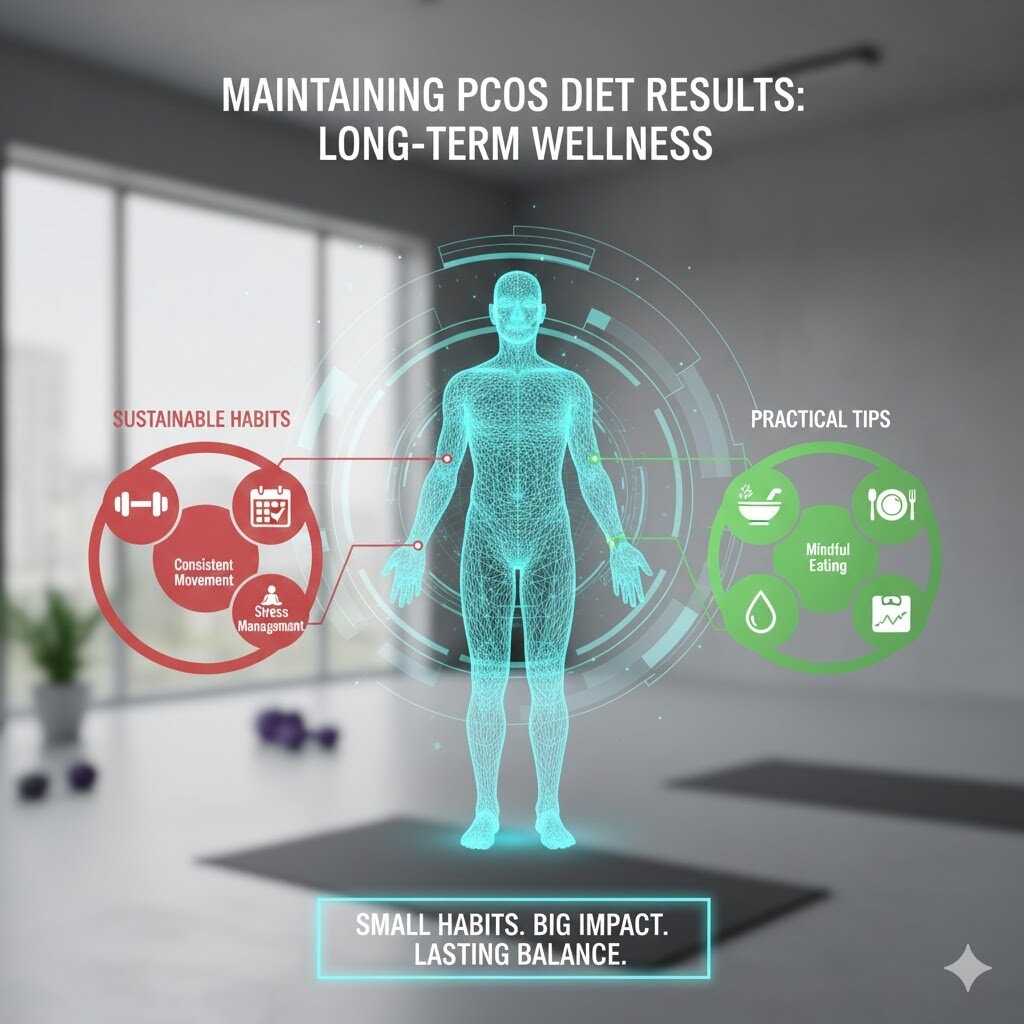
Long term stability depends on keeping a healthy diet that uses natural foods, mindful habits and simple tools like green tea or almond milk. Small additions such as a sleeping herbal tea or warm milk help regulate routine while stress management keeps hormones steady.
These choices protect the progress made during the week. Further these tips help you keep results without feeling restricted.
1. Keep Portions Consistent Even On Busy Days
Portions that stay roughly the same across most days prevent slow, unnoticed gain. Use similar plate sizes at home and outside, and fill half the plate with vegetables whenever possible.
On rushed workdays, pre deciding your lunch and snack portions removes guesswork and keeps the pattern steady.
2. Continue Prioritizing Low GI Foods
Keeping low GI foods at the center of meals reduces sudden energy crashes. Brown rice, quinoa, sweet potato and mixed vegetable dishes keep you full without heavy spikes.
You can still enjoy occasional treats, but most plates should lean on these calmer carb choices.
3. Maintain A Steady Intake Of Lean Proteins
A regular supply of lean proteins supports satiety and protects muscle while weight shifts. Options like lentils, paneer, tofu, eggs or chicken breast fit easily into Indian and global meals.
Including them in two or three meals a day makes hunger patterns more predictable.
4. Use Healthy Fats In Controlled Amounts
Healthy fats keep hormones supported, yet the serving size matters. Olive oil, nuts, seeds and a small amount of ghee can all fit if used with intention.
Think in teaspoons and small handfuls, not free pours, to keep calories aligned with your routine.
5. Limit Sugar And High Dairy When Symptoms Flare
Some notice that acne, bloating or mood swings rise when sugary foods and heavy dairy go up together. During such weeks, cut back on desserts, sweetened drinks and very rich milk products.
You can lean on almond milk or curd in smaller portions until the body settles again.
6. Stay Active With Light Daily Movement
Stable results often come more from consistency than hard workouts. A daily walk, light stretching or short home routine keeps circulation and mood in a better place.
Even ten to fifteen minutes after meals can support digestion and energy without needing a full gym plan.
7. Plan Weekly Meals To Avoid Random Eating
A simple weekly outline makes it easier to repeat what works. Note your preferred breakfast, a few lunch and dinner ideas and one or two snack patterns.
This is not a strict chart, it is a guide that prevents “what should I eat now” moments that lead to random choices.
8. Track Your Body’s Response And Adjust Intake
Your body will keep giving feedback in the form of energy, sleep, skin and cycles. Reviewing this once a week helps you see when to adjust portions, timing or specific foods.
A small notebook or phone note with two or three lines per day is enough for useful insight.
9. Hydrate Well And Keep Caffeine Moderate
Water supports digestion, appetite control and overall comfort. Adding herbal options like green tea or sleeping herbal tea can also calm evenings.
Keeping caffeine moderate, rather than high, prevents jitters and supports more stable sleep, which helps hormones stay in better rhythm.
10. Follow A Stable Sleep Routine For Hormone Balance
Sleep timing affects hunger, cravings and stress responses. Going to bed at a similar time most nights and using calming habits such as warm milk or quiet reading sends the body a clear signal.
Even small improvements in sleep length and quality can make the same diet feel more effective.
These habits keep the benefits of the 7 day plan alive long after the first week ends and help the body trust the routine you build.
If you prefer simple habits rather than strict charts, MyBalanceBite shares sustainable tweaks that fit busy days and still support long term PCOS comfort.
FAQs
1. How Does Diet Affect PCOS When Someone Has Irregular Meal Timings?
Irregular timings make insulin swing sharply, which raises cravings and keeps symptoms active. A pcos diet focuses on steady meal gaps because predictable eating keeps energy stable and reduces hormonal stress on the body.
2. Can You Follow A 7 Day PCOS Routine If You Have A Vegetarian Or Vegan Lifestyle?
Yes, the plan works easily with plant based meals. Lentils, tofu, vegetables, nuts, seeds and whole grains fit the structure and support blood sugar balance without relying on animal foods.
3. What Should Someone Do If They Feel More Hungry Than Usual During A Structured PCOS Diet Plan?
Increase lean proteins, add fibre rich vegetables or include a small planned snack to prevent overeating later. Hunger usually settles once portions and timing stay consistent for a few days.
4. Is It Helpful To Drink Milk Before Bed When Managing Hormonal Symptoms?
Warm milk can help some people relax and sleep better, but others feel bloated or sluggish after dairy. Track how your body reacts and choose almond milk or smaller servings if needed.
5. Can Occasional Cheat Meals Fit Into A Long Term PCOS Diet Without Slowing Results?
Yes, when planned. Keeping portions controlled and spacing them between balanced days prevents swings in insulin and hormones. One meal does not undo progress when the weekly pattern stays steady.
Conclusion
A structured plan works best when it turns into a rhythm you can rely on. The next step is choosing one or two changes you can apply today, whether it is steady meal timing or clearer portion habits. Small adjustments practiced consistently create the kind of progress that stays, not just shows up for a week.
To turn these seven days into a steady routine, explore MyBalanceBite’s practical nutrition guides that help you stay consistent without strict rules.




Leave a comment
Translation missing: en.blogs.comments.discription