

Intermittent fasting looks simple from the outside, yet most people struggle because the routine they follow does not match how the body actually adapts. The gap between intention and method shapes whether fasting feels steady or unpredictable.
Progress becomes easier when the plan respects hunger patterns, meal timing and energy rhythm. A clear structure turns fasting from guesswork into a predictable routine that works in real life.
What Is Intermittent Fasting And How It Differs From Other Fasting Periods?
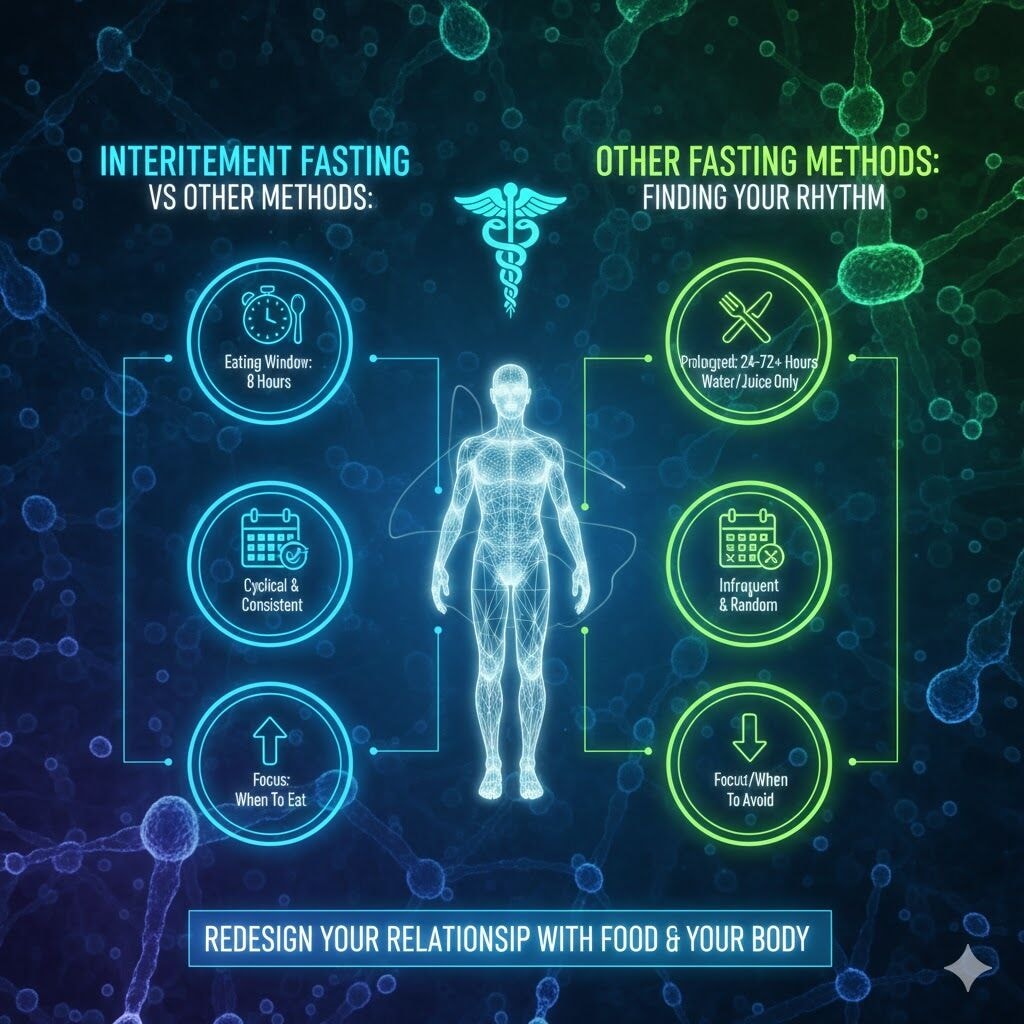
Intermittent fasting is an eating pattern that limits eating periods and creates a fasting window where the body uses stored energy instead of constant intake. Different methods involve fasting in unique ways, from alternate day fasting to time restricted eating and time restricted feeding.
Each intermittent fasting plan shapes its own intermittent fasting pattern across extended periods. Seeing these distinctions makes it easier to recognise which structure aligns with your goals.
Core idea of intermittent fasting
-
Intermittent fasting is about timing, it changes when you eat rather than focusing only on what you eat.
-
The fasting window gives the body time without food so it can rely more on stored energy.
-
Eating periods are planned in advance so meals follow a clear structure instead of random timing.
Examples of common intermittent fasting methods
-
Alternate day fasting usually means one fasting day is followed by one normal eating day in a repeated cycle.
-
Time restricted eating and time restricted feeding limit all meals to a set eating window, for example 10 am to 6 pm.
-
Some people choose lighter patterns at first, such as a 12 hour fasting window that fits their sleep and work hours.
How intermittent fasting differs from traditional fasts
| Approach | What It Focuses On | How It Controls Intake | How the Body Responds | Who It Suits Best |
|---|---|---|---|---|
| Intermittent Fasting | Timing of eating periods and fasting window | Limits when you eat, not specific foods | Uses stored energy during fasting, stabilises appetite rhythm | People who prefer structured timing over calorie counting |
| Calorie Restriction Diets | Reducing daily calorie intake | Counts or reduces calories across all meals | Gradual weight changes with continuous energy intake | People comfortable tracking calories and portions |
| Low Carb or Keto Diets | Lowering carbohydrate intake | Limits carbs and increases fats | Promotes fat use as primary fuel, steady energy for some individuals | People who enjoy high fat meals and want faster metabolic shifts |
| Mediterranean Diet | Quality of food and nutrient density | Prioritises whole foods, olive oil, vegetables and fish | Supports heart health and stable energy | |
| Warrior Diet | A compressed eating window with intense fasting | 20 hour fast followed by a 4 hour eating period | Strong reliance on stored fuel, sharper hunger cycles |
People who prefer one large evening meal might benefit from considering a 1000 calories diet plan (Indian style). |
| Meal Frequency Diets | Eating small, frequent meals | Spreads calories across 5–6 meals per day | Keeps hunger low but may increase grazing habits | People who feel better with constant small meals |
Why choosing the right pattern matters
-
Each intermittent fasting plan creates a different load on energy levels, hunger signals and daily focus.
-
A pattern that suits one person can feel too hard for another with a different schedule or health profile.
-
Matching the structure to your goals helps intermittent fasting work as a routine rather than a short experiment.
Once the structure is clear, it becomes easier to picture how these patterns feel across real days. The next step is to see how a single day of intermittent fasting looks in practice.
What A Day Of Intermittent Fasting Looks Like
A day of intermittent fasting aligns your eating window with calorie intake and caloric restriction while avoiding frequent meals. Some plans ask you to skip breakfast or rely on black coffee, herbal tea and nutrient dense foods to support proper nutrition within a balanced diet and healthy diet.
Each cycle fits naturally into daily eating and fasting, especially when incorporating a low carb Indian diet.
| Time | What Happens | Why It Matters |
|---|---|---|
| 6:30 am | Hydration with water, black coffee or herbal tea | Supports alertness during the fasting window without breaking the fast |
| 8:00 am – 12:00 pm | Light activity and work while fasting | Helps caloric restriction feel natural as the body taps stored energy |
| 12:00 pm | First meal with nutrient dense foods | Restores energy and keeps calorie intake structured for the eating window |
| 3:30 pm | Balanced snack if needed | Maintains proper nutrition without triggering frequent meals |
| 6:30 pm | Final meal of the day | Ends the eating window with a balanced diet that supports steady energy |
| 8:00 pm – 12:00 pm next day | Fasting period begins | Creates a clean cycle that fits daily eating and fasting patterns |
Each phase of the day shapes how the body manages energy and adapts to this routine. Once the structure is clear, the next question is what these patterns actually do inside the body and why they influence health so strongly.
“Want meal plans that support fasting without confusion? Try MyBalance Bite’s nutrition tools.
Health Benefits Of Intermittent Fasting Backed By Evidence

The health benefits of fasting appear through changes in metabolic health, blood pressure and blood glucose levels supported by stable blood sugar levels, insulin levels, fasting glucose and fasting insulin.
Studies suggest protective effects on overall health, chronic diseases, cardiovascular disease and heart disease as shown in systematic review data and randomized controlled trials with more research emerging.
These findings explain why fasting is widely studied for long term improvement.
1. Improved Insulin Sensitivity
Animal studies and early human trials show that structured fasting days can improve insulin sensitivity by supporting steadier blood sugar regulation. This creates a metabolic environment that responds more effectively to fasting routines.
-
Cells respond better to insulin, so they use glucose more efficiently.
-
This can support people at risk of type 2 diabetes or prediabetes.
-
Consistent fasting days help reduce sugar spikes and dips across the week.
-
The effect improves when meals stay balanced with fibre and protein.
2. Better Blood Sugar Control
Time restricted feeding helps stabilise blood glucose levels by giving the body consistent fasting intervals. These cycles improve blood sugar control in a predictable rhythm that supports long term balance.
-
Fixed eating windows reduce late night meals and irregular snacking.
-
Fewer eating occasions produce fewer sharp rises in blood sugar levels.
-
People with irregular appetite patterns notice steadier daily energy.
-
Paired with light movement, the effect becomes more reliable.
3. Enhanced Fat Loss
Intermittent fasting schedules encourage the body to rely on stored fat during fasting days. This natural shift enhances fat loss and supports brain health through more efficient energy use.
-
When glycogen stores fall, the body uses stored fat as its main fuel.
-
This reduces fat without constant calorie counting.
-
Many people report clearer focus during the fasting window.
-
Progress improves when portions stay measured during meals.
4. Reduced Insulin Resistance
Patterns like the warrior diet create extended fasting periods that reduce insulin resistance. The body adapts by improving blood sugar regulation and restoring metabolic flexibility.
-
Longer fasting stretches let insulin levels fall and reset.
-
Over time, cells respond better to insulin signals.
-
This supports early metabolic syndrome when planned carefully.
-
Balanced meals remain essential for energy and nutrition.
5. Better Heart Health Markers
Mediterranean diet style eating during feeding windows pairs well with fasting days. Nutrient dense meals support heart health and help maintain steady cardiovascular function.
-
Olive oil, vegetables, legumes and fish support heart markers.
-
Eating within a window often lowers overall calorie intake.
-
Blood pressure and lipid patterns may improve with consistency.
-
This fits people who prefer structure without strict restriction.
6. Lower Inflammation Levels
Some studies on polycystic ovary syndrome show fasting may lower inflammation by improving hormonal balance and metabolic rhythm. This effect strengthens when eating windows stay balanced.
-
Regular timing eases digestive and hormonal strain.
-
Stable insulin patterns reduce inflammatory signals.
-
Women with PCOS may feel gradual symptom relief when supervised.
-
Diet quality, sleep and stress also influence outcomes.
7. Improved Metabolic Flexibility
Fasting days help the body shift between glucose and fat more easily. This flexibility supports reproductive health and stabilises internal energy signals.
-
A flexible metabolism switches fuels without energy crashes.
-
This supports activity, exercise and recovery with less strain.
-
Appetite and reproductive hormones respond to steady rhythms.
-
Benefits grow with consistency and moderate fasting periods.
8. Potential Longevity Support
Research on polycystic ovarian syndrome and metabolic conditions shows that fasting routines may influence longevity pathways. The effect strengthens when feeding windows prioritise whole foods like brown rice and lean proteins.
-
Calorie patterns similar to mild restriction support healthy ageing.
-
Cells activate repair processes more often during fasting periods.
-
Whole grains and lean proteins protect against nutrient gaps.
-
Longevity gains rely on long term routine, not short dieting bursts.
These benefits show how structure, timing and food quality interact inside the body. The next section focuses on the practical steps that help you set up an intermittent fasting plan that applies these advantages in daily life.
Steps To Start Intermittent Fasting Safely And Sustain It
A safe intermittent fasting plan starts with proper nutrition that prevents nutrient deficiencies and manages calorie restriction. Choosing healthy fats, a balanced diet and a healthy diet helps you maintain your eating window while following an eating plan that fits your schedule.
These steps support consistency and energy.
1. Choose Your Fasting Period
Selecting a fasting period depends on how your routine aligns with intermittent fasting schedules. The right timing helps stabilise blood glucose levels while supporting metabolic comfort. If you take medication or have a medical condition, a healthcare professional can guide you toward the safest structure.
-
Match the fasting hour range with your daily workload.
-
Keep the first version simple, such as a 12 hour fast.
-
Increase the window only when your energy stays steady.
-
Anchor your timing around sleep for better adaptation.
2. Start With A Manageable Eating Window
A manageable eating window works better when paired with time restricted feeding. This creates steady blood sugar regulation and makes fasting more sustainable for beginners.
-
Start with an 8 to 10 hour eating window.
-
Place your meals at the same time every day.
-
Avoid late night eating to support metabolic rhythm.
-
Reduce snacking to keep sugar levels stable.
3. Prioritize Balanced Meals During Eating Hours
Meals rich in whole grains like brown rice support proper nutrient flow during eating hours. This keeps metabolic balance stable during fasting days.
-
Combine protein, whole grains and vegetables in each plate.
-
Use healthy fats to maintain satiety through the fasting window.
-
Keep portions moderate to prevent sugar spikes.
-
Plan meals ahead so choices stay predictable.
4. Support Blood Sugar With Protein And Fiber
The goal is to support blood sugar regulation through protein and fiber rich meals. This makes fasting smoother and reduces fluctuations during long fasting periods.
-
Add beans, lentils or lean protein to every meal.
-
Include fruits with fibre for more steady digestion.
-
Build meals that slow energy release across hours.
-
Avoid large sugary meals before fasting begins.
5. Hydrate Consistently Throughout The Day
Hydration helps stabilise blood glucose levels, especially on extended fasting days. A structured routine keeps your energy steady and reduces discomfort.
-
Drink water at regular intervals through the day.
-
Use herbal tea or black coffee during fasting hours.
-
Limit sweetened drinks that break the fasting cycle.
-
Track intake when working long or active days.
6. Adjust Fasting Duration Based On Energy Levels
Adjusting fasting duration ensures your intermittent fasting plan supports reproductive health and hormone balance without overwhelming your system.
-
Shorten your fasting window if energy falls sharply.
-
Lengthen it slowly if you feel steady across days.
-
Keep stress levels low during adjustment periods.
-
Track patterns that influence mood or appetite.
7. Monitor Insulin Sensitivity Signals And Hunger Patterns
Monitoring hunger patterns helps you understand how your fasting days influence metabolic cues tied to brain health and deeper hormonal rhythms.
-
Notice how your focus shifts across fasting hours.
-
Track hunger before and after adjusting meal times.
-
Modify meal composition when cues change.
-
Record changes in alertness or digestion.
8. Maintain A Consistent Daily Routine
A consistent routine allows your body to adapt to intermittent fasting schedules and maintain stable internal signals across fasting days and eating windows.
-
Sleep and wake at similar times each day.
-
Keep your eating window steady across the week.
-
Repeat meal patterns to reduce decision fatigue.
-
Treat timing as a regular part of daily hygiene.
These steps create a structure that supports your energy and helps fasting settle into daily life. The next section focuses on maintaining strength and stable energy so fasting becomes a routine you can rely on rather than a plan you struggle to follow.
“Build a fasting routine that matches your lifestyle. Explore personalised guides on MyBalance Bite.”
Tips To Maintain Muscle And Energy While Doing Intermittent Fasting
Maintaining muscle mass during fasting depends on proper nutrition, stable reproductive hormone levels and sleep quality that does not affect hormone levels negatively. These factors protect strength, recovery and energy so the fasting cycle stays manageable.
A balanced approach keeps workouts and daily activity steady.
1. Prioritise Protein And Meal Quality
Keeping muscle mass starts with proper nutrition that meets your daily protein needs. Strong meals in the eating window help your body repair tissue and keep reproductive hormone levels more stable.
-
Aim for a source of protein at every main meal.
-
Include foods like lentils, paneer, eggs, Greek yogurt or lean meats.
-
Add healthy fats and vegetables so each plate is filling and steady.
-
Avoid very low calorie days in a row when you are training often.
2. Support Training With The Right Timing
Fasting can fit strength training when timing supports energy instead of fighting it. Placing workouts near meals reduces strain and helps hormone levels stay in a comfortable range.
-
Train in the last hours of your fast if you feel sharp and focused.
-
Or lift within one to two hours after your first meal if you prefer fuel first.
-
Keep the hardest workouts on days with enough sleep and food.
-
Use lighter sessions on busy or low energy days.
3. Protect Recovery With Sleep And Stress Habits
Sleep quality is a major driver of muscle recovery and hormone balance. Poor sleep can affect hormone levels that control hunger, strength and mood, which makes fasting feel harder than it needs to be.
-
Aim for a regular bedtime and wake time across the week.
-
Keep screens and heavy meals away from the last hour before sleep.
-
Use simple wind down habits like stretching or slow breathing.
-
Reduce late caffeine if you notice lighter or broken sleep.
Example Of A Fasting And Training Day
Seeing one simple structure makes it easier to plan your own routine. This pattern works for a 16:8 schedule, but the logic also applies to longer or shorter fasting windows.
-
7:00 am to 12:00 pm: fasting, water, black coffee or herbal tea.
-
12:00 pm: first meal with protein, whole grains and vegetables.
-
4:30 pm: strength session of 40 to 60 minutes.
-
6:00 pm: second meal with protein, healthy fats and fibre.
-
8:00 pm: light snack if needed, then fasting resumes.
This rhythm gives the body fuel around training while keeping the fasting window intact. Once strength and energy feel stable, the next step is watching for side effects so you can adjust early and keep the routine safe over time.
Side Effects Of Intermittent Fasting And How To Reduce Them
Fasting can trigger concerns for people with eating disorders, a history of eating disorders or those who experience low blood pressure or irritable bowel syndrome. Nutrient deficiencies may occur quietly, and unhealthy snack foods can worsen reactions.
Recognizing these risks early helps you adjust your routine without losing progress.
Short term side effects to watch
-
Light headedness, headaches or low energy during the first fasting days.
-
Digestive issues such as constipation, acidity or irritable bowel syndrome flare ups.
-
Trouble sleeping when meal timing shifts too quickly.
-
Mood shifts or irritability when blood sugar changes sharply.
Who should be more cautious
-
People with a current or past history of eating disorders.
-
Anyone with low blood pressure, fainting spells or frequent dizziness.
-
Those with chronic digestive conditions that react to long gaps between meals.
-
People taking blood sugar or blood pressure medication that requires timed food intake.
Ways to reduce risk in daily life
-
Start with shorter fasting windows and increase only when you feel stable.
-
Keep meals nutrient dense so you avoid nutrient deficiencies over time.
-
Limit unhealthy snack foods that trigger sharp blood sugar swings.
-
Monitor how your body responds across several weeks, not just one or two days.
When to pause and seek help
-
Stop or shorten fasting if you notice rapid weight loss, ongoing weakness or strong mood changes.
-
Speak with a healthcare professional if symptoms repeat, worsen or interfere with daily tasks.
-
Consider a gentler eating pattern if your body does not settle even after adjustments.
These checks help fasting sit inside your life without pushing your system beyond comfort. Once safety is in place, the next step is to look at the simple mistakes that still weaken results even when the structure seems correct.
Common Mistakes People Make When Starting Intermittent Fasting
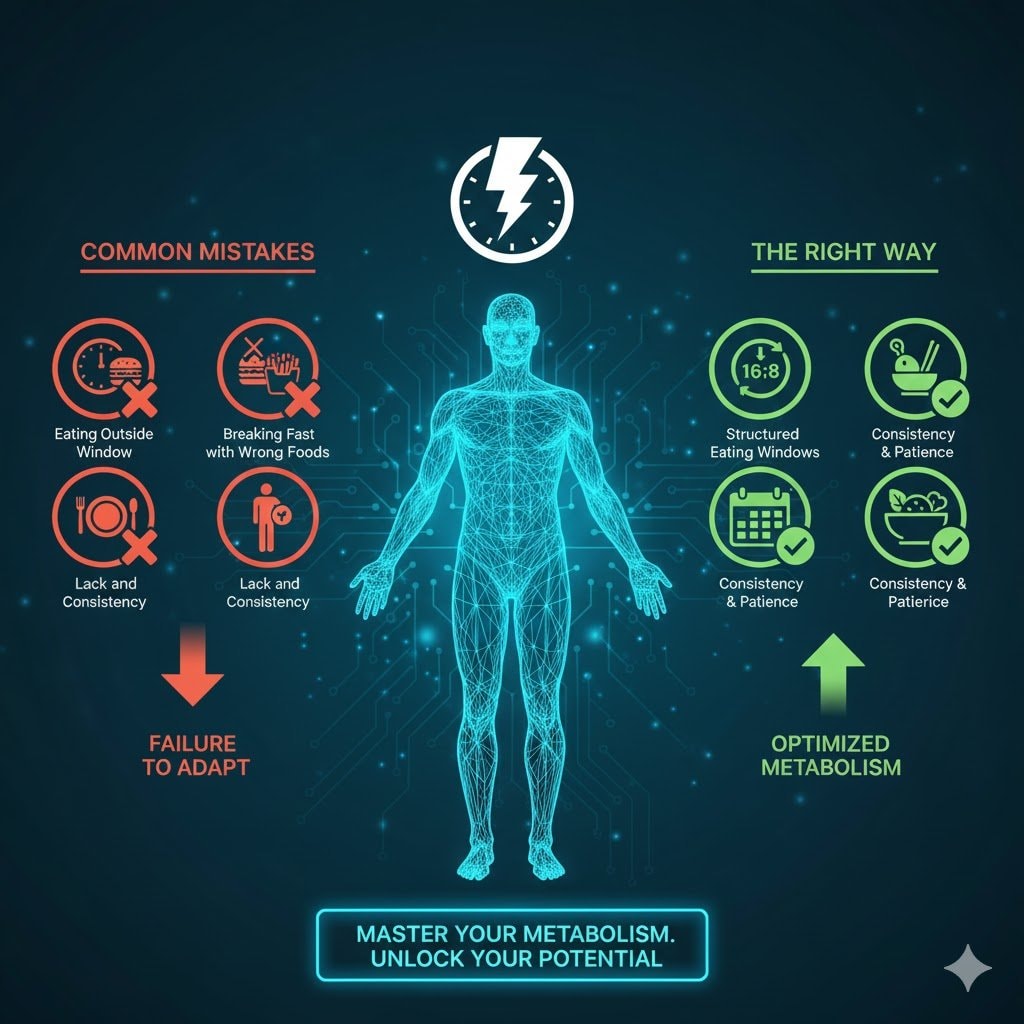
Many beginners struggle with body weight shifts when they lose weight too quickly or fail at weight management. Misjudging calorie intake or relying on unhealthy snack foods makes weight loss inconsistent and disrupts fasting flow.
These mistakes often build up unnoticed.
1. Choosing A Fasting Window That Is Too Aggressive
Choosing an aggressive fasting window disrupts hormone levels tied to reproductive health and can slow progress. A gradual approach helps your system adapt.
-
Jumping straight into very long fasts can spike fatigue and irritability.
-
Social meals become hard to manage when the window is too narrow.
-
Strong hunger early on makes it harder to trust the routine.
-
Starting with shorter fasts and adding hours slowly protects stability.
2. Overeating During The Eating Window
Overeating during the eating window disrupts blood sugar regulation and limits the benefits that fasting days provide. Controlled portions keep progress steady.
-
Large meals push blood sugar levels to swing up and down.
-
Extra calories remove the deficit that supports fat loss.
-
Emotional eating often creeps in after long workdays.
-
Planning plate sizes in advance keeps intake predictable.
3. Ignoring Protein And Fiber Requirements
Skipping protein and fiber creates nutrient gaps that affect metabolic rhythm. Even on fasting days, nutritional balance supports smoother adaptation.
-
Low protein slows muscle repair and can weaken training progress.
-
Poor fibre intake leads to constipation and erratic hunger.
-
Meals built mostly on refined grains digest too quickly.
-
Adding lentils, beans, paneer, eggs and vegetables steadies appetite.
4. Drinking Too Little Water Throughout The Day
Low hydration interferes with the body’s ability to stabilise blood glucose levels during fasting days. Drinking water supports energy and clarity.
-
Mild dehydration can feel like hunger or low sugar.
-
Headaches often appear when water intake drops.
-
Digestive flow slows, which increases discomfort in the fast.
-
Keeping a bottle nearby makes regular sipping automatic.
5. Expecting Fast Results Without Consistency
Expecting rapid results often leads to frustration. Intermittent fasting schedules require consistency so metabolic systems can adjust properly.
-
Constantly changing fasting hours confuses hunger signals.
-
Weighing yourself every day can hide slow but real progress.
-
Short bursts of effort followed by long breaks blunt the effect.
-
Treating the plan as a long term rhythm keeps results more stable.
6. Not Aligning Fasting With Daily Routine
A fasting schedule that conflicts with lifestyle patterns reduces efficiency. The best intermittent fasting plan fits naturally into your workload and sleep cycle.
-
Night shift workers struggle with standard daytime fasting windows.
-
Parents with young children need flexible meal timing at home.
-
Work meetings around lunch or dinner can clash with strict plans.
-
Designing the window around real life makes adherence far easier.
7. Skipping Sleep And Recovery Support
Poor sleep disrupts hormone levels that influence hunger, energy and recovery. Consistent rest keeps your fasting rhythm stable and predictable.
-
Short sleep raises cravings for sugar and heavy foods.
-
Training feels harder when recovery is incomplete.
-
Mood swings increase when rest is irregular.
-
Protecting sleep hours strengthens every other part of the plan.
8. Ignoring Early Signs Of Low Blood Sugar
Ignoring early signs of low blood sugar prevents safe fasting practices. Being aware of symptoms helps you maintain a safe eating pattern across fasting cycles.
-
Shakiness, sweating or sudden weakness are signals to slow down.
-
Trouble focusing or blurred vision needs attention, not willpower.
-
Pushing through repeated episodes can make fasting feel unsafe.
-
Adjusting the window or meal size often solves the problem early.
Every mistake carries a simple adjustment when it is seen clearly and not judged as failure.
FAQs
1. Does Eat Stop Eat Fit Into A Busy Lifestyle Without Disrupting Daily Energy Levels?
Yes, if the fasting days are planned on lighter workload days. Keeping meals nutrient dense on eating days and staying hydrated helps maintain stable energy across the week.
2. Is Alternate Day Fasting Hard To Maintain During Social Or Family Meal Plans?
It can be, since fasting days may overlap with shared meals. Many people shift their fasting days to weekdays and keep weekends flexible to maintain consistency.
3. Can Intermittent Fasting Work For People Who Do Early-Morning Workouts?
Yes, if training intensity is moderate or if the first meal follows soon after the workout. Strength sessions often feel better when placed inside or near the eating window.
4. How Do Women Adjust Fasting Routines During Menstrual Cycle Fluctuations?
Lower intensity fasting works better in the late luteal phase when energy needs rise. Shorter fasting windows or gentler routines help maintain comfort and stability.
5. What Should Beginners Track To Know Their Fasting Routine Is Actually Working?
Track hunger patterns, energy levels, sleep quality and focus across the week. These signals show adaptation more reliably than weighing yourself daily.
Conclusion
Intermittent fasting works best when it becomes a steady part of your routine rather than a test of willpower. The patterns you build around sleep, meals and daily activity decide how smoothly your body adapts.
Progress grows when you respond to signals early, adjust your timing with intention and treat each day as practice rather than pressure.
The next step is simple. Start with a version that fits your life, refine it patiently and let consistency do the work that shortcuts never can.
“Start your fasting journey with confidence using MyBalance Bite’s beginner resources.”





Leave a comment
Translation missing: en.blogs.comments.discription