

Women living with PCOS often adjust their meals again and again, yet the body responds in ways that feel uneven and hard to predict. The reason sits deeper than the foods themselves, shaped by how diet and polycystic ovary syndrome(pcos) quietly influence one another.
Hormones shift the way nutrients are processed, and those same nutrients affect hormone signals in return. This creates a loop where small food decisions produce larger internal changes.
Seeing this two way relationship clearly turns confusion into insight and gives your routine a foundation that supports steadier progress.
What Triggers Diet Related Issues in Polycystic Ovary Syndrome?
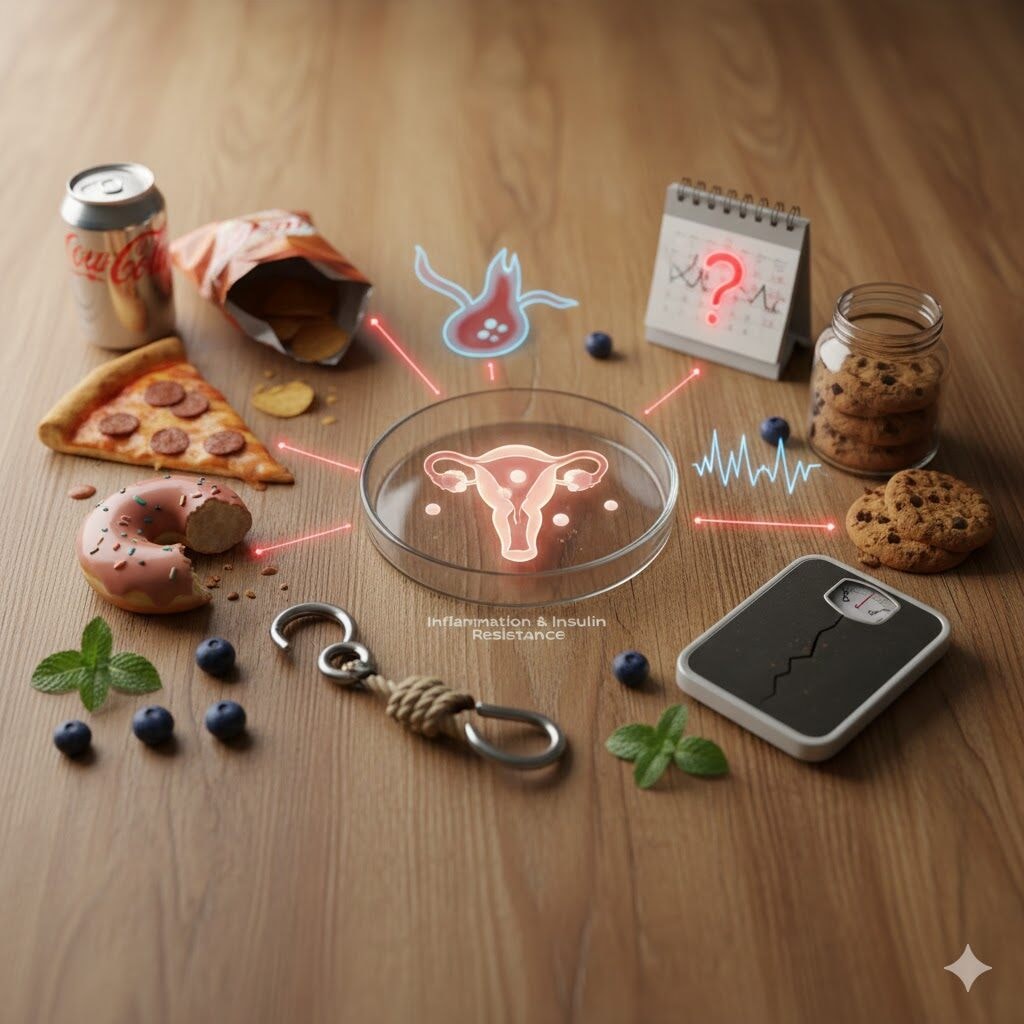
Diet challenges often begin with how polycystic ovarian syndrome disrupts hormonal signals. Women with polycystic ovary experience shifts in the menstrual cycle, ovarian dysfunction and clinical symptoms linked to excessive androgen production.
Factors like male sex hormones, free testosterone and changing follicle stimulating hormone or luteinizing hormone levels reflect deeper pituitary gland and gonadotropin releasing hormone patterns. These early signals show why diet reacts so sharply within this condition.
Understanding these roots helps clarify how food choices behave inside polycystic ovary disease before solutions make sense.
How PCOS Changes The Way Food Behaves In The Body
Hormone signals between the brain, pituitary gland and ovaries begin to work out of sync, which alters the timing of follicle development and ovulation. This shift influences hunger levels, mood and the pace of digestion.
A person may notice feeling full quickly on some mornings and unusually hungry on others. These swings reflect more than daily habits, they reflect internal communication.
Excessive androgen production affects where body fat sits and how the body uses energy. This is why certain meals may create a heavier feeling or slower energy release.
An example is how a simple bowl of rice may feel steady one week and sluggish the next because hormone balance changes the way glucose is handled.
Changes in follicle stimulating hormone, luteinizing hormone and gonadotropin releasing hormone shape menstrual cycle patterns and related clinical symptoms.
These shifts influence how predictable digestion feels. A stable routine can still produce uneven responses because the internal environment keeps changing.
Key internal shifts that influence dietary reactions
-
Variations in the menstrual cycle that affect appetite and energy
-
Ovarian dysfunction that alters timing signals across the month
-
Androgen activity that shapes fat storage and food tolerance
-
Pituitary driven changes in hormone release that affect symptoms
-
Clusters of associated symptoms that appear before a diagnosis
These elements create the foundation on which every dietary choice lands, and they clarify why food routines gain power only when the internal picture is understood clearly.
Why Ignoring Food Patterns Makes PCOS Symptoms Harder To Manage
When food habits become irregular, metabolic syndrome and metabolic disorders begin to influence glucose metabolism and insulin secretion. This can lead to impaired glucose tolerance, rising blood glucose and metabolic abnormalities that affect body composition, body fat and excess body fat.
These shifts raise cardiovascular disease risks and are often linked with pcos development. Seeing the consequences of these patterns highlights why the body responds strongly when food timing or quality changes.
How Irregular Eating Patterns Disrupt The Body
Irregular meals make insulin levels rise and fall too sharply. Glucose metabolism becomes less efficient, and insulin secretion adapts in ways that strain the system. Even meals that seem small can feel heavier when the timing is unpredictable.
Clear signs of disruption
-
Stronger swings in insulin levels after inconsistent meals
-
Slower handling of rising blood glucose
-
Early signs of impaired glucose tolerance after long gaps without food
These shifts influence body composition. Excess body fat builds more easily when the body keeps switching between high and low energy states without rhythm. Over time, this pattern feeds into metabolic syndrome in women with PCOS.
What These Shifts Mean For Long Term Health
Metabolic abnormalities do not remain surface level. They influence how the body manages daily energy, how stable blood sugar feels and how cardiovascular disease risks build over time. Cardiovascular disorders often trace back to the long term load placed on the heart and vessels when blood glucose stays unstable.
As these patterns persist, pcos development often accelerates. The body reacts to the absence of structure, not just the ingredients on the plate.
Key consequences of ignoring food patterns
-
Higher chance of impaired glucose tolerance
-
Greater accumulation of excess body fat
-
Noticeable changes in body composition over time
-
Stronger links to increased cardiovascular disease risk
-
Faster progression of pcos development
These connections show why rhythm in eating supports a more reliable PCOS response and prepares the ground for building a nutrition strategy that remains steady across days.
Steps To Build A PCOS Diet That Supports A Real Nutrition Strategy
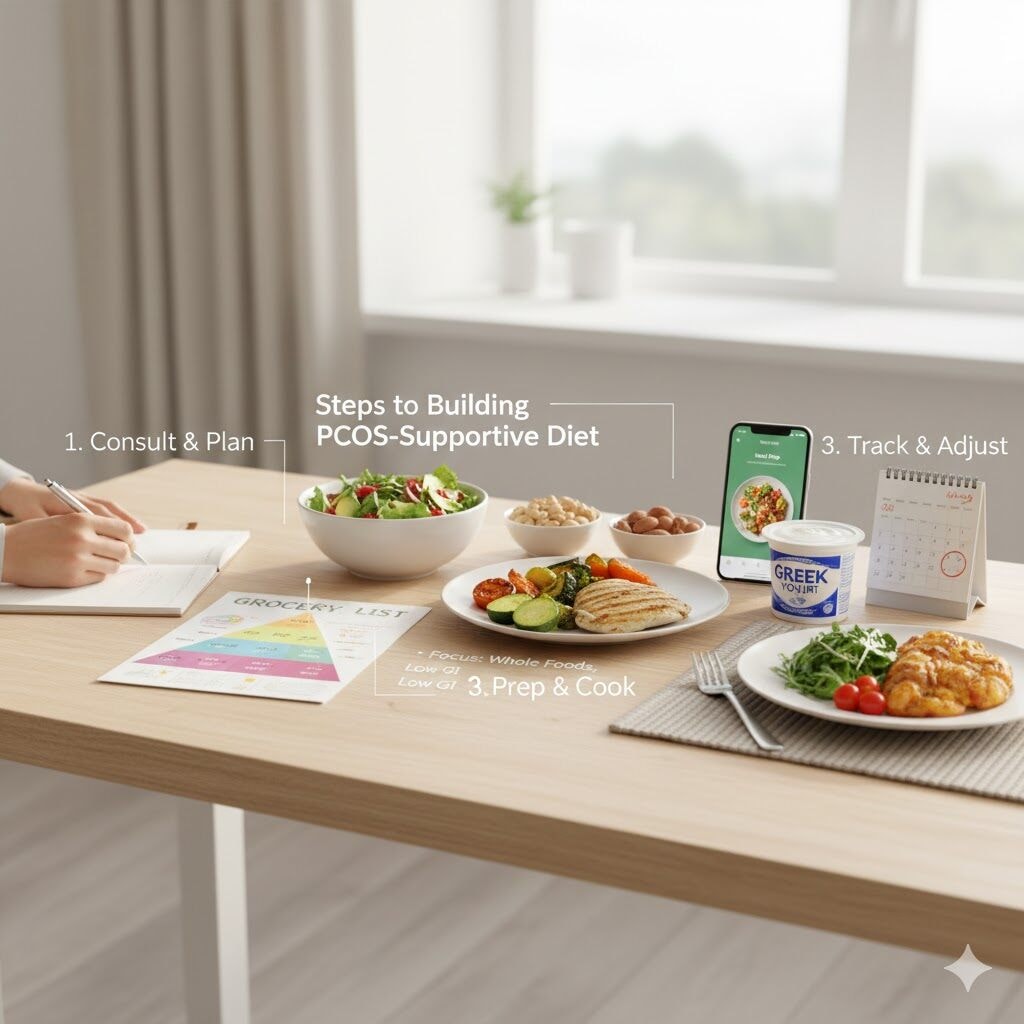
A strong PCOS diet starts with a healthy diet that includes a balanced diet, low glycemic index meals and low glycaemic index ingredients that steady energy and mood.
Lean protein, healthy fats, green leafy vegetables, olive oil and polyunsaturated fatty acids create a foundation that limits saturated fat ingestion and sugary foods. Brown rice and similar staples support steadier blood responses.
These elements form the base for a nutrition strategy that works consistently inside a real routine.
Core building blocks of a PCOS plate
-
Choose whole grains such as brown rice instead of refined grains to slow blood glucose rise and support insulin control.
-
Add lean protein to each meal, for example lentils, paneer or eggs, to stabilise appetite and assist gradual weight loss.
-
Use healthy fats like olive oil and other polyunsaturated fatty acids to support hormone health and sex hormone binding globulin activity.
-
Fill at least half the plate with green leafy vegetables and other fibre rich produce to aid digestion and glucose metabolism.
-
Limit saturated fat ingestion and sugary foods so the body handles daily meals with less metabolic strain.
-
Discuss vitamin d supplementation with a clinician if blood work suggests a gap, since vitamin D can influence metabolic balance in PCOS.
A simple example is a plate with brown rice, dal, a generous serving of sautéed green leafy vegetables and a spoon of olive oil used in cooking. This kind of meal keeps blood responses flatter, supports insulin action and still feels familiar.
Once this structure is clear, it becomes easier to see which parts of the PCOS diet stay constant and which parts can shift according to individual symptoms. That distinction sets up the move from a general nutrition strategy to a personalised plan shaped around your own PCOS pattern.
“Build Your PCOS Plate With Expert Guidance From MyBalance Bite”
Steps To Personalize Your Approach Based On Your PCOS Symptoms
Personalisation begins when patterns like reproductive medicine needs, body mass index changes, insulin sensitivity variations or improve pcos symptoms signals align with specific symptom types.
For pcos patients, understanding how healthy lifestyle behaviours or unique hormonal tendencies shape responses helps refine decisions. Each symptom cluster becomes easier to manage once the internal cause and its dietary or lifestyle match are recognised clearly.
1. Insulin Resistance
Insulin resistance sits at the centre of many PCOS experiences and often carries an increased risk of metabolic and cardiovascular problems. The goal is to reduce insulin resistance and improve insulin sensitivity in small, steady steps rather than through drastic shifts that fade quickly.
Practical focus areas for insulin resistance
-
Build meals around whole grains, lean protein and fibre to slow blood glucose rise.
-
Replace fried foods and sugary snacks with options that keep energy steady across the day.
-
Use blood tests, where possible, to track fasting glucose and insulin patterns over time.
2. Irregular Periods
Irregular periods reflect how hormone signalling between the brain and ovaries has shifted. Personalising support means understanding how stress, sleep, nutrition and weight together influence cycle length and flow.
Ways to support cycle rhythm
-
Keep meal timing consistent so the body receives regular energy signals.
-
Track cycle length, flow and symptoms to see how changes in routine affect timing.
-
Discuss patterns with a clinician who understands PCOS, especially if cycles remain very far apart.
3. Weight Gain or Stubborn Weight
Weight gain in PCOS often appears even when intake does not look extreme. Body mass index and body shape can change with small hormonal shifts. Here, the focus is on gentle corrections that support weight loss without strain.
Adjustments that respect PCOS weight patterns
-
Use smaller, balanced meals rather than large, irregular servings.
-
Choose cooking methods that avoid unnecessary oils instead of relying on fried foods.
-
Monitor how different carb portions affect hunger two to three hours after eating.
4. Hormonal Acne
Hormonal acne reflects how androgens and oil production behave at the skin level. Food choices do not replace dermatology care, yet they can reduce the internal triggers that push oil glands harder.
Diet and routine ideas for acne prone PCOS
-
Limit large sugar hits from sweets and sweetened drinks that drive quick spikes.
-
Include whole grains and healthy fats to keep energy and mood more stable.
-
Track whether certain foods correlate with flare ups in the following days.
5. Hair Loss or Excess Hair Growth
Hair loss and excess hair growth are tied to how androgens circulate and how sensitive hair follicles are to those signals. The aim is to support hormonal balance across the day so these signals soften over time.
Supportive steps for hair related symptoms
-
Maintain steady meals and avoid long gaps that stress blood sugar and hormones.
-
Include healthy fats and adequate protein to support hair structure and growth.
-
Work with a clinician on lab tests, for example sex hormone binding globulin levels, to see how the body binds active hormones.
6. Lean PCOS
Lean PCOS shows that polycystic ovary syndrome can appear even when weight looks typical on the outside. Personalisation here relies less on weight and more on energy patterns, mood shifts, digestion and cycle behaviour.
Distinct needs in lean PCOS—especially when weight loss plateaus occur.
-
Avoid overly restrictive diets and instead focus on quality, variety and regularity.
-
Pay attention to fatigue, brain fog and gut comfort after different meal types.
-
Use symptom diaries to see which habits support daily stability even when scales do not change.
Once each symptom pattern has its own clear support, a personalised plan stops feeling theoretical and starts working with the body’s real behaviour. The next step is to see how movement and physical activity can strengthen these changes and push PCOS results further.
“Take the Guesswork Out of PCOS Meal Planning With MyBalance Bite”
Beyond Any Diet Plans: How Physical Activity Strengthens PCOS Results
Physical activity creates improvements that food alone cannot. Movements like vigorous aerobic exercise or vigorous intensity exercise help enhance metabolic rhythm, support better hormonal communication and stabilise energy patterns that influence overall PCOS responses.
These shifts help the body use fuel more efficiently.
This makes movement an essential part of a routine that depends on more than dietary control.
Forms of movement that support PCOS
1. Walking
A brisk walk for 30 minutes most days helps steady blood sugar and improves circulation.
2. Cycling
Short cycling sessions support cardiovascular strength and energy rhythm.
3. Strength routines
Bodyweight exercises, light dumbbells or resistance bands improve muscle use of glucose and support joint stability.
4. Vigorous aerobic exercise
Fast walking on an incline, a short jog or skipping sessions add intensity when energy allows.
5. Lifestyle movement
Taking stairs, stretching between tasks and adding small bursts of activity across the day maintains metabolic flow.
Movement works because it acts as a daily signal that guides how the body uses fuel, and this signal strengthens every other PCOS habit. The next section looks at lifestyle changes that secure these gains and help the entire routine stay stable.
8 Lifestyle Changes That Matter Most For PCOS Management

Daily choices shape long term outcomes in PCOS. Healthy lifestyle habits support mental health and mental health parameters while reducing patterns that contribute to sleep disorders or inconsistent routines.
These changes strengthen how the body handles stress, energy and symptoms inside lifestyle management frameworks. When these habits settle into place, they create a stable environment that supports deeper progress in PCOS management.
1. Improving Sleep Quality
Consistent sleep regulates hormones, steadies appetite signals and supports emotional balance. Better rest improves metabolic rhythm and gives the body time to repair. People often notice clearer mornings and fewer cravings when sleep stays regular across the week.
2. Reducing Daily Stress Load
Lower stress softens hormonal spikes that affect mood and appetite. Predictable routines make it easier for the body to maintain stable insulin patterns. Small acts like slower evenings, structured work hours or five minute breathing breaks often shift stress responses meaningfully. For individuals looking to further support their health, a personalized weight loss program can provide structured nutrition and wellness strategies tailored to individual needs.
3. Building Consistent Meal Timing
Regular meal timing supports clearer digestion and smoother blood responses. A predictable pattern reduces cravings and helps the body understand when fuel is coming. This rhythm improves decision making because energy stays steady through the day.
4. Limiting Processed Food Intake
Processed foods trigger faster rises in blood sugar and create more hormonal noise. Choosing simple, recognisable ingredients helps the body stay even through the day. People often feel lighter and more focused when this shift becomes consistent.
5. Strengthening Gut Health Habits
A balanced gut supports smoother digestion, better nutrient use and calmer appetite signals. Fibre rich foods, steady hydration and regular meals help the gut handle PCOS demands with less strain. A comfortable gut often reduces bloating and midday discomfort.
6. Staying Hydrated Through the Day
Water supports digestion and circulation and prevents thirst driven cravings. Hydration keeps energy even across long work blocks and helps the body clear metabolic byproducts. A steady intake often improves skin comfort and fatigue.
7. Creating a Balanced Work Routine
A manageable routine reduces pressure on hormones, sleep and appetite. Clear boundaries between work and rest allow recovery to hold through the week. This balance supports all other PCOS habits because the mind and body stay centred.
8. Maintaining Regular Light Movement
Light daily movement supports circulation, improves insulin action and enhances flexibility. Short walking breaks, gentle stretching or small activity bursts through the day help the body stay responsive. These efforts add up and complement more structured exercise.
Lifestyle change is important across all pcos phenotypes, especially in women in reproductive age who experience the daily swings described in many introduction polycystic ovary syndrome summaries.
These lifestyle patterns build a setting where diet and movement can work with greater precision, and the next section focuses on the specific mistakes that weaken this foundation and slow PCOS progress.
Key Things To Avoid When Starting Your Plan To Manage PCOS Symptoms

Many routines fail because early choices disrupt progress. Avoiding sugary foods, cutting back on saturated fat ingestion and steering clear of patterns that trigger unnecessary physical or emotional strain help protect stability.
These corrections prevent small mistakes from building into larger symptom shifts.
Recognising these triggers early makes it easier to build a consistent and reliable PCOS plan that stays functional over time.
1. Cutting Calories Too Aggressively
Severe calorie restriction disrupts hormones, slows metabolism and increases fatigue. It also triggers stronger cravings and makes relapse more likely, even when the plan looks disciplined from the outside. Gentle adjustments give the body time to adapt.
Key checks
-
Watch for constant tiredness or light headed spells after sharp calorie cuts.
-
Notice evening cravings that feel stronger than before the diet started.
-
Prefer small, repeated reductions over sudden, dramatic drops in intake.
2. Following Fad Diets Without Evidence
Fad diets often ignore hormonal needs and present short term tricks as long term solutions. Many restrict entire food groups, disrupt energy rhythm or encourage rules that are hard to live with. Evidence based structures keep the body and mind more stable.
Warning signs of a fad pattern
-
Strong promises of rapid change without mention of medical context.
-
Rules that remove whole food groups without a clear clinical reason.
-
Plans that feel impossible to blend with work, family or social life.
3. Skipping Meals and Creating Blood Sugar Spikes
Skipping meals sets the stage for large blood sugar swings later in the day. These swings influence mood, cravings and decision making, especially in the late afternoon and evening. Regular meals reduce these peaks and dips.
Patterns to watch
-
Long gaps that lead to urgent hunger and quick, heavy eating.
-
Big portions at night after very light intake earlier.
-
Energy that crashes in the middle of the day or early evening.
4. Overtraining or Doing Inconsistent Workouts
Very intense training without recovery raises stress hormones, while scattered workouts never give the body a clear pattern to follow. PCOS responds best to steady, moderate effort that the body can expect and handle.
Signals your routine needs adjustment
-
Soreness or exhaustion that carries into several days.
-
Trouble sleeping after late evening intense sessions.
-
Weeks with bursts of hard effort followed by weeks with none.
5. Ignoring Sleep and Stress Regulation
Sleep and stress shape hunger, mood and hormone activity as strongly as food does. When they stay unstable, even a careful diet feels less effective. Bringing both into view strengthens every other PCOS habit.
Areas to review honestly
-
Bedtime that shifts widely across the week.
-
Frequent waking at night or unrested mornings.
-
Constant mental load with no defined recovery time.
6. Using Supplements Without Guidance
Supplements can support health, yet taken without direction they may overlap with medicines, strain the liver or push hormones in unhelpful ways. Guidance keeps choices targeted and safe.
Safe supplement habits
-
Share a full list of products with your doctor or dietitian.
-
Avoid starting several new supplements at the same time.
-
Question any product that promises quick fixes or cures.
7. Relying Only on Diet and Avoiding Lifestyle Changes
Diet is one part of polycystic ovary management, not the entire picture. Sleep, movement, stress load and daily routine each influence how the body uses food. Ignoring them limits how far any meal plan can go.
How to widen the frame
-
Pair dietary shifts with a simple, repeatable movement routine.
-
Protect sleep and downtime as firmly as you protect mealtimes.
-
Review one lifestyle factor at a time so changes stay realistic.
Every mistake here holds a direct correction, and applying those corrections turns a fragile plan into a durable one.
FAQs
1. How Does PCOS Affect Nutrient Absorption And Daily Energy Levels?
PCOS can alter digestion and slow how nutrients move through the gut, which affects how quickly energy becomes available. Hormonal shifts also change how the body uses glucose, leading to mid-day dips or uneven stamina even when meals stay consistent.
2. Can Stress Hormones Influence PCOS Even When the Diet Is Under Control?
Yes. Stress hormones disrupt insulin activity and ovarian signalling, which can undo the benefits of a balanced diet. Even a controlled eating pattern feels less effective when cortisol stays high across the day.
3. How Do Sleep Cycles Shape Hormone Balance In Women With PCOS?
Sleep regulates appetite hormones, insulin responses and the signals that guide ovulation. Irregular sleep weakens these rhythms, making cravings stronger, energy less stable and symptoms more noticeable.
4. What Role Does Gut Health Play In Long Term PCOS Stability?
A balanced gut supports smoother digestion, better nutrient use and calmer inflammation. These factors help stabilise hormones and make dietary changes more effective over the long term.
5. How Does Lifestyle Management Support PCOS Progress When Diet Alone Isn’t Enough?
Lifestyle management strengthens the signals that guide metabolism, mood and hormone timing. When sleep, stress and movement improve, the body responds more predictably to food and PCOS symptoms settle more steadily.
Conclusion
Understanding how diet and polycystic ovary syndrome shape one another gives you the clarity to act with intention instead of guesswork. Each choice becomes easier to evaluate when you know how the body responds beneath the surface.
The next step is to build a routine you can return to on busy days as easily as on steady ones. Small, consistent decisions shape the environment your hormones work in, and that environment is what moves progress forward.
“Start Your PCOS Friendly Journey With MyBalance Bite Today”




Leave a comment
Translation missing: en.blogs.comments.discription